
Palestinian detainees face ‘torture, brutality’ in IOF jails: Hamas
 4 Min Read
Hamas urges urgent global action as over 9,300 Palestinian prisoners face inhumane treatment and violations in Israeli prisons.
-
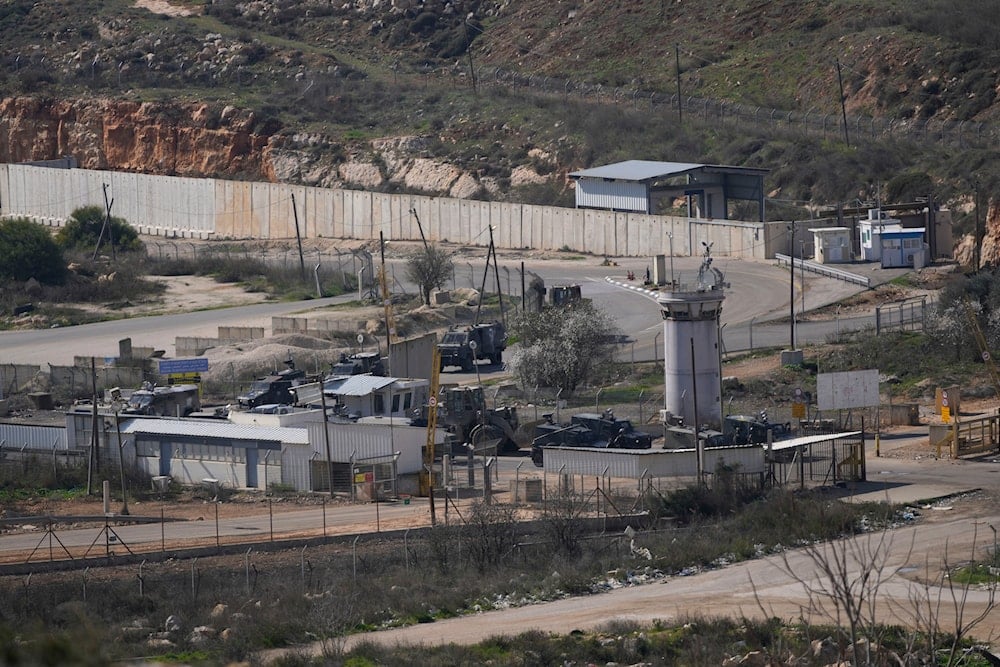
Military vehicles are lined up at the Israeli Ofer prison in the West Bank city of Beitunia, on Saturday, Feb. 1, 2025 (AP)
Palestinian detainees held in Israeli jails are facing “inhumane conditions” and systematic abuse, the Palestinian Resistance movement Hamas revealed, calling on the international community to take urgent action to end what it described as their suffering.
In a statement, Hamas stated that footage broadcast by Israeli media showing the mistreatment of detainees reflected “one of the most extreme forms of brutality,” arguing that detainees were not merely subjected to violations but to what it called a “full-fledged humanitarian crime” inside Israeli detention facilities.
Hamas condemned what it described as international silence over the treatment of Palestinian detainees, saying Israeli officials and journalists had openly boasted about practices that should “shock the human conscience.”
9,300 Palestinians detained in 'Israel', thousands without formal charges
It reiterated that more than 9,300 Palestinians are currently held in Israeli prisons, including thousands under administrative detention without charge or trial, which it described as a flagrant violation of basic justice standards.
The group alleged that detainees are subjected to physical and psychological repression, deliberate medical neglect, denial of family visits, and restrictive measures, including food deprivation, warning that such policies threaten prisoners’ lives and health.
Hamas urged the international community, the United Nations and its agencies, and international human rights organizations to move beyond what it called a “state of silence,” press for an end to the alleged abuses, hold Israeli leaders accountable, ensure respect for the Geneva Conventions and international humanitarian law, and allow international bodies unrestricted access to prisons to assess detainees’ conditions.
Israeli brutality on full display
"Israel's" brutal treatment of Palestinians in the entity's prisons is no news.
Palestinian detainees were deprived of access to drinking water for prolonged periods during the war on the Gaza Strip, a measure described as a form of “collective punishment” by Israeli authorities, who admitted that the practice had been imposed on detainees amid the war, by withholding drinking water, with access during the war on Gaza at times restricted for hours and, in some cases, up to half a day.
In a separate development, the Prisoners’ Media Office on December 17 warned of what it described as a dangerous escalation inside Israeli prisons, accusing authorities of systematically targeting leaders of the Palestinian Captive Movement through violent assaults and intensified psychological pressure.
In a statement, the office said repression units forcibly removed several senior detainees to prison yards, naming Abdullah Barghouti, Bilal Barghouti, and Ahed Ghalmeh, where they were reportedly beaten with batons until they bled. The assaults were described as deliberate attempts to break the detainees’ resolve and intimidate other detainees, efforts the office said had failed.
Sharp rise in administrative detention
Palestinian detainee advocacy groups released figures as of December 19, detailing the scale of detentions in Israeli prisons, pointing to a sharp rise in administrative detention and the continued incarceration of minors.
According to the groups, around 9,300 Palestinians are currently being held in Israeli prisons. The majority are detained without trial, either while awaiting legal proceedings or under administrative detention orders. Only 1,254 detainees are serving sentences following convictions issued by Israeli courts.
The data show that at least 3,350 Palestinians are being held under administrative detention, a policy that allows Israeli authorities to detain individuals for renewable, indefinite periods without formal charges, citing undisclosed security grounds.
Advocacy groups say the practice deprives detainees of basic legal safeguards and constitutes a violation of international standards on due process.


