
Paris signals readiness for post-UNIFIL security role in South Lebanon
 4 Min Read
France has offered to participate in a new international security mission in southern Lebanon after UNIFIL's anticipated departure.
-
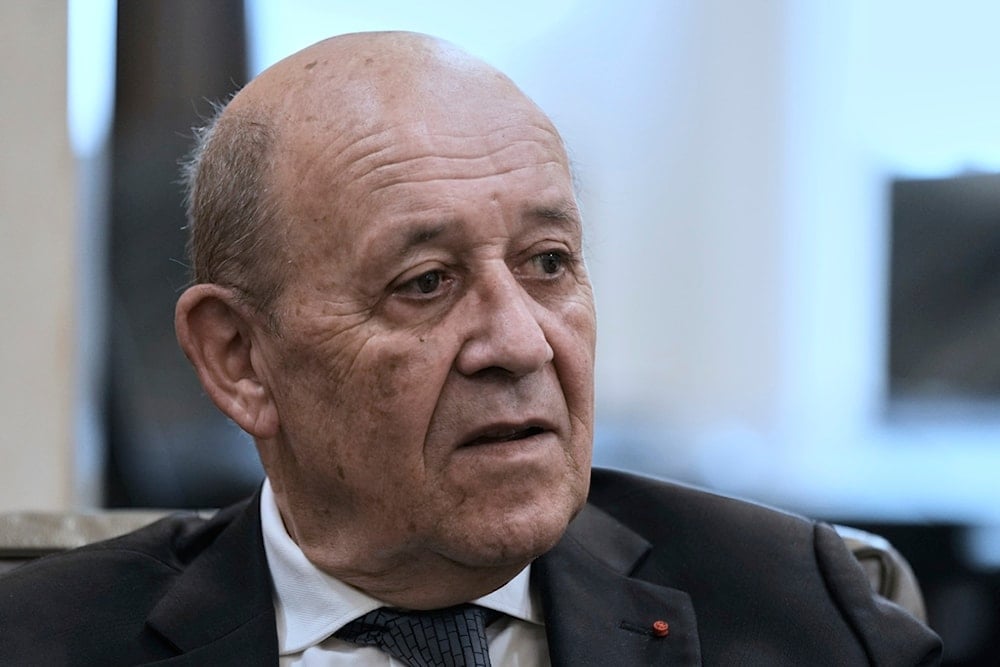
France's special envoy to Lebanon, Jean-Yves Le Drian, meets with Lebanese Prime Minister Nawaf Salam at the government palace in Beirut, Lebanon, Tuesday, June 10, 2025 (AP)
France has signaled its readiness to participate in a new international security arrangement in southern Lebanon, raising concerns about renewed foreign involvement in the region as Israeli occupation forces continue to hold Lebanese territory and carry out attacks despite repeated ceasefire announcements, The National reported.
During a visit to Beirut, French envoy Jean-Yves Le Drian said Paris was prepared to help fill what he described as a potential security vacuum should the mandate of the UN Interim Force in Lebanon (UNIFIL) come to an end later this year.
"France is available for an ad hoc international mission or a mission within the UN framework to fill the security vacuum expected at the end of the year," Le Drian told The National.
"All our partners are worried about the security vacuum. [..] But today I repeat very clearly: France is ready."
His remarks come as Washington pushes a new political and security framework for southern Lebanon, centered on the establishment of "pilot zones" where the Lebanese Army would assume exclusive control while all non-state armed groups would be excluded.
Pressure on the Resistance
The proposal is being advanced amid ongoing Israeli aggression against Lebanon and continued occupation of Lebanese territory. Despite the announcement of a fourth ceasefire following US-sponsored talks between Lebanon and "Israel", Israeli forces have continued airstrikes, bombardments and displacement operations across the south.
Israeli troops also remain stationed in occupied areas along the border, while Israeli officials have openly stated that a withdrawal is not imminent.
At the same time, the proposed arrangements place the burden of implementation primarily on the Resistance, demanding a halt to Hezbollah's military operations without securing a complete Israeli withdrawal from Lebanese territory.
The Resistance has rejected the ceasefire framework, arguing that any arrangement which leaves occupation forces on Lebanese land while restricting Lebanon's ability to defend itself cannot provide a genuine path to stability.
Iran has similarly insisted that Israeli forces must first withdraw from occupied areas before any lasting settlement can be achieved.
Washington process receives French backing
Le Drian voiced strong support for the Washington-sponsored negotiations that recently brought Lebanese and Israeli officials into direct discussions.
According to the French envoy, the talks represent a means of advancing a ceasefire and implementing the proposed security arrangements in southern Lebanon.
"What I can say is that there is a desire, in the conclusions of Washington, to achieve a ceasefire," he said.
"From that point of view, I find the mechanism satisfactory, even though it requires considerable political will."
Le Drian also described the planned "pilot zones" as a "significant step forward," arguing that they could facilitate the deployment of the Lebanese Army while enabling a gradual Israeli withdrawal.
However, Israeli officials have continued to signal their intention to maintain military operations. Israeli Minister of War Israel Katz stated that Israeli forces would not withdraw "for the time being."
Occupation condemned, but foreign role expands
While defending the Washington process, Le Drian reiterated France's opposition to the continued Israeli occupation of Lebanese territory.
France "strongly" condemns "Israeli occupation, which is completely unacceptable" under international law, he said.
Asked about Israeli attacks on journalists and rescue workers and accusations of war crimes committed during the assault on Lebanon, Le Drian stated, "France has very firmly condemned Israel's conduct."
The latest phase of the war erupted on March 2, when the Resistance resumed operations against Israeli forces, following non-stop Israeli aggression and occupation of Lebanese territory. "Israel" subsequently intensified its military campaign against Lebanon.
According to Lebanese authorities, the Israeli assault has killed more than 3,500 people, wounded around 10,000 others and displaced over one million residents, while large parts of southern Lebanon have suffered widespread destruction.
Against this backdrop, France's proposal for a post-UNIFIL security mechanism is likely to face scrutiny from those who view international initiatives in southern Lebanon through the lens of ongoing occupation and repeated efforts to curtail the role of the Resistance while Israeli forces remain on Lebanese soil.
Read more: IRGC demands immediate Israeli withdrawal from Lebanese territory


