
Pentagon tightens grooming, fitness rules amid Hegseth discipline push
 6 Min Read
The Pentagon is tightening grooming, shaving, fitness, and weight standards under War Secretary Pete Hegseth.
-
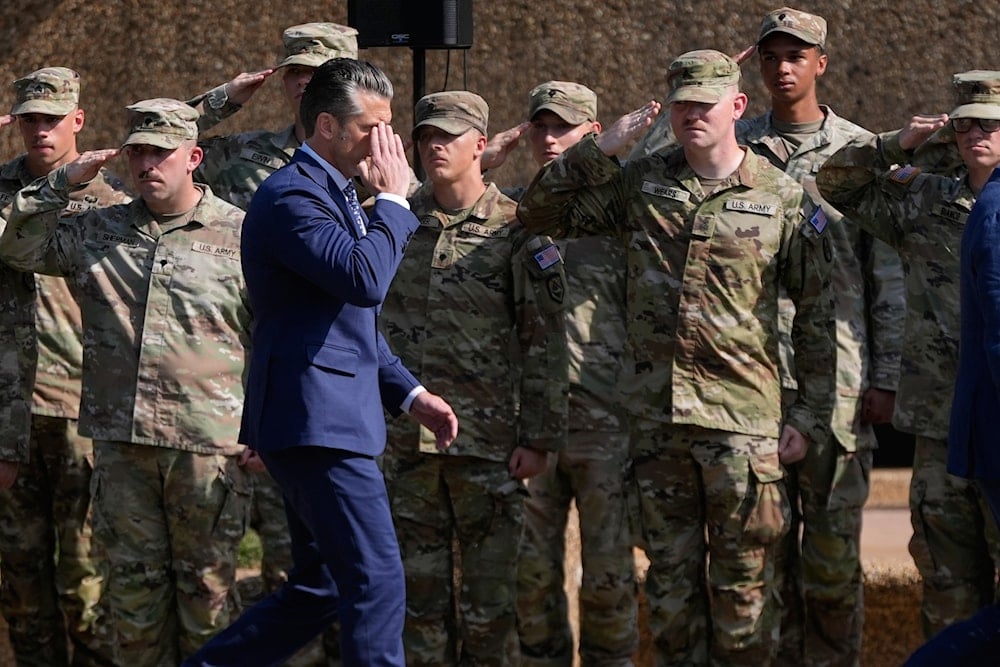
War Secretary Pete Hegseth attends a D.C. Safe and Beautiful Task Force ceremony, Thursday, July 2, 2026, at Meridian Hill Park in Washington (AP)
The Pentagon is intensifying enforcement of military grooming, fitness, and body-composition rules as War Secretary Pete Hegseth seeks to impose what he describes as a stronger culture of discipline across the United States armed forces, CBS News reported.
The effort is moving forward while senior defense officials oversee US military operations against Iran and contend with several other national security priorities.
According to US officials familiar with the matter, Hegseth has recently expressed dissatisfaction after encountering troops with facial hair and observing what he views as inadequate enforcement of physical training, height, and weight requirements.
One military official told CBS News that the war secretary believes senior commanders have not fully implemented the standards he demanded during a gathering of top military leaders at Marine Corps Base Quantico last September.
During that address, Hegseth declared there would be "no more beardos" and "fat troops", while insisting that military leaders restore stricter standards throughout the ranks.
Hegseth expected faster changes
The official, who spoke anonymously because they were not authorized to discuss the issue publicly, said Hegseth expected his Quantico remarks to produce faster and more visible changes.
"Secretary Hegseth maintains the highest expectations for our service members to uphold the professional standards of appearance, fitness, and discipline that define our warfighting force, and he continues to emphasize consistent enforcement of hair, weight, and grooming standards across all ranks," Pentagon spokesman Sean Parnell said in a statement to CBS News.
He added, "Commanders at every level are expected to lead by example by meeting these standards, implementing these requirements, and they will be held accountable for delivering results as the Department works to restore a culture of excellence and readiness. Our Armed Forces are stronger when every service member meets and exceeds these expectations."
Medical shaving waivers face greater scrutiny
The Pentagon’s campaign includes a Department of War directive instructing commanders to begin separation proceedings against active-duty and reserve personnel who continue to require medical shaving waivers after more than one year of treatment.
Under the revised approach, troops granted medical exemptions from shaving must receive treatment and undergo regular assessments. Waivers are generally issued for periods of no more than 90 days.
Personnel who remain unable to shave without suffering skin irritation after a year of treatment could ultimately be removed from military service.
The changes have triggered renewed concerns over how the military distinguishes between personnel who disregard grooming regulations and those who require legitimate medical or religious exemptions.
US military regulations permit beards in some cases for Sikh, Muslim, and Jewish troops whose religious practices require facial hair.
Medical waivers have also traditionally been issued to service members diagnosed with pseudofolliculitis barbae, commonly known as razor bumps. The condition causes painful inflammation and disproportionately affects Black men.
Studies estimate that between 45% and 83% of Black men experience the condition. It may also affect women with hirsutism who shave coarse facial hair.
Pentagon links shaving to combat readiness
Military officials have presented the new policy as a readiness issue rather than simply a matter of appearance.
They argue that facial hair may prevent protective equipment, particularly gas masks or military respirators, from properly sealing around the face during chemical, biological, or other hazardous incidents.
The Pentagon has also ordered the military services to revise the way they assess body composition, following guidance issued in December as part of Hegseth’s campaign to restore what he calls the military’s "warrior ethos".
The dispute over whether bearded troops can safely use protective masks has existed for years.
Unprofessional appearance?
In 2016, then-Army Secretary Eric Fanning directed testing at Aberdeen Proving Ground to examine whether Sikh service members wearing beards could safely operate protective equipment.
The study found that standard gas masks did not form an adequate seal over facial hair. However, alternative systems, including powered air-purifying respirators and loose-fitting masks, were found capable of providing sufficient protection in dangerous environments.
Hegseth has continued to frame shaving waivers and grooming exemptions as part of a broader problem involving weakened standards within the armed forces.
Speaking at Quantico, he said that "the era of unprofessional appearance is over."
Religious accommodations questioned
Hegseth has also questioned whether some religious exemptions have been granted appropriately.
"We don't have a military full of Nordic pagans but unfortunately, we have had leaders who either refuse to call BS and enforce standards, or leaders who felt like they were not allowed to enforce standards," he said last year.
The US military formally recognized paganism as a religious faith in 2017. Hegseth has since revised the religious affiliation codes used by the armed forces, although it remains unclear whether pagan designations continue to be formally recognized.
Throughout his roughly 18 months leading the Pentagon, Hegseth has repeatedly argued that relaxed grooming and fitness regulations reflect a wider decline in military discipline and combat preparedness.
He expressed similar views before becoming defense secretary. In his book, The War on Warriors, Hegseth accused the military of enforcing contradictory standards, writing that it had removed "good soldiers for having naked women tattooed on their arms" while allowing weaker rules "on shaving, dreadlocks, man buns, and straight-up obesity."
He did not provide evidence showing that those practices had become widespread across the armed forces.
Critics question Pentagon’s priorities
Some current and former service members support more consistent enforcement of fitness and grooming regulations, arguing that uniform standards are fundamental to military discipline.
Others warn that the Pentagon’s approach could unfairly place personnel with genuine medical conditions or religious obligations in the same category as troops who deliberately ignore regulations.
Mike Nelson, a retired Army Special Forces officer, said Hegseth raises some legitimate concerns but is devoting attention to matters that would normally be handled by lower-level military leadership.
"He's not wrong, he's just spending a lot of time and effort on things that a battalion sergeant major should be focused on, small unit level leadership kind of things that are getting to him and that are taking up much of his time and focus."
Nelson said he believes the shaving-waiver system has been misused in some cases over the past decade and supports broader efforts to correct what he described as "sloppy" standards.
However, he criticized the prospect of dismissing qualified service members for medical conditions that could otherwise be managed.
If Hegseth views the matter as a national security issue, "then fine", Nelson said, but he described the overall approach as "ridiculous".


