
What polls don't tell us about the 2026 midterms: CNN
 3 Min Read
Polls show Democrats with a national advantage ahead of the US midterms, but voter enthusiasm, late shifts and polling errors add uncertainty.
-
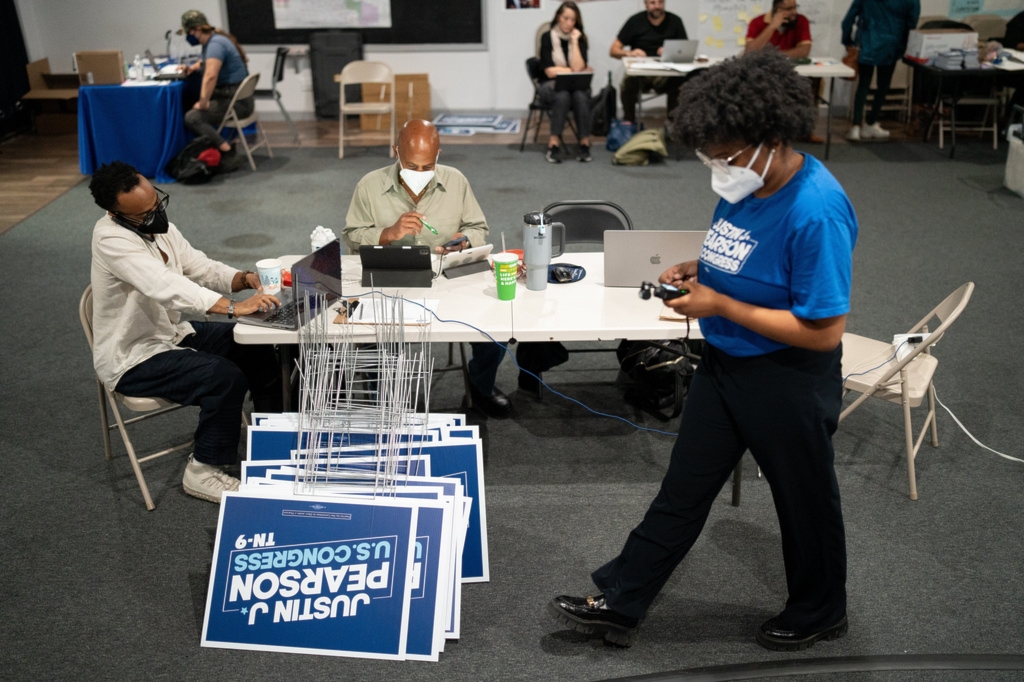
Volunteers work inside Democratic Congressional candidate Justin J. Pearson's campaign headquarters the day before the midterm election on Monday, Nov. 2, 2026, in Memphis, Tenn. (AP Photo/Kevin Wurm)
Polls ahead of Tuesday's US midterm elections point to a potential Democratic advantage, as President Donald Trump's approval ratings decline and voters express growing dissatisfaction with the economy and the country's direction, CNN reported.
According to CNN, Democrats have maintained a consistent lead in the national generic ballot, which measures voters' preferences for control of Congress. However, the network cautioned that national polling does not necessarily reflect the dynamics of individual races, where turnout, voter enthusiasm and local political factors could produce different outcomes.
Democratic enthusiasm advantage raises questions over turnout
Citing Gallup, CNN reported that Democrats hold their largest enthusiasm advantage in a midterm election since 1994. The disparity could affect polling accuracy, as Democratic voters may be more inclined to participate in surveys, while less enthusiastic Republican voters could be underrepresented despite ultimately casting their ballots.
Pollsters attempt to account for differences in voter participation through demographic and partisan weighting, but these adjustments do not always capture actual turnout patterns. Consequently, the enthusiasm gap could make it difficult to determine how accurately current surveys reflect the electorate heading into election day.
Late voter shifts could complicate polling projections
CNN also pointed to the possibility of Republican candidates gaining support in the final hours before voting, particularly in closely contested Senate races. Its final state polls found that between 6% and 8% of voters in each surveyed state intended to support neither leading candidate nor another option, even after being asked to reconsider.
Voters favoring Republican control of the Senate were more likely to withhold support from either major-party candidate. The gap reached 9 percentage points in Texas, 6 in Kansas and 4 in Michigan, potentially creating room for shifts that could affect the margins in competitive contests.
CNN noted that polling organizations underestimated Republican support in the 2016, 2020 and 2024 presidential elections by approximately 3 percentage points in both 2016 and 2024, and nearly 5 points in 2020.
However, the network noted that the same pattern has not been consistent in midterm elections during Trump's political era, while polling errors can vary considerably between states. National surveys therefore offer an indication of broader voter sentiment but cannot guarantee the outcome of individual races.
Read more: Republicans quietly blame Trump for their midterm election woes


