
Rubio cites ‘slight progress’ in talks as Iran war tensions persist
 3 Min Read
US Secretary of State Marco Rubio said there has been “some slight progress” in efforts to end the war on Iran, while criticizing NATO allies over their response to the US' war.
-
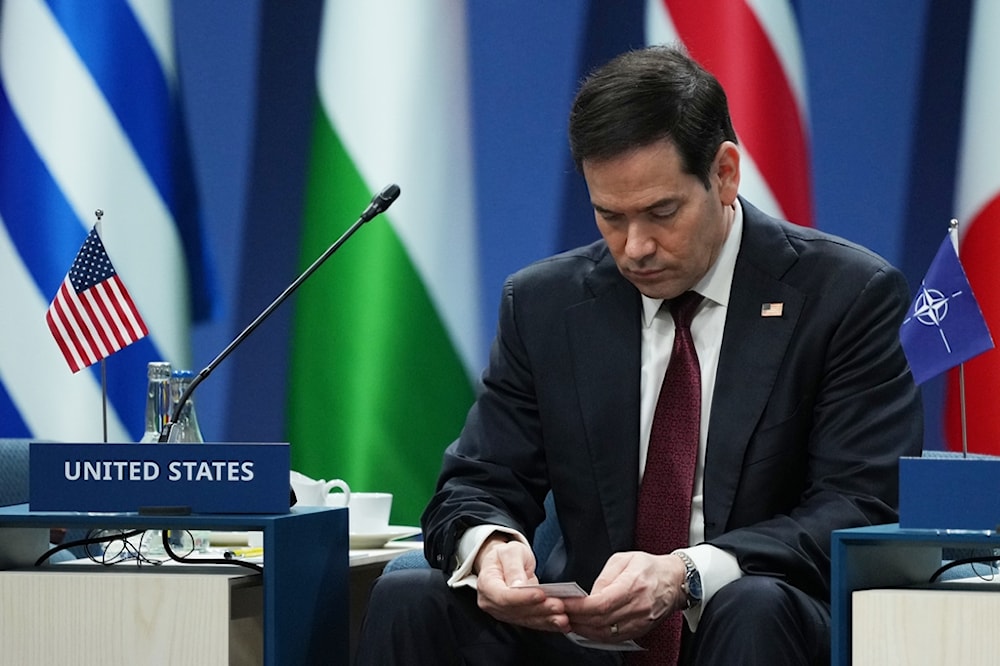
United States Secretary of State Marco Rubio attends a meeting of the North Atlantic Council in NATO foreign ministers format in Helsingborg, Sweden, Friday, May 22, 2026. (AP Photo/Julia Demaree Nikhinson, Pool)
US Secretary of State Marco Rubio said Thursday that negotiations surrounding the war on Iran had shown “some slight progress,” while cautioning against overstating developments.
Speaking during a NATO foreign ministers’ gathering in Helsingborg, Sweden, Rubio said there had been “a little bit of movement” in diplomatic efforts linked to ending the conflict.
“There’s been some slight progress. I don’t want to exaggerate it,” Rubio told reporters at a press conference. “There’s been a little bit of movement and that’s good.”
The remarks come amid continued regional tensions and ongoing discussions surrounding maritime security, sanctions, and the future of escalation between Washington and Tehran.
Read more: Any state used as launchpad against Iran will face retatliation: Iran
Washington reiterates demands on nuclear program and Hormuz
Rubio repeated Washington’s long-standing demand that Iran never acquire nuclear weapons, something Iran has repeatedly stated that it is not working towards, and accused Tehran of attempting to establish a new framework for regulating maritime transit through the Strait of Hormuz.
According to Rubio, Iran was “trying to convince Oman to join them” in creating a system that would impose charges on vessels crossing the strategically vital waterway.
“There is not a country in the world that should accept that,” Rubio said.
Rubio criticizes NATO allies over Iran war response
Rubio also acknowledged growing frustration within the Trump administration over what Washington views as insufficient support from NATO allies during the war on Iran.
“The president’s views, frankly disappointment, at some of our NATO allies and their response to our operations in the Middle East — they’re well documented,” Rubio said.
He added that the issue “will have to be addressed,” though he noted it would not be resolved during the current NATO gathering.
The comments reflect broader strains within the trans-Atlantic alliance as divisions deepen over military escalation, regional strategy, and the political costs of aggressing against Iran.
Read more: NATO at a breaking point: Europe pushes back as US pressure mounts
US denies troop repositioning linked to allied disputes
Rubio denied that recent shifts in US military deployments across Europe were intended to punish allies over their positions on Iran.
“The United States continues to have global commitments that it needs to meet in terms of our force deployment,” Rubio said, describing troop adjustments as part of an ongoing strategic review process.
“This is not a punitive thing, it’s just something that’s ongoing,” he added.
The statement comes amid heightened scrutiny over Washington’s military posture in both Europe and West Asia as tensions surrounding the blowback of the US-Israeli war on Iran continue to reshape regional and alliance dynamics.


