
Russia, China set to challenge UN vote on Iran sanctions panel
 4 Min Read
France is preparing a Security Council vote on the Iran sanctions panel as Russia and China challenge the UN sanctions framework.
-
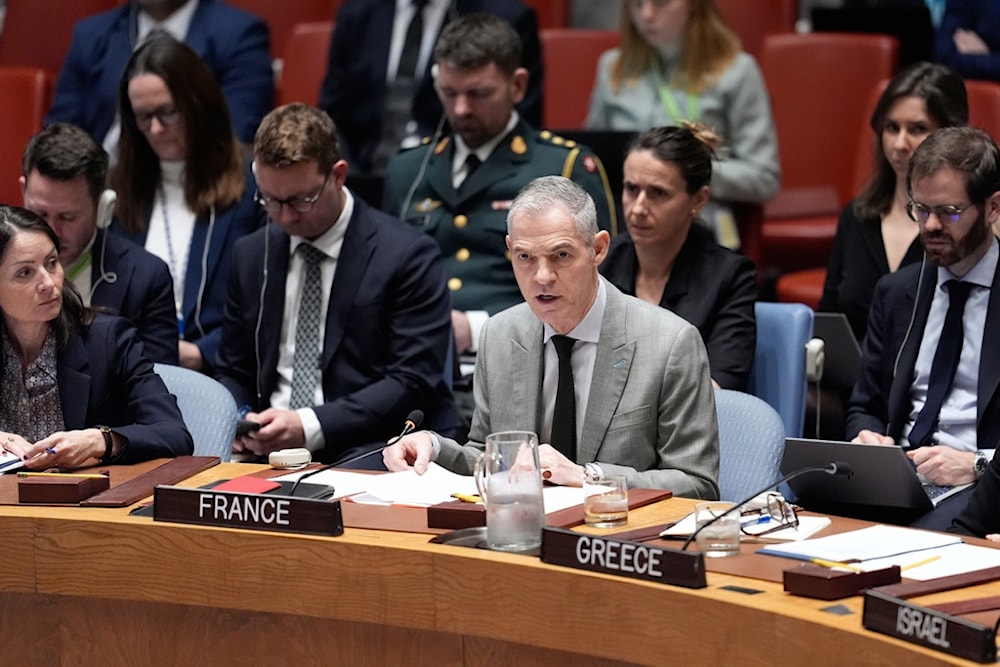
French ambassador to the United Nations Jérôme Bonnafont speaks during a Security Council meeting at UN headquarters, Wednesday, March 11, 2026. (AP Photo/Seth Wenig)
A new confrontation over Iran’s nuclear program is looming at the UN Security Council, with France preparing to put the future of a sanctions-monitoring mechanism to a vote later this month, Reuters reported on Wednesday.
The Council is expected to vote on September 17 on whether to renew the mandate of the panel of experts supporting the UN committee overseeing sanctions on Iran. The panel’s mandate is due to expire on September 26, during the annual UN General Assembly, setting the stage for a potentially contentious diplomatic dispute.
France, which holds the Security Council presidency this month, has placed Iran’s nuclear activities and what it claimed as "Tehran’s failure to meet its UN obligations" among the Council’s central issues.
French UN Ambassador Jerome Bonnafont said the Council would have to address the future of the panel after sanctions against Iran were restored in 2025.
"The Council will finally have to vote on renewing the mandate of the ... panel of experts on Iran," he said. "That was a matter reintroduced in September 2025, when we restored sanctions on the country following Iran's non-compliance with its obligation under its nuclear program."
Moscow, Beijing reject renewed sanctions oversight
The vote could put Western powers at odds with Russia and China, which have opposed the restoration of the sanctions framework and questioned the Security Council’s authority to revive mechanisms connected to it.
Both countries could veto a renewal of the panel. In a joint statement issued in March, Russia and China argued that the Security Council "cannot proceed to re-establish the 1737 Committee or its Panel of Experts."
The sanctions committee itself does not operate under a fixed-term mandate. It was established in 2006 to oversee measures imposed on Iran over its nuclear program and is commonly known as the 1737 Committee, after the Security Council resolution that created it.
The dispute reflects a broader pattern of opposition from Moscow to the renewal of UN sanctions-monitoring mechanisms. In 2024, Russia vetoed a resolution extending the mandate of a panel tasked with monitoring sanctions enforcement against the DPRK over its nuclear weapons and ballistic missile programs.
European powers triggered latest sanctions dispute
The latest standoff over Iran dates back to last year, when Britain, France and Germany activated the UN nuclear deal’s so-called "snapback" mechanism.
The move restored UN sanctions that had been lifted under the 2015 Iran nuclear agreement after the three European powers concluded that Tehran was "failing to comply with its commitments under the deal."
Iran has always maintained that it is not pursuing nuclear weapons, and continues to state that it has no intention of developing nuclear arms, pointing to longstanding doctrinal, ethical, and religious prohibitions on weapons of mass destruction. Iranian President Masoud Pezeshkian has repeatedly reaffirmed this position in public remarks.
Western governments and their allies have nevertheless remained concerned about Iran’s uranium enrichment program because highly enriched uranium can be used for civilian nuclear energy, but can also provide the fissile material needed for a nuclear weapon.
With the sanctions panel’s mandate nearing its expiration, the September vote could therefore become another test of the widening divide within the Security Council over how the UN should deal with Iran’s nuclear program.


