
Sanchez calls snap election as housing crisis shapes Spain’s vote
 5 Min Read
Spain’s prime minister acknowledges political setbacks as he seeks to rally progressive voters and preserve his governing coalition ahead of the Nov. 29 vote.
-
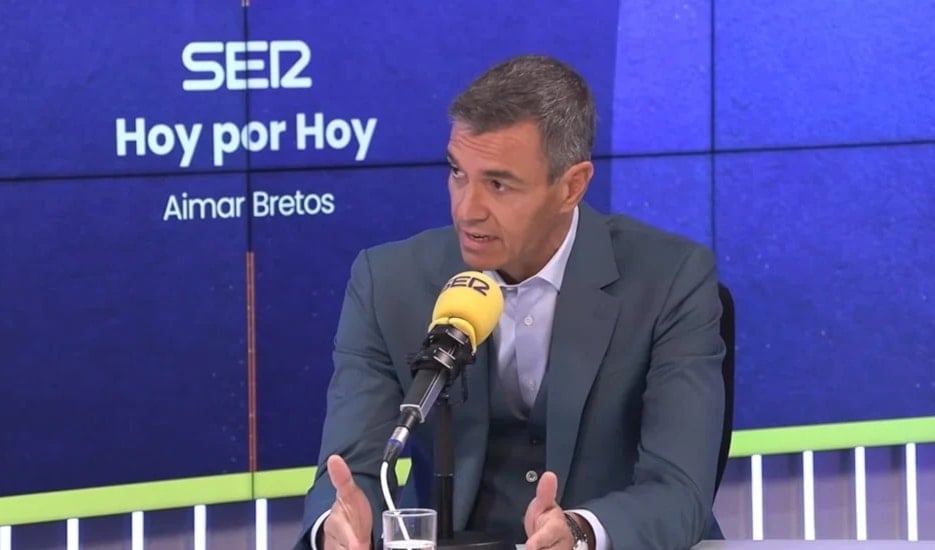
Spanish Prime Minister Pedro Sanchez during an interview in Madrid on August 31, 2026. (Screenshot/ Cadena SER)
Spanish Prime Minister Pedro Sanchez called an early election for November 29 on Monday, seeking to reinforce his mandate after a divided parliament rejected the government’s key housing measures last week as protests over housing spread.
“We need to renew people's support,” Sanchez said in a televised address. “We need to mobilise and win a much larger progressive majority in parliament, one that will allow us to overcome vested interests, deliver new social advances and continue transforming Spain.”
Sanchez also admitted that he had made mistakes and failed to deliver on some of his campaign commitments.
“I also know that part of that social majority is dissatisfied today,” he said.
The Spanish prime minister has gained international attention for his firm positions on progressive issues, including Palestinian statehood, defending multilateral institutions and challenging “tech oligarchs.”
Sanchez’s decision to call an early election comes as his Socialist Party faces a challenging polling environment, but his government has gained momentum from housing proposals that have resonated with a public increasingly affected by Spain’s housing crisis. The measures were rejected by right-wing lawmakers on Friday, prompting plans for further housing protests and giving Sanchez an opportunity to campaign on an issue that has drawn significant public support.
Election could reshape Spain’s political landscape
A defeat for Sanchez would bring an end to one of Europe’s remaining left-leaning governments as far-right parties make unprecedented gains across the continent and increasing numbers of voters move away from the political center.
Opinion polls indicate that a coalition led by the conservative People's Party (PP), backed by Vox, is currently the most likely outcome. Such a result would bring a far-right party into Spain's central government for the first time since democracy was restored following the death of dictator Francisco Franco.
Sanchez, however, has repeatedly defied predictions of his political demise. The veteran political operator has survived despite never securing enough votes to govern alone, assembling a succession of fragile and seemingly unlikely alliances.
Those coalitions have ranged from the far-left to separatist right-wing parties and have enabled him to remain in office for three consecutive terms spanning eight years.
Rival ousted after corruption scandal
Sanchez first became prime minister after spearheading a move to remove center-right leader Mariano Rajoy following major corruption scandals involving Rajoy's People's Party.
In the past year, however, senior figures within Sanchez's own Socialist Party have faced graft allegations, further damaging the party's already weak approval ratings, which have remained between about 26% and 31% throughout his time in office.
Despite suffering major defeats in earlier regional and local elections, Sanchez secured a second four-year term in 2023 by negotiating parliamentary backing from a loose coalition of parties.
That agreement included a highly contentious amnesty for pro-independence Catalan leaders in return for their support. The decision remains deeply unpopular with many voters, who continue to view it as a betrayal of Spanish unity.
Progressive record under scrutiny
Sanchez initially earned praise for policies including the removal of Franco's remains from the mausoleum the dictator had built for himself outside Madrid and a labor law reform that helped unemployment fall to its lowest level in nearly two decades.
He also established his humanitarian and pro-immigration credentials early in his tenure. In June 2018, he announced that Spain would allow the Aquarius migrant rescue ship and its 629 passengers to dock after Italy and Malta had both refused permission for the vessel to enter their ports.
As other European governments have tightened restrictions on migration, Sanchez has repeatedly maintained that immigration is necessary to sustain Spain's economic growth by filling labor shortages in sectors including construction, agriculture and hospitality. He has also argued that migrants provide revenue needed to support the country's strained welfare system.
More recently, Sanchez's refusal to accept US-led calls for defense spending to rise to 5% of gross domestic product, alongside his shift toward closer ties with China, has angered US President Trump and some European leaders worried that the bloc could be overwhelmed by Chinese imports.
Housing crisis offers political opening
Sanchez’s housing proposals have given the Socialist leader an opportunity to rally the left around an issue that has struck a chord with voters, while placing his government’s response to Spain’s housing crisis at the center of the political debate, according to Lorenzo Bernaldo de Quiros, an economist and president of consultancy Freemarket Corporate Intelligence.
“This is a window of opportunity,” de Quiros said. “If he does not call elections fast, (those topics) will return to centre stage.”
In short, the November 29 vote will be a defining test for Sanchez, putting his government’s housing agenda, political alliances and future direction of Spain’s left directly before voters.
Read more: Sanchez questions EU solidarity with Spain over migration, Gaza stance


