
Saudi war on Yemen threatens MBS's Vision 2030: WSJ
 5 Min Read
Saudi Arabia faces mounting economic and security pressures as the war on Yemen threatens oil exports, infrastructure, foreign investment and Mohammad bin Salman's Vision 2030 agenda.
-
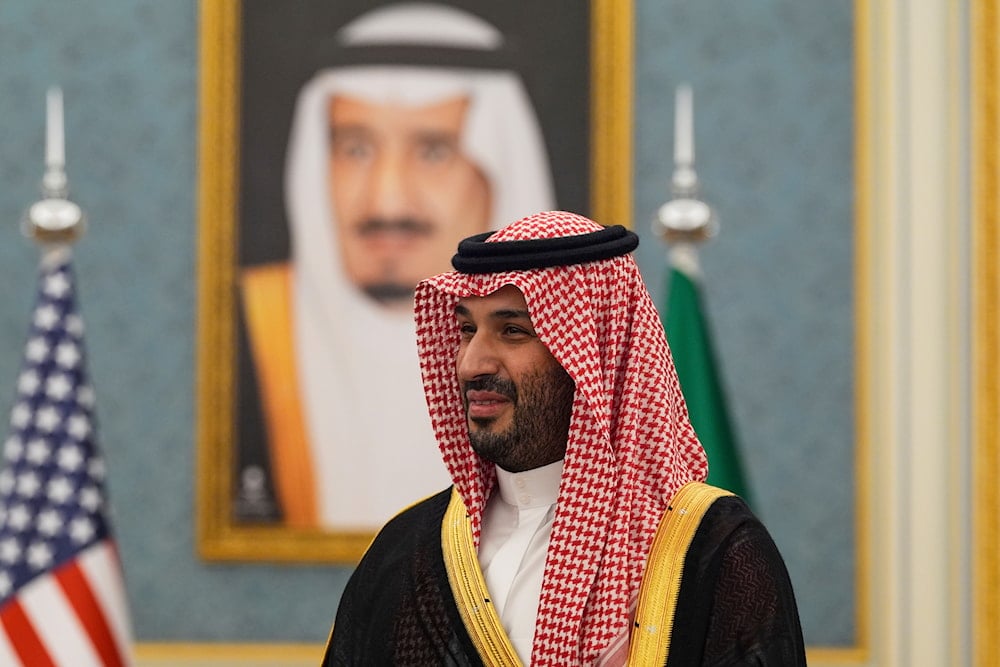
Saudi Crown Prince Mohammed bin Salman joins President Donald Trump to greet delegations at the Royal Palace in Riyadh, Saudi Arabia, Tuesday, May 13, 2025. (AP)
Saudi Arabia is facing growing security and economic pressures as escalating fighting with the YAF in neighboring Yemen threatens to disrupt key infrastructure and complicate Crown Prince Mohammad bin Salman's plans to diversify the kingdom’s oil-dependent economy, The Wall Street Journal reported on Sunday.
At least one missile struck Riyadh’s international airport on Saturday, killing at least 12 people and injuring dozens, many of them seriously.
Two airport terminals were struck, and their roofs partially collapsed, according to people familiar with the damage. Authorities reported further attacks on the closed airport on October 11, saying a projectile caused a fire in Terminal 4 and resulted in additional injuries.
Growing pressure on Saudi economy
The attacks come as Saudi Arabia seeks to expand tourism and travel as major components of its economy. A prominent international investment conference scheduled for the end of the month is increasingly in doubt, while the costs of the war have already widened the budget deficit and threaten to push the economy into contraction.
Saudi officials had briefed journalists as recently as this summer that the war on Yemen was under control; since then, however, the Yemeni Armed Forces ramped up their retaliatory strikes targeting airports and vital energy infrastructure.
The war broke out again when Saudi Arabia struck the Sanaa International Airport to prevent the landing of a civilian flight from Iran, followed by Saudi refusal to end the years-long blockade on Yemen.
Saudi Arabia has also faced difficulties providing air defense coverage across its large territory and has been moving batteries to protect palaces and energy infrastructure, according to people familiar with the kingdom’s deliberations.
Iran offers mediation amid Saudi struggle to find alternative routes
While supporting continued economic pressure on Iran, Prince Mohammed instructed advisors to maintain a diplomatic channel with Tehran and communicate that Saudi Arabia’s intentions were not confrontational, according to people familiar with the matter.
On October 12, Iranian Foreign Minister Abbas Araghchi said that Iran is ready to facilitate talks between Saudi Arabia and Sanaa, stressing to his Saudi counterpart that the region's ongoing crises have no military solution, and that disregarding political settlements only exacerbates the issues.
Sanaa's retaliatory strikes have affected Saudi efforts to maintain an alternative route for oil exports after the Strait of Hormuz was blocked. Earlier in the year, the kingdom was able to transport oil across the desert to the Red Sea, benefiting from those sales and higher prices.
In July, the Yemeni Armed Forces announced a maritime blockade of Saudi Arabia in response to Riyadh's blockade. An operation targeting the East-West pipeline in September struck the kingdom’s principal alternative route for transporting oil away from the Strait of Hormuz.
Saudi aviation has subsequently come under pressure, with the Yemeni Armed Forces striking King Khalid International Airport in Riyadh at least four times.
Economic bind put MBS's agenda at risk
The economic impact is adding to existing difficulties facing the crown prince’s development agenda. Foreign investment declined during the first two quarters of the year and remains below the target set for 2030, while higher defense and infrastructure costs threaten to divert funds from economic diversification.
The non-oil economy was smaller in the second quarter than in the first, according to Capital Economics. The Saudi Finance Ministry expects GDP to contract by 3.6% in 2026.
Several major projects associated with Mohammad bin Salman are stalled or under review. Saudi Arabia abandoned plans in January to host the 2029 Asian Winter Games, while the kingdom still faces the costs of hosting the World Expo in 2030 and the soccer World Cup four years later.
The crown prince has spent the past decade backing projects including Neom, a large cube-shaped building in Riyadh and a desert ski resort. Their combined costs have reached trillions of dollars, placing substantial demands on a government with an annual budget of about $350 billion.
The war is also creating new risks for Saudi Arabia’s ambitions to become an artificial intelligence hub, as data centers have emerged as potential targets.
Allies fail to deliver for Saudi
Despite Mohammad bin Salman’s efforts to strengthen ties with US President Donald Trump, including a pledge to invest about $1 trillion in the United States, Washington has so far resisted Saudi requests for military assistance to reverse the Yemeni Armed Forces' advance, although it has sent military advisors.
Saudi Arabia has sought assistance from Pakistan and is searching internationally for additional air defenses, according to people familiar with the kingdom’s efforts cited by WSJ. It is also seeking foreign fighters to support its Yemeni allies, while increasingly exploring whether a diplomatic settlement could contain the conflict.
Kristian Coates Ulrichsen, a Persian Gulf expert and fellow at Rice University’s Baker Institute, said the crown prince faced difficult choices. “Any military response risks getting drawn in deeper to an asymmetric conflict in which the Houthis have shown they have the ability to inflict significant and symbolic damage.”
Bin Salman has been moving between heavily guarded palaces equipped with bunkers and is protected by a handpicked security team, according to officials familiar with his movements, fearing targeting by the Yemeni Armed Forces.


