Mashhad mourns Sayyed Khamenei in a powerful display of steadfastness
 4 Min Read
A sea of mourners gathered in Mashhad as Sayyed Ali Khamenei was laid to rest at the Imam Reza Shrine, marking the end of a week of nationwide mourning and farewell ceremonies.
-
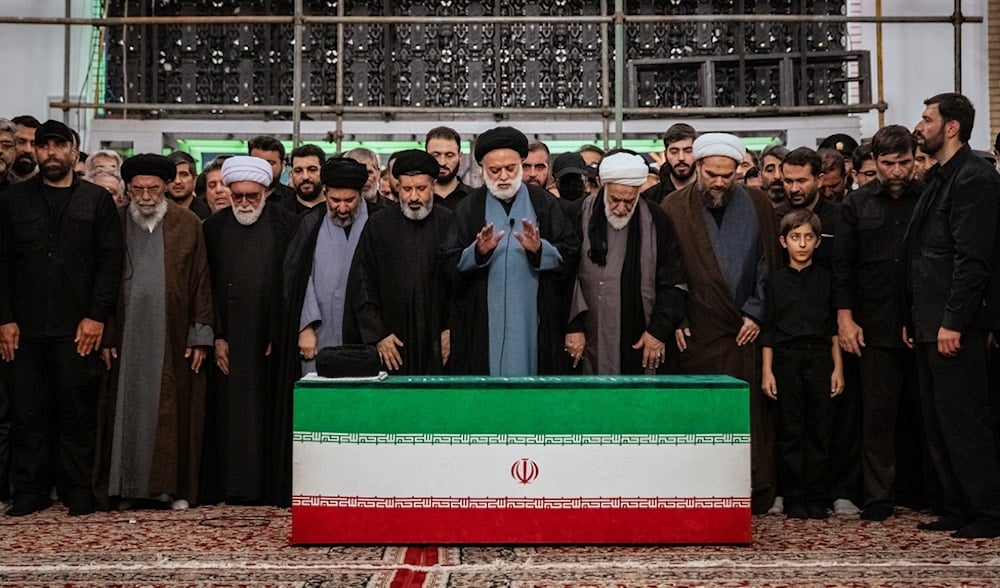
Sayyed Mostafa Khamenei leads a prayer over the coffin of his late father, Iranian Leader Ayatollah Sayyed Ali Khamenei before his burial at the Imam Reza Shrine in Mashhad, northeastern Iran, July 9, 2026. (AP)
The burial ceremony for Sayyed Ali Khamenei has concluded in his hometown of Mashhad, where millions gathered to bid farewell to the martyred leader as he was laid to rest at the Imam Reza Shrine following a week of mourning ceremonies.
Iran's state broadcaster said Sayyed Khamenei was buried in the Dar al-Dhikr portico within the Imam Reza Shrine, one of the most revered religious sites in Shia Islam.
The funeral prayers were held at the shrine and led by his eldest son, Ayatollah Hajj Sayyed Mostafa Hosseini Khamenei, as mourners gathered in solemn remembrance.
Sayyed Mostafa Khamenei leads the funeral prayer for the martyred leader Sayyed Ali Khamenei before his burial in Mashhad at the Imam Rida Shrine.#SayyedKhamenei #Iran #IranWar #WestAsia #Mashhad pic.twitter.com/bVDA047emV
— Al Mayadeen English (@MayadeenEnglish) July 9, 2026
Following the prayers, the funeral procession continued through the Imam Reza Shrine complex, with mourners carrying the coffin on their shoulders. At the same time, vast crowds gathered to pay their final respects and bid farewell.
The burial came after a large funeral procession was held in Mashhad on Thursday for Sayyed Ali Khamenei and members of his family who were also killed. Iranian media reported that mourners and visitors traveled from across Iran and abroad to participate in the ceremonies and honor his memory.
As the procession reached the Imam Reza Shrine, crowds accompanied the coffin through the complex in an emotional farewell ceremony, with many mourners expressing grief and solidarity.
Images of mourning
Millions participated in funeral and mourning ceremonies after public farewell events began in Tehran last Saturday. Iranian media reported that mourners arrived from across the country's provinces, alongside representatives and visitors from nearly 100 countries, to pay their final respects.
Despite heightened regional tensions, supporters of the Islamic Republic traveled to Mashhad to attend the burial ceremony, six days after funeral processions that Iranian media said drew millions of people across several cities in Iran and Iraq.
Women of different ages, dressed in black abayas, stood along the avenue leading to the Imam Reza Shrine, while mourners continued arriving throughout the night and in the hours before the ceremony.
Many carried large portraits of Sayyed Ali Khamenei, while others raised flags and chanted religious and revolutionary slogans as they gathered to honor his legacy.
Mohammad Afsharian, a 41-year-old shopkeeper, said: "Everyone here is calling for revenge. I don't know what is happening diplomatically or whether that path will continue, but everyone is raising red flags to express their desire for revenge."
"Even if we reach an agreement with the United States, we will still have problems with Israel," he added, referring to remarks by Israeli War Minister Israel Katz, who said on Thursday that the Israeli military was prepared to strike Iran "for the third time if necessary" and "with greater force."
Funeral conveyed message of unity and resilience
Commenting on the funeral, analysts speaking to Al Mayadeen said the scale of the gathering represented more than a moment of mourning, describing it as a reflection of national unity and public commitment to the values associated with Sayyed Ali Khamenei.
They said the funeral sent messages to the United States and "Israel," arguing that the turnout demonstrated continued support among Iranians and a demand for accountability over Sayyed Ali Khamenei's killing. They also described his legacy as extending beyond Iran, saying it remains present wherever "the voice of free people is heard."
The analysts further argued that Iran's national unity reflected resilience in the face of external pressure, saying the funeral served both as a farewell and as a demonstration that Iran would not be forced into submission.
They maintained that the fronts of the Axis of Resistance remain interconnected despite efforts to create divisions, while criticizing the miscalculation by the US administration regarding public sentiment in Iran.
The analysts also criticized US President Donald Trump, arguing that his administration had underestimated the response to Sayyed Ali Khamenei's killing and was unable to confront resistance movements.
Behind the political image of Martyr Sayyed Ali Khamenei as a leader was a life shaped by simplicity, modesty, and unwavering principles.
— Al Mayadeen English (@MayadeenEnglish) July 9, 2026
From meals of bread and raisins to refusing privileges for his own family, these lesser-known stories reveal the values that guided him for… pic.twitter.com/ny16wFzwxH