
Secret US military plane in Ushuaia sparks concerns in Argentina
 2 Min Read
A US Department of War plane landed secretly in Ushuaia, Argentina, amid growing fears of a possible Milei-Trump deal to hand over control of the port for US access to Antarctica.
-
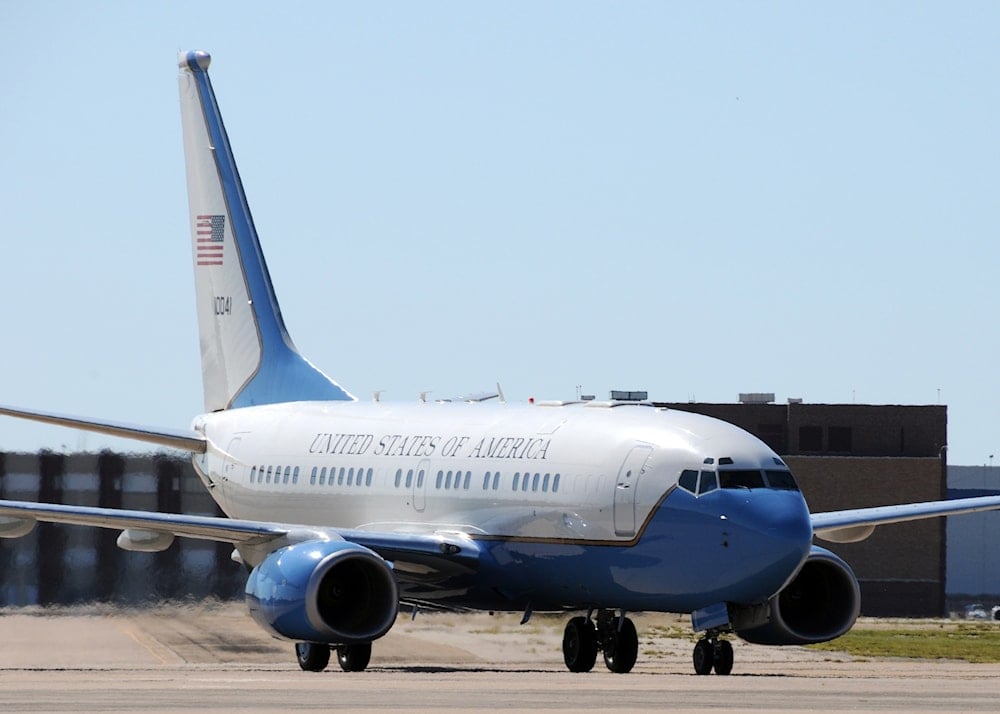
Illustrative: An undated photo of a Boeing C-40 Clipper. (WikiCommons)
A US Department of War plane has reportedly landed in the southern Argentine port city of Ushuaia, raising alarm among local authorities and media due to the lack of official communication from the national government or defense agencies.
According to the Argentine outlet Página 12, the aircraft departed from a US Air Force base in Maryland and arrived in Ushuaia on Sunday. The landing was conducted in complete secrecy, with no public notice from President Javier Milei’s administration or the country’s military command.
The secretive arrival has fueled speculation over a possible US-Argentina military agreement, particularly concerning control of Ushuaia’s strategic port. Rumors suggest that Argentine President Javier Milei and US President Donald Trump may be negotiating a deal to transfer partial or full control of the port to the United States.
Local officials reportedly expressed concern over the situation, particularly in light of long-standing US interest in establishing a naval base in Ushuaia. Such a base would provide Washington with a key access point to Antarctica, a region of increasing geopolitical significance.
No official statement from Argentine government
As of Tuesday, neither the Argentine Ministry of Defense nor the Office of the Presidency has issued a statement addressing the US military plane landing. The lack of transparency has drawn criticism from opposition figures and analysts who warn of a growing militarization of the region under external influence.
Página 12 reported that this development fits within a broader pattern of military and strategic cooperation between Buenos Aires and Washington, which has intensified since Milei took office.
The port of Ushuaia is the southernmost deep-water port in South America and holds immense logistical value for operations targeting the Antarctic region. Washington’s interest in the area has reportedly grown amid rising global competition over natural resources and scientific presence in Antarctica.
Though no formal agreement has been confirmed, analysts believe the incident may mark the beginning of a deeper US military foothold in the region, one that could have long-term implications for Argentina's sovereignty and regional dynamics in the South Atlantic.


