
Sheinbaum condemns US oil tariff threats meant to 'strangle' Cuba
 4 Min Read
Mexican President Claudia Sheinbaum denounced US threats to sanction countries exporting oil to Cuba, warning they could worsen the island’s humanitarian crisis amid deepening regional tensions.
-
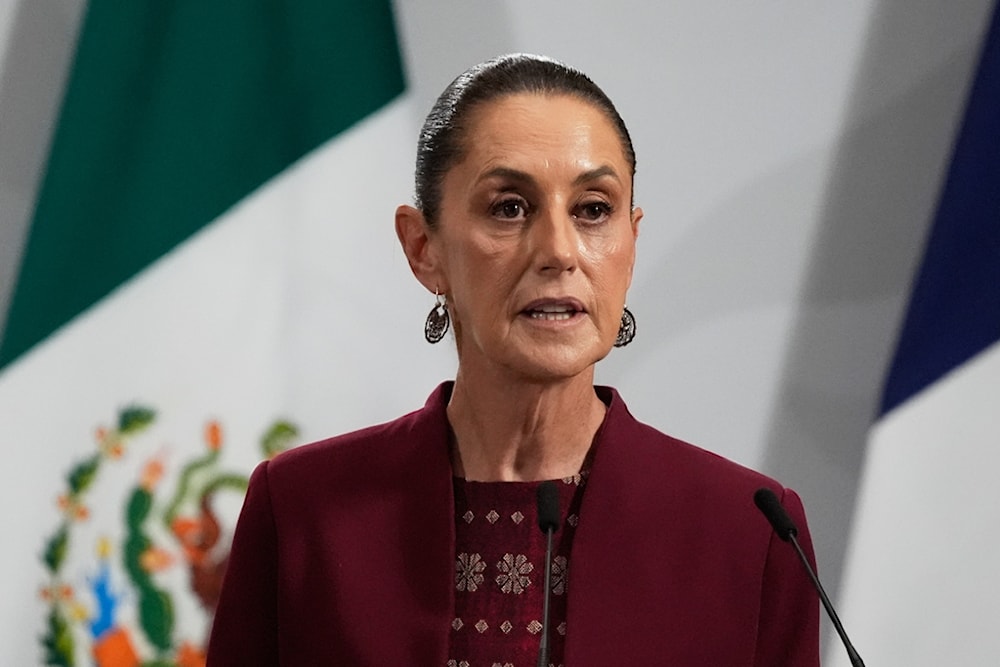
Mexican President Claudia Sheinbaum speaks at the National Palace in Mexico City, Nov. 7, 2025. (AP)
Mexican President Claudia Sheinbaum has denounced threats by the United States to impose tariffs on countries exporting oil to crisis-hit Cuba, warning that such a move would “strangle” the island's already fragile economy.
“This sanction being imposed on countries that sell oil to Cuba is very unfair... sanctions that harm the people are not right,” Sheinbaum told reporters on Monday.
The US Cuba oil tariffs threat, issued by President Donald Trump, targets nations attempting to supply petroleum to Havana, amid tightening pressure from Washington.
Sheinbaum emphasized the humanitarian implications of such sanctions, cautioning that economic coercion could further deepen Cuba’s fuel crisis.
Mexico criticizes Trump’s sanctions strategy
The US administration has vowed to penalize countries aiding US-sanctioned Havana, following the toppling of Venezuela’s President Nicolás Maduro in a deadly US military operation last month.
Trump declared control over Venezuelan oil and has since threatened trade penalties on any nation that steps in to supply Cuba with fuel.
Mexico, a key regional actor, has found itself navigating a difficult diplomatic position. While maintaining strong economic ties with the US, Sheinbaum has also expressed solidarity with Cuba, rejecting punitive measures that impact civilians.
“You cannot strangle a people like this -- it’s very unfair, very unfair,” Sheinbaum said, reiterating her country’s opposition to politically motivated sanctions.
Venezuela condemns 'punitive measures' on Cuba’s oil allies
Caracas has also strongly condemned the US directive, calling it an unjustified attack on countries maintaining legitimate energy trade with Cuba. In a statement, the Venezuelan Foreign Ministry described the move as a hostile act intended to isolate Cuba economically and deepen its humanitarian crisis.
“These are punitive measures on countries that decide to maintain legitimate trade relations with the Republic of Cuba,” the ministry stated.
Venezuela, Cuba’s longtime energy partner, was cut off after the US took control of its oil industry in the wake of Maduro’s ouster.
The government in Caracas urged a global response, warning of Cold War–style aggression that mirrors decades of blockade on Cuba.
Cuba’s oil shortage worsens after Venezuela fallout
Cuba, already enduring a severe economic downturn, has faced worsening energy shortages following the collapse of fuel shipments from Venezuela.
With its long-time ally no longer able to provide oil, Cuba’s energy crisis has escalated, forcing the suspension of jet fuel supplies for a month.
The loss of Venezuelan oil has left Havana vulnerable, with limited alternatives amid international pressure. Trump’s move to restrict support for Cuba is part of a broader strategy aimed at isolating the island.
Mexico cautious but committed to supporting Havana
Despite the risk of facing Trump oil sanctions, Mexico is exploring diplomatic avenues to resume oil exports to Cuba without incurring US trade penalties. Sheinbaum stated that her government remains committed to aiding the Cuban people, but not at the cost of jeopardizing Mexico’s economic stability.
Bloomberg reported that Mexico’s state-owned oil company Pemex had suspended a planned shipment to Havana.
Asked about the matter, Sheinbaum said, “It is a sovereign decision, and it is made in the moment when necessary,” declining to say whether the move was permanent.
“We will continue supporting them and taking all necessary diplomatic actions to restore oil shipments,” she added.
Humanitarian aid sent as oil exports remain on hold
While oil exports are currently paused, Mexico has taken steps to support Cuba in other ways. On Sunday, it dispatched two ships carrying humanitarian aid to Cuba, including essential supplies to alleviate the hardships triggered by the energy crisis.
With the Mexico-Cuba relations strained under geopolitical pressure,
Sheinbaum’s administration is pursuing what it describes as a “principled and balanced” approach, underscoring the need to protect human life amid political disputes.


