
Spain rejects military support against Iran, calls for diplomacy
 3 Min Read
Spain reaffirms its opposition to participating in any military action against Iran, prioritizing diplomacy over war.
-
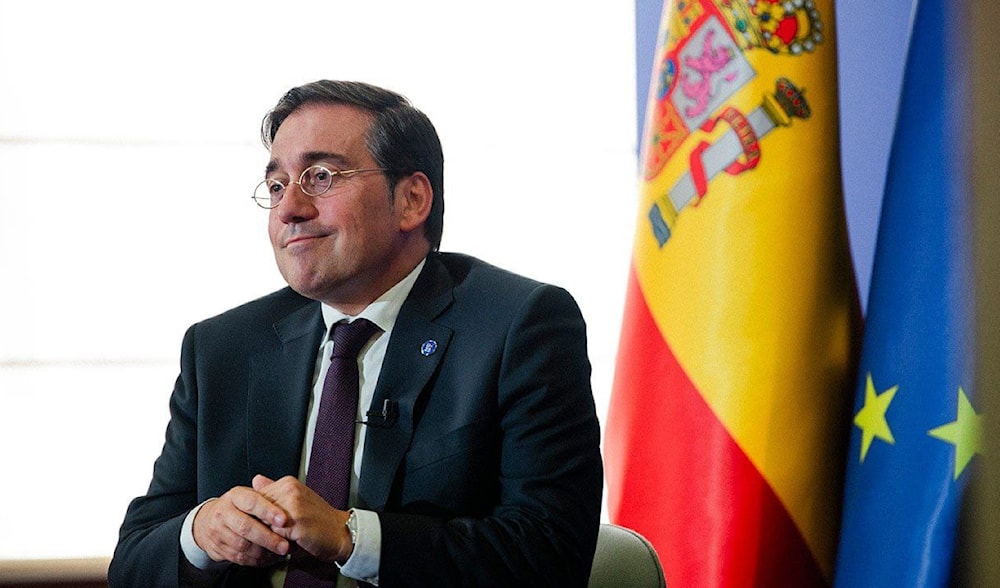
Spanish Foreign Minister Jose Manuel Alvarez on May 4, 2026. (Social media/X)
Spanish Foreign Minister José Manuel Álvarez reaffirmed on Tuesday Spain’s firm position against being drawn into any military confrontation in the region, stressing that Madrid will not participate in any military actions in the war against Iran.
Alvarez underscored that Spain continues to support diplomatic solutions and rejects escalation, emphasizing that international disputes should be resolved through negotiation rather than war.
Following his meeting with Pope Leo XIV at the Vatican, Álvarez said that the Spanish government and the Holy See share a common understanding of the need to resolve global crises through diplomatic means, firmly rejecting military action.
Concerns over religious freedom in al-Quds
Álvarez added that discussions with the Pope also addressed the situation of Christian communities in West Asia, particularly the challenges they continue to face amid rising regional tensions. He referred to reported instances of Israeli harassment, including restrictions affecting religious figures and access to holy sites in Al-Quds.
In detail, the conversation touched on incidents involving restrictions affecting the Latin Patriarch’s access to the Church of the Holy Sepulchre in occupied al-Quds, as well as an attack on a nun in the occupied city.
Álvarez stressed the importance of protecting religious freedom and ensuring that places of worship remain accessible without political or military restrictions.
Strait of Hormuz and regional security tensions
Addressing escalating tensions around key maritime routes, Álvarez stressed that a return to normal conditions in the Strait of Hormuz cannot be achieved through military action. He emphasized that regional stability can only be secured through dialogue and negotiation, rather than military escalation, warning that any alternative approach risks further destabilizing vital global energy and trade routes.
The Spanish Foreign Minister confirmed his country’s support for a return to negotiations involving Pakistan and Iran, noting that he had conveyed Spain’s position directly to Iranian Foreign Minister Abbas Araghchi two days earlier.
Madrid, he said, remains committed to diplomatic engagement as the primary path toward reducing regional tensions and preventing further escalation.
Warnings over regional, geopolitical escalation
Álvarez also cautioned against diverting attention from other ongoing regional crises, stressing that heightened focus on the Strait of Hormuz should not come at the expense of neglecting other matters.
He specifically pointed to the situation in Lebanon, which is facing illegal aggression, and underscored the need for a balanced international response to the multiple crises unfolding across the region.
Since the beginning of the Israeli-US aggression against Iran, Spanish officials have repeatedly voiced opposition to military escalation, maintaining their call for diplomatic engagement.
Álvarez's remarks have reportedly drawn political reactions from US President Donald Trump, who threatened to halt trade between the two countries following Spain’s stance. Spain, however, continues to insist that dialogue and negotiation remain the only viable path toward long-term stability in the region.


