
Starmer blames Trump, Putin for rising UK energy bills
 4 Min Read
UK Prime Minister Starmer says he is “fed up” with Donald Trump and Vladimir Putin’s global impact on energy prices, condemning continued Israeli attacks on Lebanon.
-
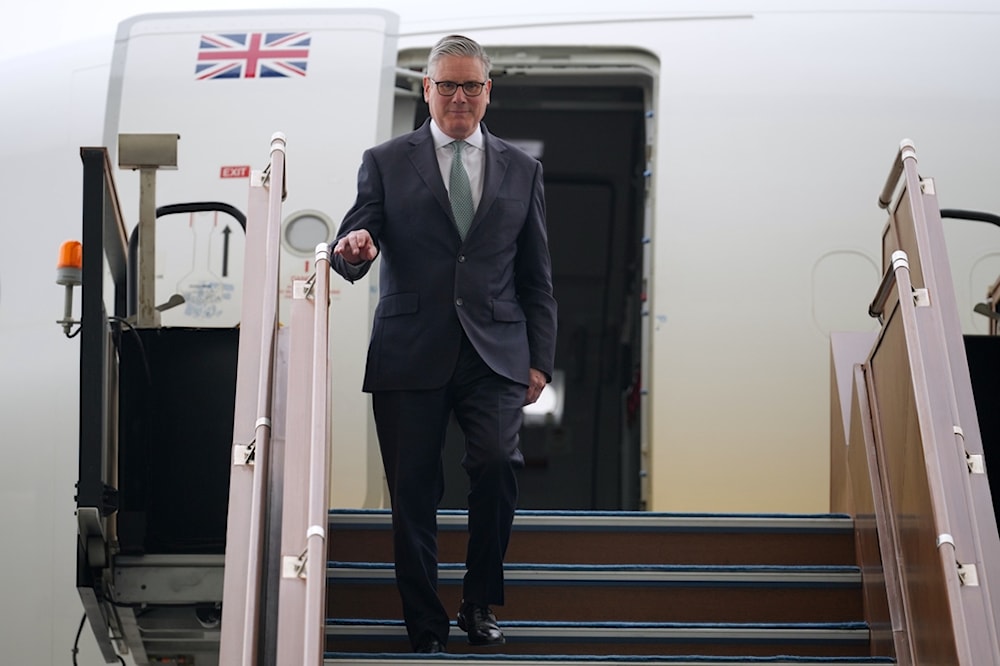
Britain's Prime Minister Keir Starmer leaves the airplane as he arrives at the airport in Abu Dhabi, United Arab Emirates, Thursday, April 9, 2026. (AP Photo/Alastair Grant, Pool)
UK Prime Minister Keir Starmer said he is “fed up” with the impact of global wars on British energy prices, singling out the actions of US President Donald Trump and Russian President Vladimir Putin as key drivers of volatility.
Speaking to ITV’s Robert Peston on Thursday, Starmer said British families and businesses were bearing the brunt of geopolitical instability, with energy bills fluctuating due to decisions taken abroad.
Starmer also appeared to condemn Israeli actions in Lebanon, criticizing continued Israeli attacks despite calls for the country to be included in the ceasefire agreed earlier this month. He stressed that the issue was not a technical debate over violations but a broader concern, stating that such attacks “should stop.”
He further emphasized his position in the interview, saying, “Let me be really clear about it: they’re wrong,” referring to the continued attacks on Lebanon.
Strait of Hormuz and the rise of transatlantic tensions
The UK prime minister also held talks with Trump on Thursday regarding the need to restore shipping through the strategically vital Strait of Hormuz following the ceasefire.
According to a Downing Street spokesperson, Starmer briefed Trump on discussions with Gulf leaders and military planners, stressing the urgency of ensuring "freedom of navigation" and advancing a coordinated international plan.
Both leaders agreed that, with a ceasefire in place and commitments to reopen the strait, the next phase would focus on implementing practical steps to resume shipping operations as quickly as possible.
In a piece published in The Guardian, Starmer said he wanted the UK to become less vulnerable to global shocks, arguing that previous governments had merely managed crises without addressing root causes. He described the Iran war as a turning point, stating it must serve as “a line in the sand” that would shape the country’s long-term approach to global instability.
Starmer’s remarks come amid growing strain in relations between European leaders and Trump following the US-Israeli war on Iran. The US president has publicly criticized several European figures, including French President Emmanuel Macron and Spanish Prime Minister Pedro Sánchez.
Trump has also mocked Starmer in recent weeks, including sharing satirical content portraying the British leader as weak, while questioning his leadership credentials.
Sánchez, one of the most vocal critics of the war, has faced threats from Trump over trade and US military access to Spanish bases, further highlighting deepening transatlantic tensions as the war reshapes global alliances.
UK seeks role in Iran ceasefire as Starmer visits Gulf
Prior to his statements, Starmer said he was traveling to the Gulf to discuss diplomatic efforts with regional leaders to support the temporary ceasefire between Iran and the US.
“I welcome the ceasefire agreement reached overnight, which will bring a moment of relief to the region and the world," Starmer said on Wednesday. “Together with our partners, we must do all we can to support and sustain this ceasefire, turn it into a lasting agreement, and reopen the Strait of Hormuz."
Starmer's visit was planned before the ceasefire announcement and comes as he faced increased pressure to limit the US' access to British airbases, following the US President Donald Trump's genocidal threat against Iran on Tuesday, in which he threatened that a "whole civilization will die" if Iran continues to utilize its leverage over the Strait of Hormuz.
Trump's comments were not criticized by Downing Street.
Read more: US no longer reliable ally, special ties must be dropped: UK advisor


