
Sudan’s RSF carried out ethnic cleansing in Darfur: Amnesty
 3 Min Read
Amnesty International reports that Sudan’s RSF carried out widespread abuses in El Fasher, including systematic attacks on civilians, forced displacement, and grave violations of international law.
-
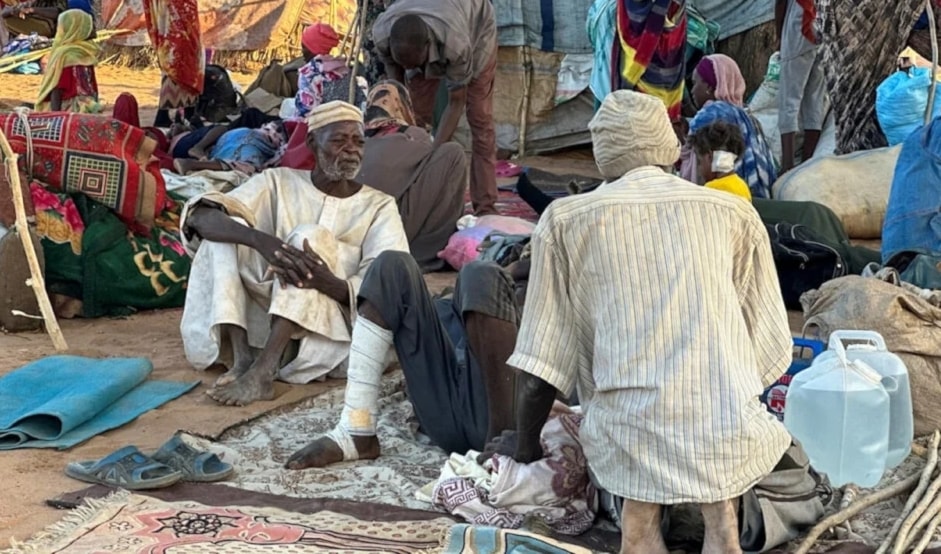
Displaced Sudanese who fled El Fasher after the city fell to RSF rest near the town of Tawila in the Darfur region (AP)
The Sudanese paramilitary Rapid Support Forces (RSF) committed crimes against humanity and engaged in ethnic cleansing during its offensive to seize El Fasher, Amnesty International has revealed.
In a report published on Wednesday, the human rights organization said many of the abuses, including murder, torture, rape, enslavement, and sexual slavery, were carried out as part of a widespread and systematic attack on civilians, rising to the level of crimes against humanity.
Amnesty further stated in the report that the RSF deliberately targeted children during assaults in El Fasher, located in North Darfur state.
Siege and capture of El Fasher
In October, the RSF captured El Fasher, the final stronghold of the Sudanese armed forces in the Darfur region, following an 18-month siege. The takeover was accompanied by extensive massacres, with tens of thousands of people reported killed.
In February, an independent United Nations fact-finding mission said the RSF’s seizure of the city showed “hallmarks of genocide” against non-Arab communities.
For its report, Amnesty International interviewed 247 people, including 208 survivors of the violence in El Fasher and surrounding areas. The organization also reviewed documentary and video evidence and conducted satellite imagery analysis covering North Darfur.
Amnesty concluded that the RSF committed war crimes in El Fasher and nearby areas between mid-2024 and late 2025. It found that "non-Arab civilians were frequently targeted and that RSF fighters repeatedly used derogatory and dehumanizing language during attacks."
The organization also determined that the RSF committed the crime against humanity of persecution on ethnic grounds.
Satellite evidence and destruction of communities
Satellite imagery documented widespread destruction in El Fasher. The human rights group said the RSF’s destruction of towns and villages between December 2024 and March 2025, including Abu Zeregan, was consistent with ethnic cleansing.
Amnesty reported that the violence orphaned large numbers of children and displaced hundreds of thousands of people. Many were exposed to death and injury either during attacks or while fleeing their homes.
Agnès Callamard, Secretary General of Amnesty International, said, “The war in Sudan is a war on civilians. The world was warned of the horrors that civilians in El Fasher confronted as the RSF laid siege to the city. It is a stain on the conscience of humanity.”
The report identified three RSF commanders it said were responsible for serious violations of international law: Maj Gen Gedo Hamdan Ahmed Mohamed, also known as “Abu Shok”, Lt. Col. Abbas Khater Bakhit, and commander Al-Fateh Abdullah Idris, also known as “Abu Lulu”.
Broader context of Sudan’s conflict
The Sudanese clashes began in April 2023 after a power struggle between the Sudanese armed forces led by Gen Abdel Fattah al-Burhan and the RSF, headed by Gen Mohamed Hamdan Dagalo, commonly known as Hemedti, escalated into war in Khartoum.
The war has killed hundreds of thousands of people and displaced many more.
Amnesty International has called for an immediate ceasefire and the urgent deployment of an international force to protect civilians.
Callamard urged stronger global action, saying, “The international community must move beyond statements of concern and take concrete steps to protect civilians, breaking the cycle of impunity.”


