
Syrian Army deploys in al-Jazira after deal with SDF
 3 Min Read
Syrian army units deploy across the al-Jazira region after a ceasefire and integration deal with the SDF, securing the Tishrin Dam, Deir Ezzor, and Raqqa.
-
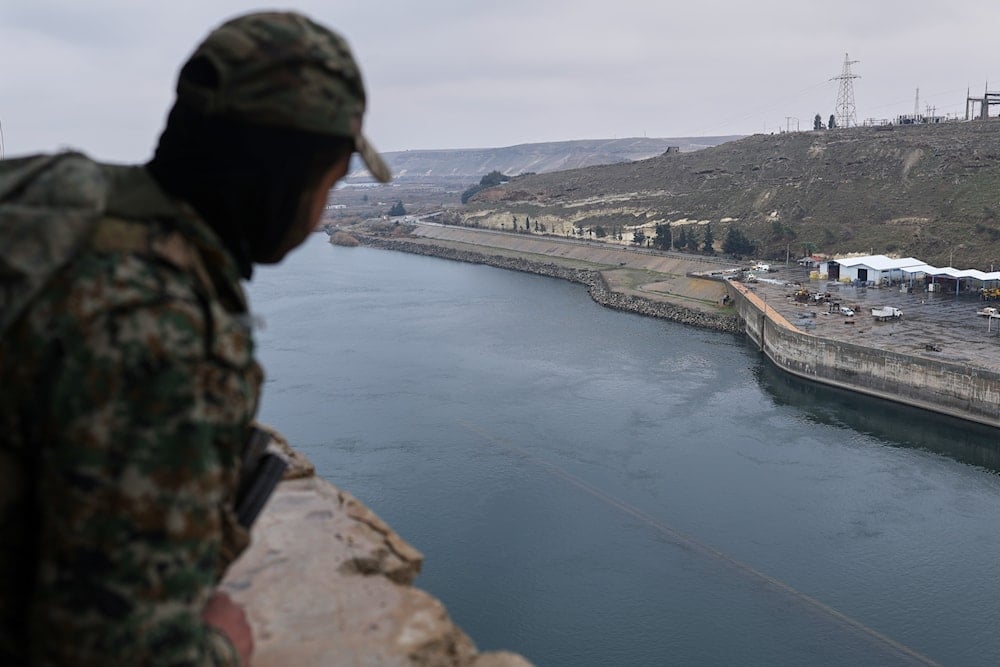
A Syrian government soldier looks out over the Euphrates Dam after government troops took control of the town from Syrian Democratic Forces during an ongoing push against Kurdish-led forces, in Tabqa, eastern Syria, Sunday, Jan. 18, 2026 (AP)
Syrian government forces have begun deploying across the al-Jazira region in northeastern Syria to secure the area under a newly signed agreement with the Syrian Democratic Forces (SDF), state media reported on Monday.
According to SANA, the army’s operations authority confirmed that troops have so far secured the Tishrin Dam, northern Raqqa countryside, and western Hasakah countryside. Civilians were urged to follow army directives and to limit movement in the region to essential travel only.
In parallel, army units have reopened several roads leading to the Tishrin Dam near Aleppo following their control of the dam south of Manbij, coinciding with the beginning of the SDF’s withdrawal from the area.
The Ministry of Interior also announced that its units have started entering the eastern Deir Ezzor countryside as part of a plan to systematically deploy in towns and villages, in line with the broader security strategy aimed at protecting civilians, property, and restoring stability.
Meanwhile, the Autonomous Administration of North and East Syria, according to Hawar News Agency, declared a general mobilization, accusing factions aligned with the Syrian interim government of violating agreements and launching attacks on SDF positions across multiple fronts.
Turkey welcomes SDF-Damascus agreement
Turkish security sources said on Monday that the integration agreement between the Syrian government and Kurdish forces represents a “historic turning point,” Reuters reported, noting that Turkish intelligence engaged in extensive contacts before its signing to ensure restraint on the ground.
The sources emphasized that the fight against the Islamic State in Syria will continue relentlessly and that establishing stability and security in Syria is crucial to Turkey’s goal of eliminating what it sees as "terrorism" within its borders.
They also confirmed that Turkish intelligence had been in communication with both the United States and the Syrian government ahead of the agreement’s conclusion.
Damascus, SDF reach implement ceasefire
No clashes have been reported between Syrian army forces and the SDF since Monday morning, following the implementation of a ceasefire announced on January 18 evening, after intense fighting around the Tishrin Dam earlier this month.
The agreement stipulates a ceasefire and the integration of SDF into Syrian state institutions, including civil bodies, as well as the incorporation of SDF members into the Syrian Ministry of Defense. It also covers the return of border crossings and oil and gas fields to Damascus’ control. Key provisions include the immediate administrative and military handover of Deir Ezzor and Raqqa to the Syrian government.
A cautious calm prevails across northern and eastern Syria, particularly in Raqqa, as the implementation of the agreement begins, following calls for restraint from interim President Ahmad Al-Sharaa.
The Syrian Observatory for Human Rights highlighted serious security concerns regarding the al-Aqtan prison, controlled by the SDF, warning that any security lapses could allow ISIS members to escape, as Ministry of Interior units prepare to deploy in the area.
In a separate development, a German government spokesperson confirmed that al-Sharaa has postponed his planned visit to Germany, citing Syria’s internal political situation as the reason.


