
Trump: Nothing reached with Netanyahu, Iran talks continue
 4 Min Read
Trump said no definitive agreement was reached with Netanyahu, emphasizing continued US-Iran negotiations while underscoring security concerns raised by "Israel."
-
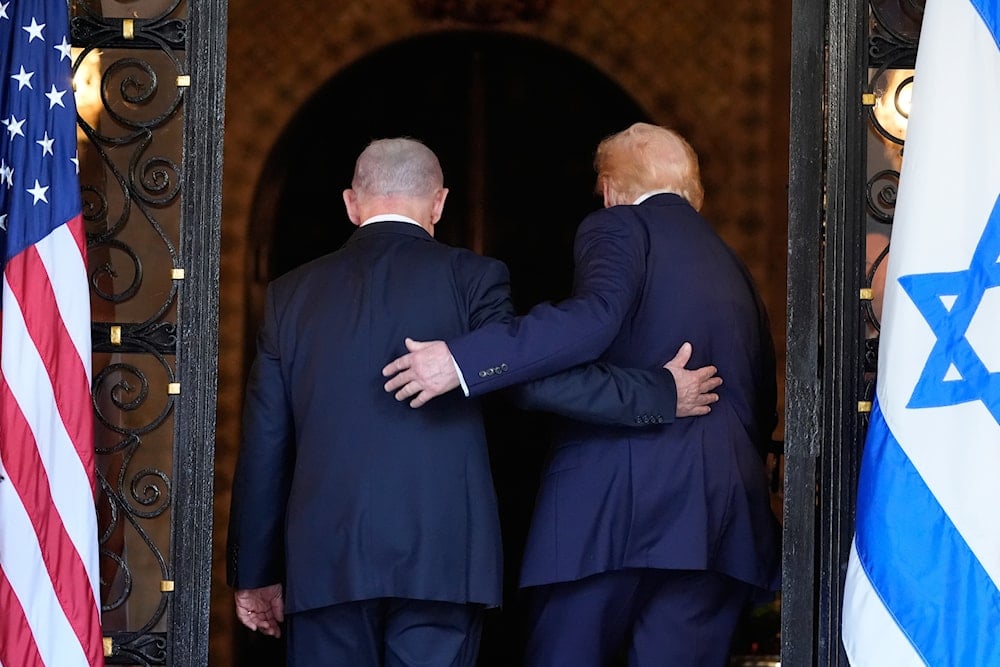
President Donald Trump and "Israel's" Prime Minister Benjamin Netanyahu walk arm in arm into Trump's Mar-a-Lago club in Palm Beach, Fla., Dec. 29, 2025. (AP)
Before departing Washington, Netanyahu stated that discussions with Trump would focus “first and foremost about Iran,” adding that he would present his principles for negotiations.
Netanyahu had previously expressed “general skepticism,” according to a statement issued by his office, stressing that any agreement must include elements that are critically important to "Israel", including Iran’s nuclear program, its ballistic missile program, and the “groups that operate as its proxies.”
These issues remain central to ongoing Israeli-Iran tensions, particularly as US officials signal interest in expanding the scope of talks beyond the nuclear file.
US President Donald Trump, on his part, said he had concluded talks with Israeli Prime Minister Benjamin Netanyahu, stating that discussions focused on continuing US-Iran negotiations and developments in Gaza and the broader region.
The meeting comes amid ongoing debate over the prospects of a Netanyahu-Trump-Iran agreement, as Washington and Tehran pursue indirect diplomatic engagement.
Trump insists on continuing US-Iran negotiations
In a post published on Truth Social following the meeting, Trump outlined the key points discussed, emphasizing that negotiations with Iran should continue.
"I have just finished meeting with Prime Minister Netanyahu, of Israel, and various of his Representatives. It was a very good meeting, the tremendous relationship between our two Countries continues. There was nothing definitive reached other than I insisted that negotiations with Iran continue to see whether or not a Deal can be consummated. If it can, I let the Prime Minister know that will be a preference. If it cannot, we will just have to see what the outcome will be. Last time Iran decided that they were better off not making a Deal, and they were hit with Midnight Hammer — That did not work well for them. Hopefully this time they will be more reasonable and responsible. Additionally, we discussed the tremendous progress being made in Gaza, and the Region in general. There is truly PEACE in the Middle East. Thank you for your attention to this matter!"
Is Trump’s Iran diplomacy a strategic bluff?
Some observers have drawn parallels between current diplomatic rhetoric and developments during the 12-day Israeli aggression on Iran in June 2025.
At that time, US and Israeli officials publicly suggested diplomacy was underway even as military strikes on Iranian nuclear sites were reportedly imminent. Israeli reporting later indicated that Washington and Tel Aviv projected a focus on diplomacy while preparing for escalation.
Critics now caution that Trump’s emphasis on negotiations may serve as a tactical maneuver aimed at influencing Iranian calculations, similar to previous episodes of public messaging ahead of military developments.
Netanyahu visit marked by protests and security measures
Netanyahu’s visit to Washington was accompanied by heightened security measures, according to Israeli media reports. Major roads were temporarily shut down, and a large Secret Service motorcade escorted him.
Demonstrations were reported near Blair House, where Netanyahu held meetings with Trump’s envoys before his scheduled talks at the White House.
Context: Ongoing US-Iran indirect talks
The Trump-Netanyahu meeting comes as Washington and Tehran engage in indirect negotiations mediated by Oman in Muscat. The first round of talks, held on February 6, was described by Iranian officials as a “good start,” with discussions limited strictly to the nuclear file.
Iranian Foreign Minister Abbas Araghchi emphasized that the talks did not extend to Tehran’s ballistic missile program or its regional alliances. Reuters also cited regional diplomatic sources confirming that missile capabilities were not addressed in the Muscat discussions.
US officials, however, have signaled interest in broadening the scope of negotiations to include Iran’s missile program and regional influence: a position Tehran has firmly rejected.
Israeli media, including Channel 12, reported that Gulf states have conveyed to Trump that “Israel” risks obstructing diplomatic momentum by pushing for confrontation with Iran. The outlet also suggested that Tehran continues to shape both the venue and framework of negotiations, strengthening its regional position.


