
Trump claims war on Iran ‘nearing end’ as ceasefire begins
 2 Min Read
US President Donald Trump states that the war on Iran is "nearing its end", a few hours after the ceasefire between Lebanon and "Israel" took effect.
-
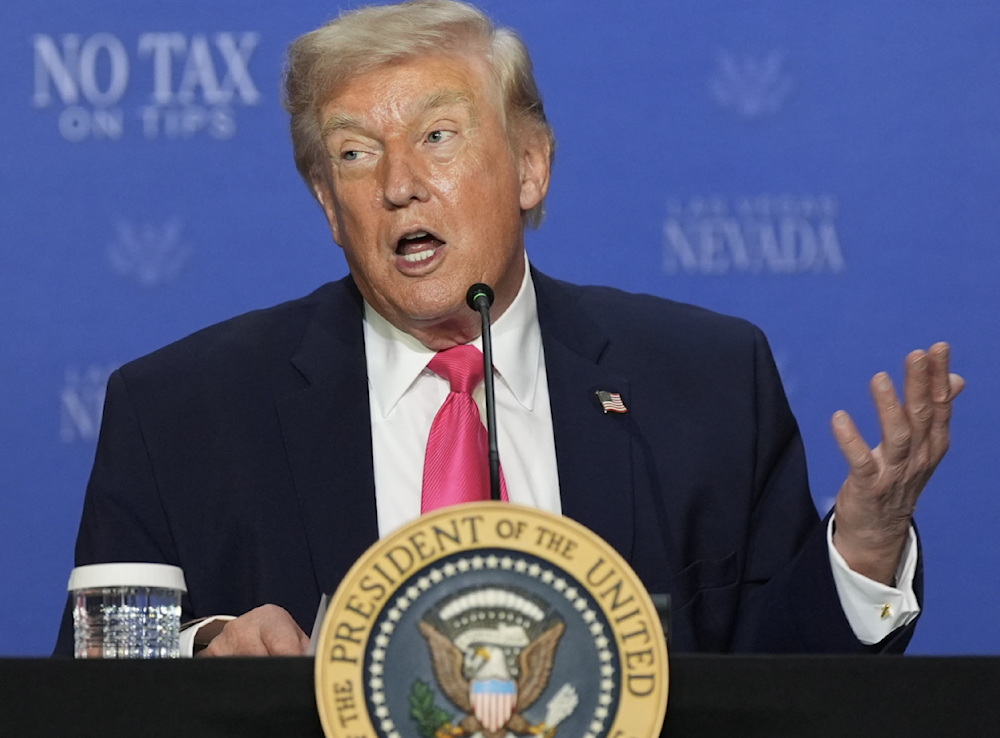
President Donald Trump speaks at a roundtable event about no tax on tips on April 16, 2026, in Las Vegas. (AP)
US President Donald Trump claimed that the war on Iran is “nearing its end,” describing the ongoing war on Iran as proceeding “swimmingly."
Speaking at an event in Las Vegas on Thursday, Trump said the war “should be ending pretty soon,” reiterating earlier claims made since the aggression began.
“It was perfect… we have the most powerful military anywhere in the world,” Trump asserted, portraying the bombing campaign as a strategic success despite mounting economic and human costs.
Trump also indicated that a second round of direct talks between US and Iranian officials could take place “probably, maybe, next weekend."
Iran and the United States have made some progress in efforts toward an agreement under Pakistani mediation, though significant differences remain more than halfway through a two-week truce, a senior Iranian official told Reuters on Thursday.
Contradictions between rhetoric and reality
While Trump framed the war as nearing resolution, the situation on the ground suggests a more complex reality. Iran has repeatedly stressed that any lasting ceasefire must include a halt to Israeli aggression on Lebanon, linking regional fronts together in ongoing negotiations.
A 10-day ceasefire between Lebanon and "Israel" took effect on Friday at 12 am, following sustained Iranian pressure linking any ceasefire agreement with the United States to a halt in Israeli attacks on Lebanon.
A senior informed Iranian military source told Al Mayadeen that Iran came repeatedly close to a return to confrontation during the course of efforts to end the war on Lebanon, with missile launch platforms prepared and ready.
At the same time, disruptions in energy markets, maritime routes, and regional stability continue to raise concerns about the broader economic and geopolitical consequences of the war.


