
Trump funding cuts pushing UN out of Geneva: Responsible Statescraft
 4 Min Read
US funding arrears and UN budget cuts are accelerating a structural shift in global governance, weakening Geneva’s role as the central hub of multilateral institutions.
-
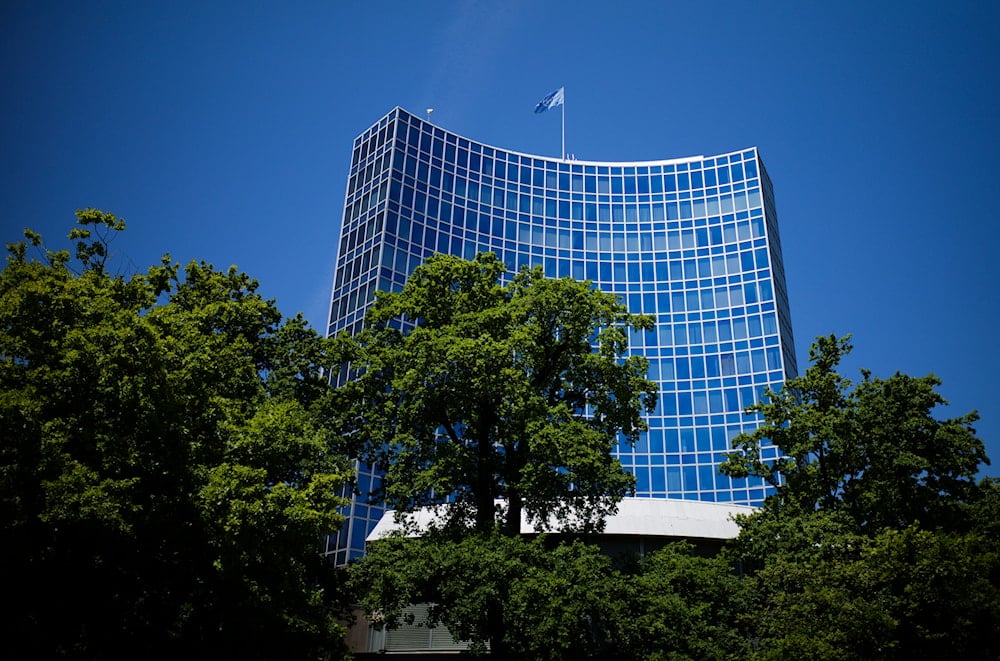
The United Nations flag waves in the wind on the top of a UN building in Geneva, Switzerland, on June 14, 2021. (AP)
A report by Responsible Statescraft on Monday stated that the World Health Organization (WHO) has cut hundreds of positions, while the UNICEF is shifting core administrative roles to Rome and Budapest, alongside other UN agencies that are also reducing staff or relocating parts of their operations abroad.
These developments contrast with the $1.2 billion renovation of the Palais des Nations in Geneva, which was intended to reinforce the city’s role as the center of the multilateral system. Instead, the international quarter appears to be undergoing a gradual contraction, as several UN bodies scale back their footprint and move key functions elsewhere.
At the same time, the United States, responsible for roughly a quarter of the UN’s regular budget, now owes approximately $2.2 billion, accounting for about 95% of all unpaid contributions to the organization.
The funding gap has intensified concerns about the stability of the UN system, signalling a broader structural decline in multilateral governance.
However, others argue that the crisis may instead be forcing overdue institutional change. According to the report, critics of the current model argue that US taxpayers have long subsidized a sprawling UN bureaucracy that lacks accountability and has drifted away from its founding mission.
Longstanding reform efforts and institutional inertia
Geneva has increasingly come to reflect a widening gap between international bureaucracies and the populations they are meant to serve. Within UN institutions, compensation structures, tax-free salaries, generous pensions, housing allowances in one of the world’s most expensive cities, business-class travel, and education grants covering elite international school fees of up to $45,000 per child have come to symbolize that divide.
Questions over efficiency have also emerged. A study of the UN High Commissioner for Refugees (UNHCR) estimated spending of about $600 per refugee annually, while education subsidies in Geneva alone can exceed the cost of supporting dozens of refugees for the same amount.
The scale of the international ecosystem in Switzerland underscores Geneva’s role as a global hub: around 40 international organizations employ more than 25,000 people in the country, most based in the Geneva region.
The World Health Organization (WHO) alone employs about 2,400 staff at its headquarters and operated on a $5.3 billion biennial budget for 2026–2027 before recent cuts, alongside other major institutions such as the International Labour Organization (ILO), UNHCR, and the World Trade Organization (WTO).
Amid mounting financial pressure, a memo from the UN Secretary-General’s office in April 2025 instructed Geneva and New York to identify posts for relocation to lower-cost duty stations. The proposal triggered strong pushback from staff unions in Geneva, including warnings of institutional destabilization and public demonstrations on International Workers’ Day in defense of local employment conditions.
A changing global order
The ongoing shifts suggest, however, a reconfiguration of multilateral influence rather than its disappearance. As decision-making authority gradually disperses beyond traditional hubs such as Geneva and New York, institutions may become more closely tied to operational environments and political realities on the ground.
Despite these changes, Responsible Statescraft argued, Geneva won't lose its diplomatic relevance entirely and is expected to remain a key venue for high-level negotiations and sensitive diplomatic engagement.
However, the center of operational multilateralism may increasingly shift elsewhere, toward field-based institutions, regional hubs, and states with growing capacity to shape global governance structures. According to the report, what emerges may not replace the UN system, but gradually redefine it: less centralized, more distributed, and more closely tied to the political and social realities it seeks to address.


