
Trump invites Turkey, Argentina, Canada to "Gaza Peace Council"
 3 Min Read
US President Donald Trump invites Turkey, Argentina, and Canada to join the so-called Gaza Peace Council as founding members, aiming to promote peace in the Gaza Strip.
-
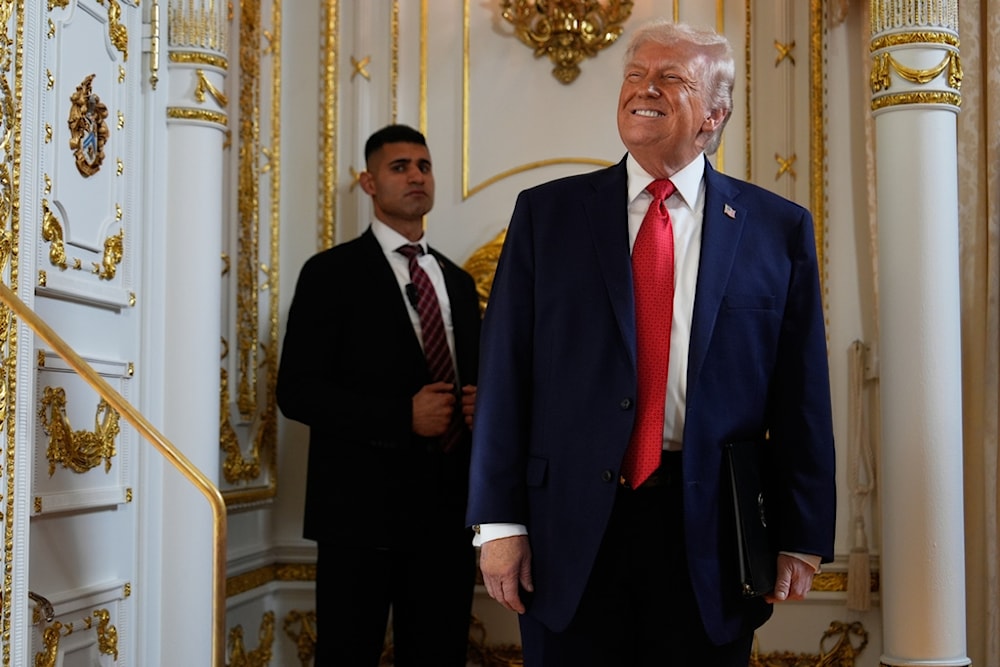
US President Donald Trump arrives at a dedication ceremony for a portion of Southern Boulevard, which the Town of Palm Beach Council recently voted to rename, "President Donald J. Trump Boulevard," Friday, January 16, 2026, at his Mar-a-Lago Club in Palm Beach, Florida. (AP Photo/Julia Demaree Nikhinson)
US President Donald Trump has formally invited Turkish President Recep Tayyip Erdogan to become a founding member of the so-called Gaza Peace Council, according to a statement released by Ankara on Saturday.
"On January 16, 2026, US President Donald Trump, as the founding chairman of the Peace Council, sent a letter inviting Turkish President Recep Tayyip Erdogan to become one of the founding members of the Peace Council," said Burhanettin Duran, head of the Turkish presidency’s communications department, in a post on X.
Birleşmiş Milletler Güvenlik Konseyi 2803 sayılı kararıyla, ABD Başkanı Donald Trump tarafından açıklanan Gazze İhtilafını Sona Erdirmek için Kapsamlı Planı (Comprehensive Plan to End the Gaza Conflict) desteklemeyi kararlaştırmıştır.
— Burhanettin Duran (@burhanduran) January 17, 2026
Bu çerçevede, Gazze'de güvenliğin…
Argentina and Canada Join the group
Trump extended the same invitation to Argentina, which was accepted by President Javier Milei. In a message posted on X, Milei wrote:
"It is an honor for me to have received tonight the invitation for Argentina to join, as a Founding Member, the Board of Peace, an organization created by President Trump to promote lasting peace in regions affected by conflict, starting with the Gaza Strip."
GRACIAS PRESIDENTE TRUMP @realDonaldTrump@POTUS
— Javier Milei (@JMilei) January 17, 2026
Es un honor para mí haber recibido esta noche la invitación para que la Argentina integre, como Miembro Fundador, el Board of Peace, una organización creada por el Presidente Trump para promover una paz duradera en regiones… pic.twitter.com/ORalzkzhlv
Canada also confirmed its participation in the council. According to The Globe and Mail, Canadian Prime Minister Mark Carney accepted Trump's invitation to become a founding member of the Gaza Peace Council, citing an unnamed source.
Gaza Peace Council Expands International Membership
The formation of the Gaza Peace Council is part of a broader initiative led by Trump, which he claims is intended to promote what he described as stability and long-term peace in the Gaza Strip.
The addition of Turkey, Argentina, and Canada seeks to legitimize this effort as a step toward establishing an internationally backed council under the guise of addressing ongoing challenges in Gaza.
In reality, the so-called Gaza Peace Council represents a form of neo-colonial governance, imposed externally under the pretext of stability while systematically undermining Palestinian self-determination. By positioning foreign powers at the center of Gaza’s political future, the council effectively legitimizes the structures of Israeli occupation and sovereignty over Palestinian land, marginalizing the voices and agency of Palestinians themselves.
Rather than facilitating genuine peace, it replicates historical patterns of external control in which powerful states dictate political outcomes for occupied peoples, normalizing foreign interference and weakening claims to national rights and liberation.
Palestinian resistance forces condemned the formation of this US backed initaitive, warning that it symbolizes an externally imposed structure that undermines Palestinian sovereignty. Leaders from resistance groups rejected the council as a political framework that seeks to sideline the will of the Palestinian people and advance foreign interests in the post-war governance of Gaza.
In November 2025, several Palestinian political movements issued a joint statement rejecting the international arrangements tied to a US-led UN resolution that proposed the establishment of a so-called Board of Peace. These factions warned that any attempt to enforce trusteeship or deploy international forces in Gaza without Palestinian consensus would violate national rights and risk deepening political fragmentation.


