
Trump announces Gaza 'Board of Peace' as phase two begins
 3 Min Read
US President Trump forms a Gaza “Board of Peace” to supervise post-war stabilization efforts.
-
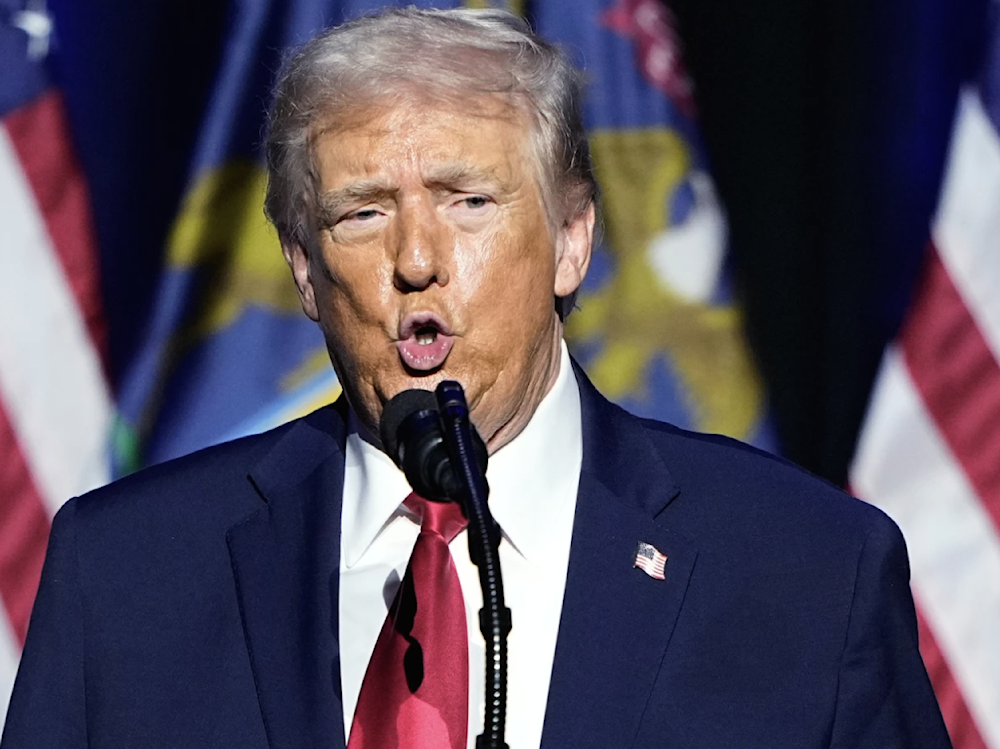
Pesident Donald Trump speaks at the Detroit Economic Club on January 13, 2026 in Detroit. (AP)
US President Donald Trump has announced the formation of a “Board of Peace” for the Gaza Strip, part of a broader 20-point plan to end the Israeli war on Gaza, shifting focus from ceasefire monitoring to reconstruction and what the US calls “demilitarization," according to a post by Special Envoy Steve Witkoff on X.
“It is my Great Honor to announce that THE BOARD OF PEACE has been formed,” Trump posted on Truth Social. “The members will be announced shortly.”
He described it as “the greatest and most prestigious board ever assembled,” and is expected to chair it himself.
Second phase of Gaza Peace plan confirmed
Trump confirmed the launch of the second phase, citing progress made since the ceasefire took effect in October and taking credit for what he called "Record" deliveries of humanitarian aid to Gaza.
"These results have set the stage for this next phase," he alleged.
As Chairman of the Board of Peace, Trump declared full support for the newly appointed Palestinian technocratic administration—the National Committee for the Administration of Gaza—tasked with overseeing daily governance during Gaza’s transitional period. The committee operates under the supervision of the board’s High Representative and is composed of Palestinian figures committed to a peaceful and secure future.
Trump reaffirmed his determination to disarm Hamas, with the backing of Egypt, Turkey, and Qatar, "including the surrender of ALL weapons, and the dismantling of EVERY tunnel. Hamas must IMMEDIATELY honor its commitments."
He threatened the Palestinian resistance that " they can do this the easy way, or the hard way."
Wider context
While Palestinian authorities and Palestinian Resistance movements, most notably Hamas, have fully respected the ceasefire since October, "Israel’s" daily violations continue to endanger civilians, block humanitarian aid, and exacerbate suffering amid Gaza’s cold winter and severe food shortages.
Earlier today, Hamas and local health officials reported hundreds of deaths, including children and the elderly, from collapsing bomb-damaged buildings, disease, and harsh conditions. At the same time, UNRWA warns of critical water shortages for forcibly displaced families.
The ongoing blockade has left international appeals largely unheeded, prompting calls for urgent action from the Arab League, OIC, and the broader international community.
These developments come as the United States announces Phase two of its 20-point plan, linking Gaza’s reconstruction and aid to “Hamas compliance, demilitarization, and the return of captives,” effectively framing relief efforts within a politically conditioned framework as the genocide continues.
Concerns for Gaza's future
The second phase of the ceasefire reportedly includes the withdrawal of the Israeli occupation forces from areas demarcated by the "red line", reconstruction efforts, and the potential deployment of an international stabilization force under a strictly defined mandate.
Hamas officials continue to stress that Palestinians will maintain responsibility for internal security and will not accept any foreign administration or occupation presence within Gaza.
Hamas leaders have also voiced strong opposition to external governance models proposed under the US-led peace plan. That plan, approved by the UN Security Council, envisions a foreign-led technocratic authority and security force to oversee Gaza during a two-year transitional period. Critics argue that such arrangements undermine Palestinian self-determination and risk entrenching permanent foreign control.


