
Trump mulls military strikes on Iran amid failed talks: Report
 4 Min Read
US President Donald Trump is reportedly considering airstrikes against Iranian leadership and nuclear sites after negotiations over Tehran's nuclear program failed to produce results, according to US media.
-
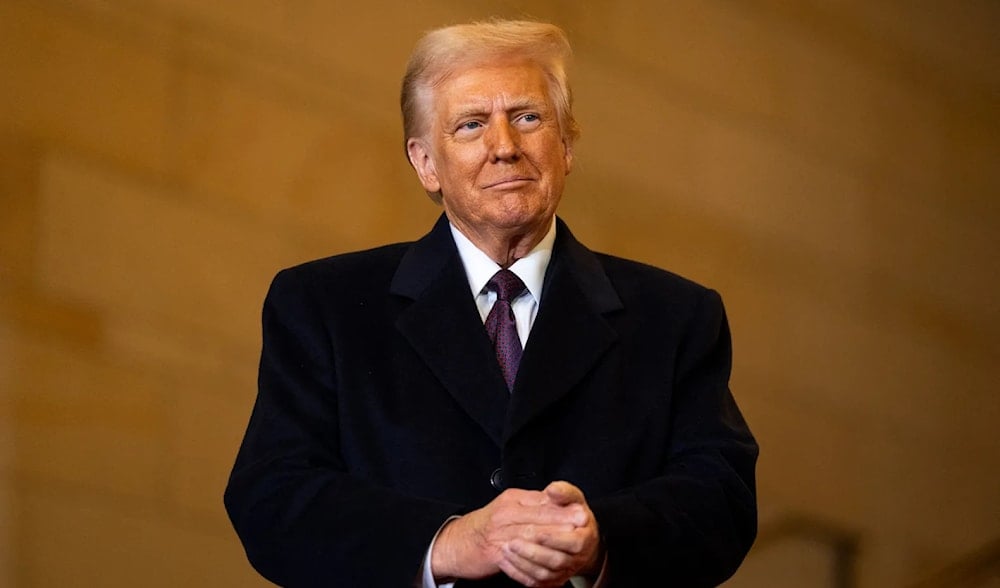
President Donald Trump waits to speak during inauguration ceremonies at the US Capitol in Washington, DC, on January 20, 2025. (AFP)
US President Donald Trump is reportedly weighing the possibility of launching military strikes against Iran, following the failure of recent talks aimed at curbing Tehran's nuclear activities, CNN reported, citing informed sources.
According to The New York Times (NYT), diplomatic efforts over the past week have failed to yield any significant progress in reducing tensions between Washington and Tehran. Iranian officials reportedly remain firm in their position, refusing to meet Trump’s demands concerning the nuclear program.
CNN's report outlines that among the options under consideration are airstrikes targeting Iranian leadership, security officials, nuclear infrastructure, and government institutions. These potential military actions are being deliberated as a direct response to Iran’s continued refusal to compromise.
Although Trump has not reached a final decision, sources indicate that the arrival of a previously deployed American strike group in the region may expand the scope of available military options. This development appears to be influencing ongoing discussions within the US administration.
The report adds that in the wake of Trump’s latest threats against Iran, there have been no substantial direct contacts between the two sides. The lack of communication further underscores the deteriorating state of US-Iran relations amid heightened regional tensions.
Iran prepared for aggression: Araghchi
In turn, Iranian Foreign Minister Abbas Araghchi reaffirmed Tehran’s preparedness to defend itself, declaring that Iran’s armed forces are fully alert and ready to respond “immediately and forcefully” to any military aggression.
He emphasized that Iran’s defense strategy has been strengthened by the lessons learned from the 12-day war on the country. "Our armed forces are ready, and their fingers are on the trigger," Araghchi wrote on X, warning against any miscalculation by adversaries.
Our brave Armed Forces are prepared—with their fingers on the trigger—to immediately and powerfully respond to ANY aggression against our beloved land, air, and sea.
— Seyed Abbas Araghchi (@araghchi) January 28, 2026
The valuable lessons learned from the 12-Day War have enabled us to respond even more strongly, rapidly, and… pic.twitter.com/kEuj0dmBaK
Despite rising tensions, Araghchi reiterated Iran’s openness to diplomacy, stating that Tehran still welcomes the revival of a nuclear agreement, but only on fair, balanced, and respectful terms.
He stressed that any new deal must ensure:
- Iran’s right to peaceful nuclear technology
- Freedom from coercion or threats
- A clear rejection of nuclear weapons
Trump sends 'Armada' to Iran
The report comes amid escalating regional tensions, including a significant deployment of US military forces toward Iran, with Trump asserting in a Tuesday interview with Axios that Tehran "wants a deal."
Trump’s remarks come amid reports that the USS Abraham Lincoln aircraft carrier strike group has entered the region, accompanied by F-15 and F-35 fighter jets, refueling tankers, and air defense systems. The deployment, viewed as a direct show of force, further escalates Washington’s aggressive posture toward Tehran. “We have a big armada next to Iran. Bigger than Venezuela,” Trump said, without specifying what military options are on the table.
According to Axios, the White House continues to threaten military action against Iran, while openly entertaining the possibility of regime change in Iran. “They want to make a deal. I know so. They called on numerous occasions,” Trump claimed, without offering any confirmation from Iranian sources.
Trump’s comments reflect the contradictions in US rhetoric, combining threats of overwhelming military force with vague claims of diplomatic outreach.
Washington's reported conditions for any agreement with Iran include:
- The removal of all enriched uranium
- A cap on long-range missile stockpiles
- An end to support for regional resistance movements
- And a ban on independent uranium enrichment
Tehran has repeatedly rejected such unilateral conditions, asserting its right to self-defense and sovereign policy-making.


