
Trump's 'buccaneer' Hormuz fee under fire amid faltering Iran strategy
 3 Min Read
An analysis by Chris Hughes for The Mirror argues Trump's 20 percent Hormuz fee reflects a lawless, chaotic approach to the US war on Iran, one that strengthens "hardliners" and widens the NATO rift.
-
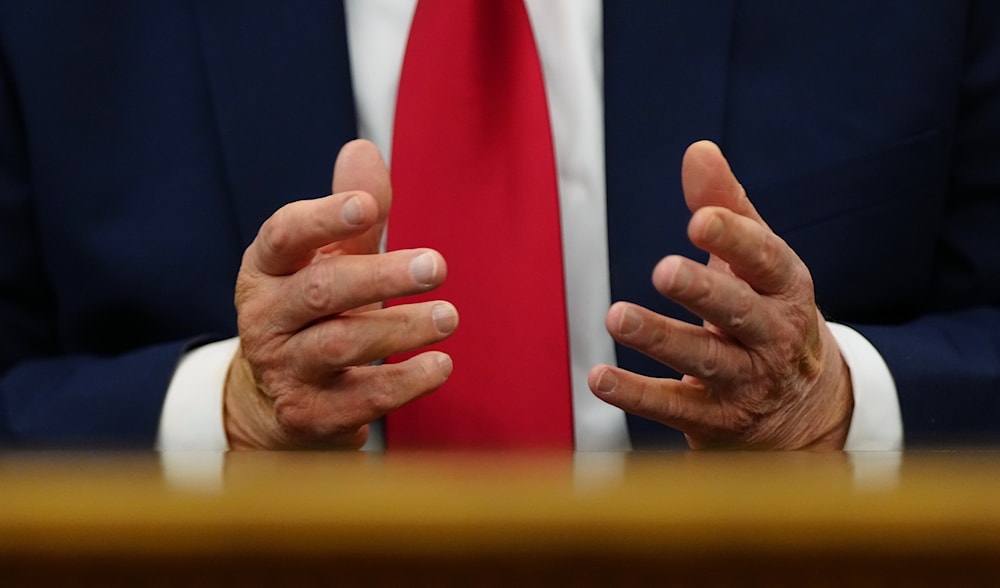
US President Donald Trump speaks after signing executive orders in the Oval Office of the White House, Monday, July 13, 2026, in Washington (AP)
The Trump administration's push to impose a 20 percent fee on vessels transiting the Strait of Hormuz reflects a broader disregard for international law and diplomatic norms in its handling of the US war on Iran, according to an analysis by Chris Hughes, defense and security editor for The Mirror.
Even German shipping giant Hapag-Lloyd called charging fees for passage through international waters "fundamentally wrong".
Hughes writes that the US president is "treating the Iran crisis like a high-seas buccaneer."
Hughes posits that the US-imposed measure on the Strait, set to take effect at midnight local time, will place immense pressure on Iranians already struggling for basic supplies. He notes the irony that many of those affected are the same people Trump promised in January that "help is on the way."
According to the analysis, "Bullying force and financial pressure" appear to be the only tools available to the US administration, and rather than achieving their intended effect, these measures are worsening the situation.
Hughes describes the administration's rhetoric and negotiating approach as "clown diplomacy", pointing to derogatory language directed at Tehran and what he says is an underqualified negotiating team.
'Hardliners' seen benefiting from escalation
Hughes argues that the continued escalation serves the interests of more "hardline" factions within Iran's leadership. He suggests the pressure campaign is likely to shift blame onto the camp of Iran's President Masoud Pezeshkian, allowing "hardline" elements to grow stronger.
From Tehran's perspective, the analysis suggests, the primary gain lies in the "humiliation of the US and its President."
Hughes frames the confrontation as a war of words Washington is losing, even as, in Hughes' view, Iran's military capacity is being degraded strike by strike, noting that Iran continues to demonstrate the ability to launch missiles and drones.
Economic toll, NATO rift highlighted
The analysis estimates the financial cost to the US and Gulf states, in offensive and defensive weapons alone, is "running into the hundreds of millions," with additional strain on Western economies more broadly.
Hughes also points to the recent NATO conference in Turkey as evidence of a widening rift between Washington and European allies, several of whom have shown reluctance to back the US war on Iran.
No resolution in sight
Hughes warns that the longer Washington delays reassessing its approach, "the worse the situation will become."
The analysis concludes that the only alternative to the current trajectory, a ground invasion aimed at toppling Iran's leadership, remains "unthinkable", and predicts the war could become "a grotesque stain" on the Trump administration regardless of how it is ultimately characterized.


