
NATO’s cracks widen as Turkey summit exposes Western bloc divisions
 4 Min Read
NATO leaders convene in Turkey as disputes over military spending, Ukraine, Syria, and US commitments expose growing divisions within the Western alliance.
-
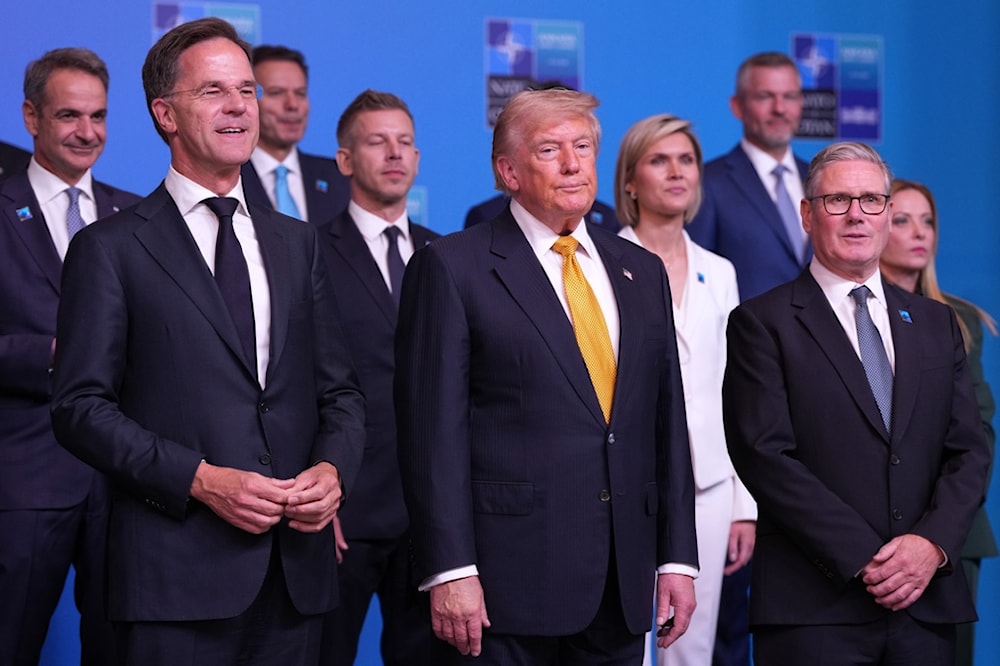
NATO Secretary General Mark Rutte, US President Donald Trump, and UK Prime Minister Keir Starmer during a group photo of NATO heads of state and government at the NATO summit in Ankara, Turkey, on July 8, 2026. (AP Photo/Francisco Seco)
As NATO leaders gathered in Turkey, the alliance faced mounting internal disagreements over military spending, continued support for Ukraine, relations with Syria, and Washington's long-term military commitments in Europe, underscoring growing strains within the Western bloc.
US President Donald Trump entered the summit after renewing pressure on NATO members to increase defense spending while signaling policy shifts on several contentious regional issues, including Türkiye's participation in the F-35 fighter jet program and the future of US sanctions on Syria.
The summit came as NATO continued to confront strategic disagreements among its members despite efforts to project unity.
Read more: NATO at a breaking point: Europe pushes back as US pressure mounts
Trump renews pressure on NATO defense spending
Military spending is expected to dominate discussions after Trump again demanded that NATO members raise defense expenditures to 5% of their gross domestic product.
Although alliance members previously agreed to increase defense spending to 3.5% of GDP by 2035, Washington has continued pressing European governments to commit additional resources while reducing their dependence on US military capabilities.
According to NATO figures, only five of the alliance's 32 members are projected to meet the 3.5% target this year.
NATO Secretary General Mark Rutte announced a series of new defense initiatives during the summit, including billions of dollars in military procurement agreements and expanded investments in drone capabilities and surveillance systems.
Türkiye's F-35 bid highlights disagreements
Relations between Washington and Ankara are expected to feature prominently after Trump indicated he is prepared to reconsider restrictions on Türkiye's participation in the F-35 fighter jet program.
The proposed policy shift has drawn opposition from members of the US Congress, who argue that Türkiye's continued operation of the Russian-made S-400 air defense system remains incompatible with the transfer of advanced US military technology.
Israeli Prime Minister Benjamin Netanyahu was also publicly opposed to supplying Türkiye with F-35 fighter jets or their engines, adding another point of contention surrounding Washington's policies.
Ukraine remains a central issue
The war in Ukraine also dominated summit discussions as Kiev continues urging Western countries to expand military support.
Ukrainian President Volodymyr Zelensky called for additional Patriot air defense missiles following recent Russian strikes, arguing that existing interceptor supplies remain insufficient.
Despite continued Western military assistance, divisions persist within NATO over the long-term direction of the conflict and future security guarantees for Ukraine.
Syria returns to the diplomatic agenda
Syria has also emerged as a key issue during the summit amid reports that Trump is expected to meet Syrian interim President Ahmad al-Sharaa.
The meeting comes as Washington reviews remaining sanctions imposed on Damascus following the coup that ended the rule of President Bashar al-Assad in late 2024.
Members of the US Congress have called on the administration to remove Syria from the US list of state sponsors of terrorism, arguing that the designation has become an obstacle to the country's reintegration into the international community.
US officials have confirmed that the designation remains under review, although no timetable has been announced.
The discussions also follow recent diplomatic engagement between Syria and several regional and European states, signaling a broader shift in international relations with Damascus.
US troop commitments fuel uncertainty within NATO
Questions surrounding Washington's military commitment to Europe resurfaced after Trump suggested the United States could reconsider its troop presence on the continent amid disagreements with Denmark over Greenland.
"There are around 80,000 US service members stationed across Europe," a presence that has long formed the backbone of NATO's military posture.
Trump's remarks have renewed concerns among European allies over the future of US security guarantees and Washington's willingness to use its military presence as leverage in disputes with alliance members.
Read more: FT poll: Most US voters say Trump’s war on Iran 'not worth the cost'


