
Trump's latest health report sparks renewed scrutiny
 4 Min Read
US President Donald Trump's latest medical report declared him fit for office, but physicians and analysts say several aspects of the evaluation continue to raise questions.
-
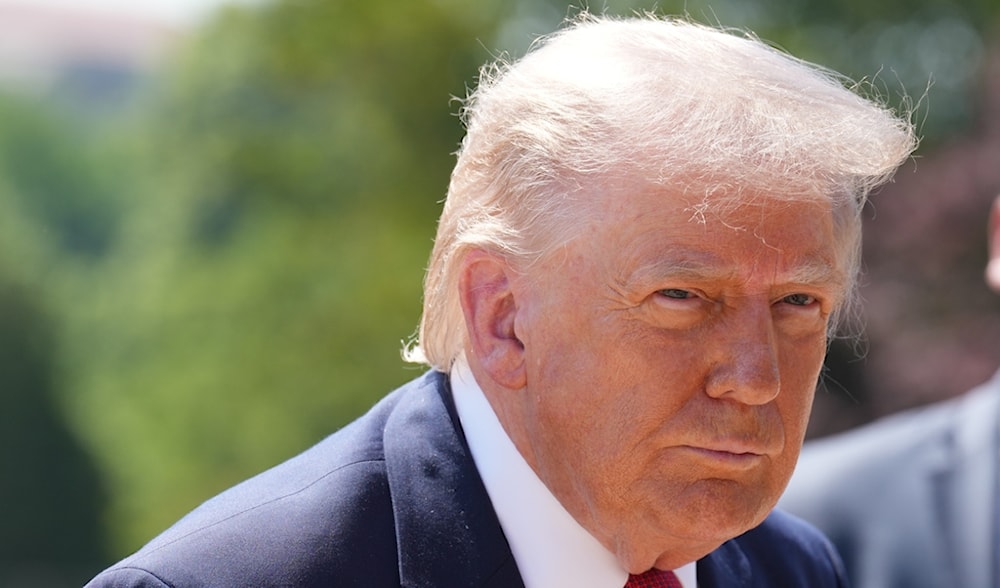
United States President Donald Trump tours Ballroom construction around the outside the White House, on May 19, 2026, in Washington. (AP)
United States President Donald Trump's latest medical evaluation has renewed debate over presidential transparency and health disclosures, with medical experts raising questions about aspects of the report despite the White House declaring the president to be in excellent condition.
Late Friday, the White House released a three-page memorandum summarizing Trump's visit to Walter Reed Military Medical Center earlier in the week. The report, prepared by White House physician Sean Barbabella, concluded that Trump remains "in excellent health" and is "fully fit" to carry out the duties of the presidency.
According to the memorandum, Trump, who turns 80 later this month, demonstrated "strong cardiac, pulmonary, neurological and overall physical function." The report claimed that bruising on the president's hands is linked to frequent handshaking and aspirin therapy, while noting that mild swelling in his lower legs has improved since last year.
The evaluation also included an AI-assisted electrocardiogram assessment that reportedly estimated Trump's cardiac age to be approximately 14 years younger than his actual age. Physicians advised the president to continue low-dose aspirin therapy, increase physical activity, and lose weight. The report listed his weight at 238 pounds, an increase of 14 pounds compared with his April 2025 physical examination.
The White House said the findings reflected testing conducted over the past year and consultations with 22 medical specialists. Trump was diagnosed with chronic venous insufficiency last year after experiencing mild swelling in his lower legs.
Experts question unanswered issues
While the report presented a positive assessment of Trump's overall health, several medical experts argued that it left important questions unanswered.
Jonathan Reiner, a cardiologist who previously treated former Vice President Dick Cheney, said the report did not clarify why Trump has undergone repeated cardiac CT scans during recent checkups or whether concerns regarding fatigue and daytime sleepiness had been evaluated.
Other physicians and commentators questioned the report's reference to a "cardiac age" younger than Trump's actual age, arguing that such descriptions are not standard diagnostic findings.
Bob Wachter, chair of the Department of Medicine at the University of California, San Francisco, noted that physical examinations are typically conducted annually and described Trump's latest visit as unusual if no new medical concerns had emerged. Wachter also questioned the rationale for prescribing aspirin and two cholesterol-lowering medications despite reportedly favorable cardiovascular test results.
Health disclosures remain politically sensitive
The latest examination was Trump's fourth publicly acknowledged medical checkup since beginning his second term. The president later highlighted his performance on a cognitive assessment during the visit, stating that he had scored highly on the test.
Questions surrounding Trump's health have persisted for years, dating back to his first presidential campaign when he released limited medical information. During the 2024 election campaign, Trump pledged to make his medical records public but ultimately did not release them, making him an exception among recent presidential candidates.
Trump, who became the oldest person ever inaugurated as president after his January 2025 return to office, frequently criticized former President Joe Biden's age and fitness during the election campaign.
The latest medical report has once again placed presidential health disclosures at the center of public debate, highlighting the tension between a president's right to medical privacy and public demands for transparency regarding the health of the nation's commander-in-chief.
Read more: Experts raise concerns over Trump’s cognitive, behavioral decline


