
Trump’s Latin America policy marks Rubio’s strategic return: FT
 4 Min Read
US President Donald Trump’s Latin America policy has revived the Monroe Doctrine, with Marco Rubio pushing a strategy of intervention and US dominance in the region.
-
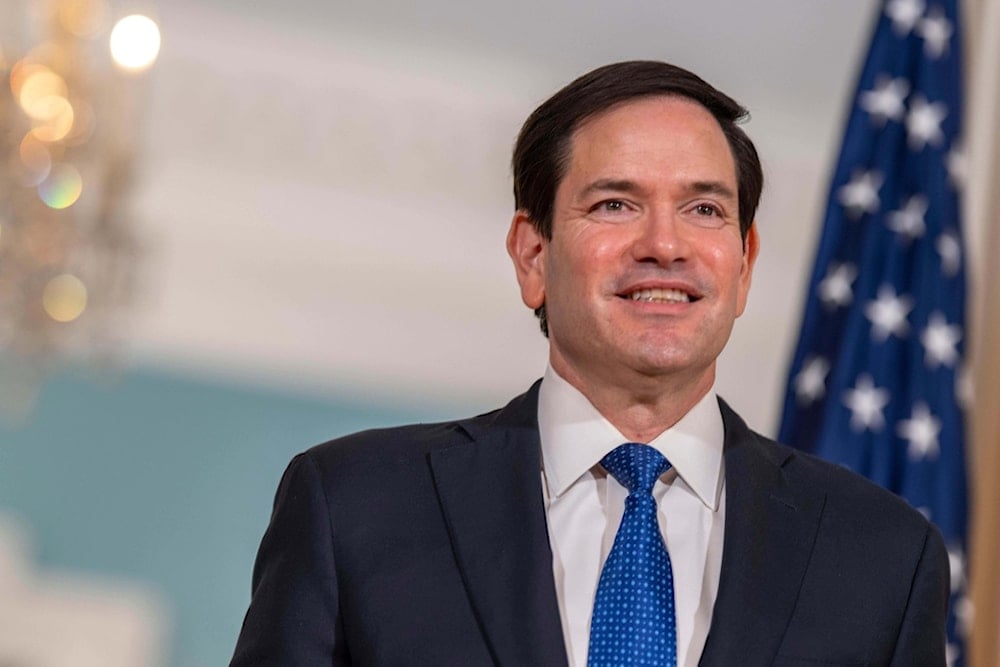
US Secretary Marco Rubio meets with Belgian Foreign Minister Maxime Prévot at the State Department, Tuesday, January 6, 2026 in Washington. (AP Phoro/Kevin Wolf)
In the press conference following the kidnapping of Venezuelan President Nicolás Maduro from Caracas, US President Donald Trump joked that the Monroe Doctrine should be renamed the Donroe Doctrine.
The quip was more than a rhetorical flourish; it marked a shift from the 19th-century principle of keeping external powers out of the Western Hemisphere to one focused on restoring what Trump described as “American dominance in the western hemisphere,” President of the New America think-tank and contributing editor for the Financial Times, Anne-Marie Slaughter highlights.
Slaughter states that dominance, in practical terms, begins with control over regional resources, highlighting that, in Venezuela's case, it means oil.
Trump noted that US oil companies would rebuild infrastructure and reap profits for the country, making sure to leave out capital gains for the companies as well. Slaughter highlights that the US president framed the move not as opportunism, but restitution, stating Venezuela's nationalization of US oil assets is "one of the largest thefts of American property" in the nation's history.
The FT contributing editor says, however, that this position directly contradicts the act of state doctrine, a legal principle asserting that “courts of one country will not sit in judgment on the acts of the government of another, done within its own territory.” First upheld by the US Supreme Court in 1897 in a case involving a Venezuelan general, the doctrine was reaffirmed in 1964 regarding Cuba’s expropriation of US sugar assets. In both cases, even amid political tensions, Washington discouraged judicial review.
Read more: Trump defends Maduro capture, touts oil gains, delayed elections
Right currently building regional networks
According to Slaughter, that era is gone, stating that if the Cuban government collapses, through internal change or outside pressure, dozens of US companies and Cuban-Americans are likely to file legal claims for restitution. She adds that this time, the White House will not stand in their way, stating that the shift is not only Trump’s doing, but it also reflects the ideological posture of his Secretary of State, Marco Rubio, the first Latino to hold the post.
Rubio, the son of Cuban immigrants, sees Miami as the financial hub of Latin America. The city is home to exiled elites who lost fortunes to nationalization policies carried out by leftist governments across the region. For Rubio, Slaughter says that reviving the Monroe Doctrine is about more than geopolitics; it is about reversing historical losses and reclaiming property taken by governments his allies regard as illegitimate.
While Latin America’s left once built regional networks through unions, forums, and alliances, the right is now building its own. This time, however, Slaughter says that the bloc is made up not of military regimes but business elites. The Trump-Rubio vision is of a Western Hemisphere anchored in capitalism, enforced by US leadership, and promoted as a model for a new era of hemispheric order. It is a message carefully crafted to appeal to both corporate America and growing segments of Latino voters.
Still, the reaction across the Americas is not simple. The FT contributing editor says that many governments see the global order as already skewed in favor of the powerful. Others, facing the stagnation of regional institutions, may publicly denounce US intervention while quietly accepting, or even celebrating, Maduro’s fall.
Rubio’s long-held vision includes the return of displaced elites with transnational assets and ambitions, Slaughter writes. But such a transformation would require dismantling entrenched power structures. She further states that the current beneficiaries of nationalized property are unlikely to surrender it easily, adding that the path ahead is likely to be marked not by smooth transition, but by struggle and instability.
Read more: Iran, Cuba, condemn US aggression and discuss closer ties


