
Trump's US counterterrorism chief resigns over Iran war
 3 Min Read
Joe Kent resigns as head of the US National Counterterrorism Center, condemning the war on Iran and citing pressure from "Israel".
-

Joe Kent speaks at a campaign event on 5 October 2022 in Morton, Washington. (AFP)
Joe Kent, who has served as director of the United States National Counterterrorism Center since July 2025, announced his "immediate" resignation on Tuesday in a social media post on X, sharply criticizing Donald Trump's war on Iran.
He emphasized that he “cannot in good conscience support the ongoing war in Iran,” asserting that pressure from "Israel" and its influential American lobby helped drive Washington into the conflict.
-
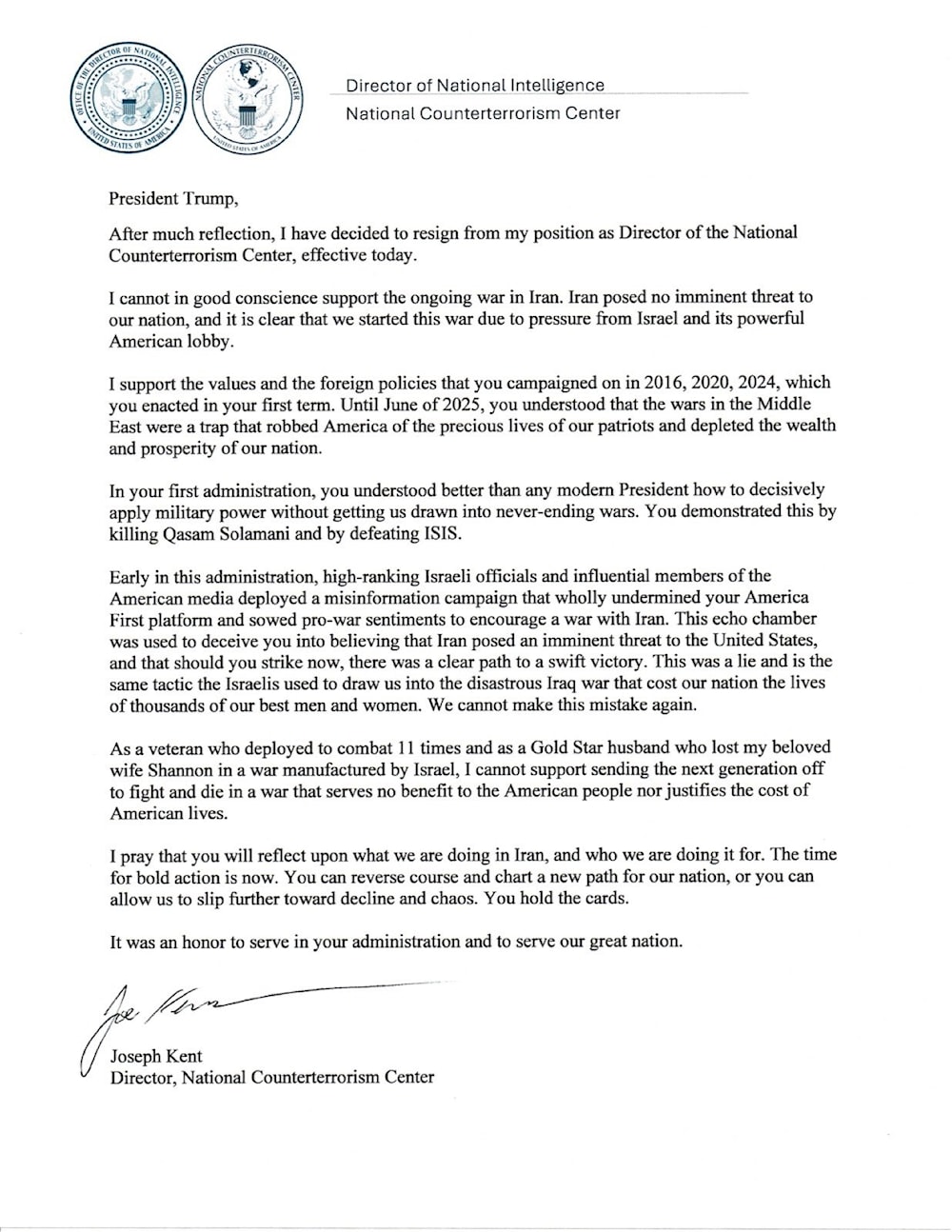
Joe Kent's resignation letter posted on his personal X account @joekent16jan19
This move made Kent the highest‑ranking official in President Donald Trump’s administration to resign over the war on Iran.
Kent’s departure underscores growing dissent within parts of the US national security establishment over the justification and prosecution of the war, which began in late February with coordinated US. and Israeli strikes against Iran. Critics of the campaign have questioned whether legal standards requiring an imminent threat were met before hostilities commenced.
Before his resignation, Kent led the NCTC, an agency under the Office of the Director of National Intelligence responsible for analyzing domestic and international terrorism threats. His tenure in the role was marked by internal debate over US foreign policy priorities, including counterterrorism strategy and the expansion of military operations in the Middle East.
The White House and intelligence leadership have not yet issued official comments on Kent’s resignation or its implications for ongoing operations related to the Iran conflict.
Trump was warned US war on Iran would strengthen its leadership
US intelligence officials have said that US strikes on Iran could ultimately strengthen the country’s leadership, even as Washington pressed ahead with military action.
Several analysts told The Washington Post (WP) that a "weakened but more hardline" government would likely consolidate power. The assessment suggested that Iran’s leadership, under Sayyed Mojtaba Khamenei, would continue to work closely with the Islamic Revolution Guard Corps (IRGC).
Sources said US President Donald Trump received “very sobering briefings” ahead of authorizing the strikes, including warnings that the IRGC would likely emerge stronger. “It wasn’t just predictable,” sources told the newspaper. “It was predicted. He was told in advance.”
Despite intelligence assessments casting doubt on changing Iran's leadership, US and Israeli forces have continued their aggression, spreading unrest across the region.
Read more: US intel warned Trump: Iran regime change 'unlikely'


