
Tunisian lawmaker sentenced to 8 months for criticism of president
 2 Min Read
Tunisian MP Ahmed Saidani sentenced to eight months in prison for criticizing President Kais Saied on social media amid ongoing concerns over freedoms.
-
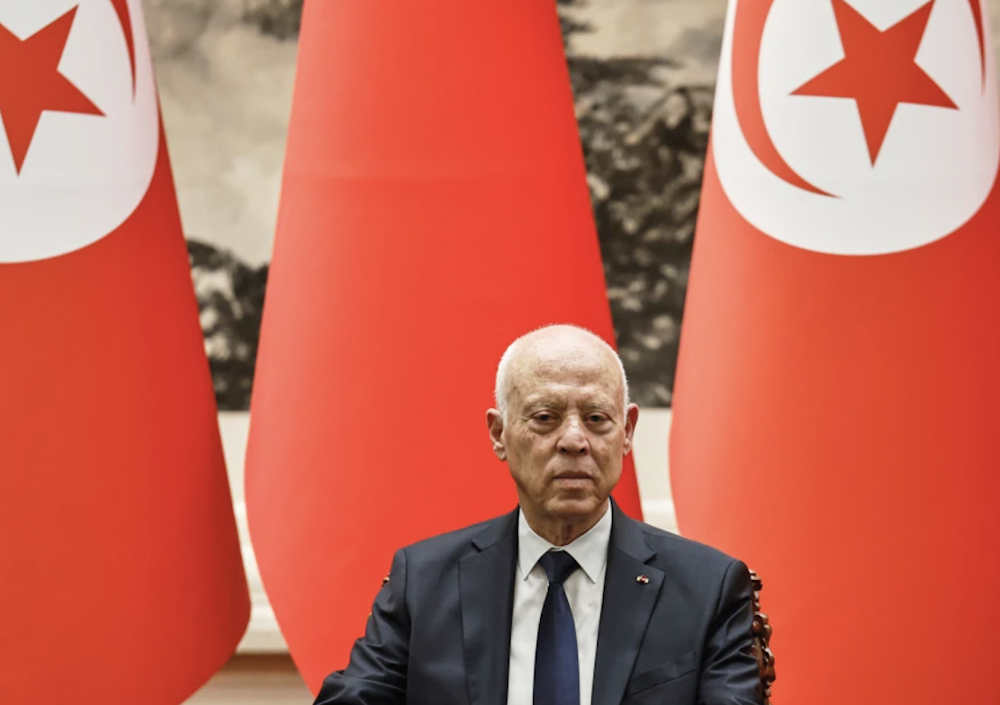
Tunisian President Kais Saied attends a signing ceremony in Beijing on May 31, 2024. (AP)
A Tunisian court has sentenced lawmaker Ahmed Saidani to eight months in prison after he criticized President Kais Saied in a social media post following recent deadly floods, according to local media reports.
Early this month, Tunisian police arrested Member of Parliament Ahmed Saidani after he publicly mocked President Kais Saied. The arrest was seen by opposition figures and rights groups as part of an escalating campaign against critics of the Tunisian president.
Saidani criticized president online
According to the sources, Saidani had posted a sarcastic comment on Facebook on Tuesday, referring to President Saied as the “supreme commander of sanitation and rainwater drainage,” mocking his performance in office.
Saidani is widely known for his outspoken criticism of Saied, particularly regarding the president’s failure to deliver on promised reforms or national achievements.
Prosecuted under telecommunications law
Saidani’s lawyer, Houssem Eddine Ben Attia, told AFP that his client was prosecuted under a telecommunications law that criminalizes “harming others via social media,” an offense punishable by up to two years in prison.
The case comes amid growing concerns from rights organizations over what they describe as a shrinking space for dissent in Tunisia.
Notably, Saidani had previously supported Saied’s power grab and the arrest of opposition figures but has recently become openly critical of the president.
Broader context of judicial crackdowns
The incident comes amid a broader crackdown on opposition voices and dissidents. In January, a Tunisian appeals court upheld a 22-year prison sentence against Rached Ghannouchi, the head of the Ennahda movement and former parliament speaker, in what is known as the “Installingo” case.
Tunisian authorities have faced growing criticism for what rights groups describe as the weaponization of the judiciary to silence political opposition and intimidate public figures.
Since seizing sweeping powers in 2021, President Saied has faced criticism for rolling back freedoms and prosecuting dozens of critics, often under terrorism-related charges or a 2022 law criminalizing the "spreading of false news."


