
UAE bars Iranian nationals from entry, transit
 4 Min Read
Despite the entry ban, some golden visa holders and family members remain exempt.
-
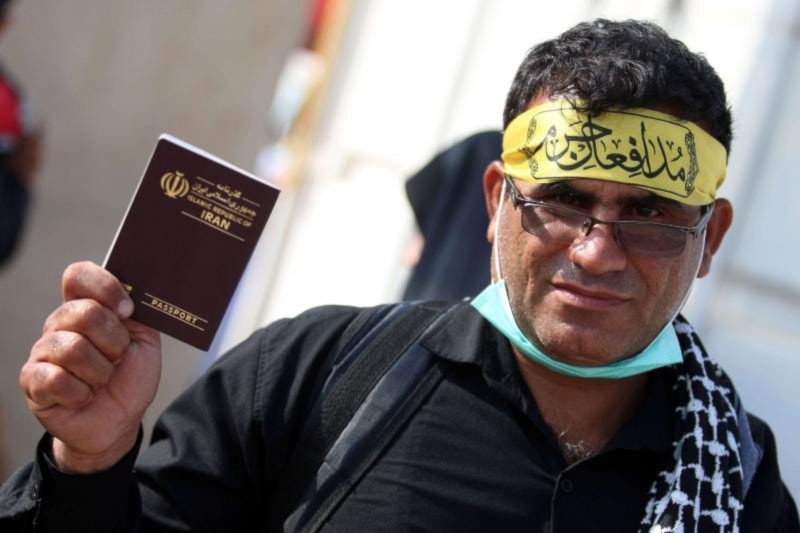
An Iranian flashes his passport while passing through a border crossing in the Iraqi city of Basra, undated (AFP)
Dubai-based carrier Emirates confirmed Tuesday that Iranian nationals are not allowed to enter or transit through the United Arab Emirates, the Wall Street Journal reported. The airline did not provide a reason for the restriction in its official notice.
The announcement, published on Emirates’ website, highlights the sudden implementation of the travel ban affecting Iranian travelers. Authorities have not clarified whether this decision is temporary or indefinite.
An earlier notice indicated that certain groups are exempt from the ban. These include Iranian golden visa holders, senior professionals, athletes, and family members of UAE citizens. These travelers are still permitted to enter the country despite the broader restriction.
Emirates’ statement did not explain the rationale behind barring Iranian nationals from entry and transit. The development comes amid ongoing tensions and strained relations in the region.
This comes as Iranian Foreign Minister Abbas Araghchi said yesterday that Iran does not want to attack their neighbors in the Gulf and only targets American bases and assets to defend itself. "Building trust with neighboring countries may face challenges in the future, but we are confident that it can be restored," he said.
No one could have predicted scale of Iran's response: US official
The scale and intensity of the Iranian retaliatory strikes on US-linked targets in the neighboring countries took regional actors by surprise, particularly given the diplomatic engagement prior to the outbreak of the war, ABC News reported.
The UAE, like other Gulf states hosting US bases and assets in the region, had its own share of strikes, especially since several deadly strikes were launched from US bases in the emirates.
“I don't think anyone, including the UAE, could have predicted the scale by which Iran would target the UAE,” a senior US official said, leaving out the detail that Iran is striking military US assets and installations in the region.
Among the incidents cited by ABC News, a suspected drone strike damaged the US consulate in Dubai in the early days of the war, though no casualties were reported.
"... the scale of it, the way Iran targeted the UAE, was something that was not necessarily expected to this level,” the official added.
It should be noted that the Iranian forces explicitly mentioned that their operations in the Gulf are aimed at disabling US radar networks and logistical systems, targeting US bases.
Iran demands compensation from UAE over role in US strikes
Regarding strained relations, earlier this month, Iran formally called on the United Arab Emirates to provide compensation for damages resulting from recent US strikes, saying Abu Dhabi facilitated attacks on Iranian territory, according to a letter submitted to the United Nations.
In a correspondence addressed to UN Secretary-General Antonio Guterres, Iran’s UN Ambassador Amir Saeid Iravani said the UAE had enabled the United States to use its territory to carry out military operations against Iran.
Iravani stated in the letter that the UAE’s actions constituted “an internationally wrongful act that entailed state responsibility,” stressing that allowing foreign forces to launch attacks from its soil violated international law.
The Iranian envoy underscored that such conduct directly contributed to the aggression against Iranian territory, holding the UAE accountable for its alleged role in enabling the strikes. Tehran argued that the UAE bears international responsibility to provide full reparations, including compensation for both material and moral damages caused by the attacks.
The letter reflects Iran’s broader push to pursue legal and diplomatic avenues in response to US military aggression in the region, while also signaling a warning to regional states against facilitating foreign aggression targeting Iranian sovereignty.


