
UAE diplomat Lana Nusseibeh emerges as UN chief contender
 5 Min Read
UAE diplomat Lana Nusseibeh is being considered as a potential successor to UN Secretary-General António Guterres, whose term ends in December 2026.
-
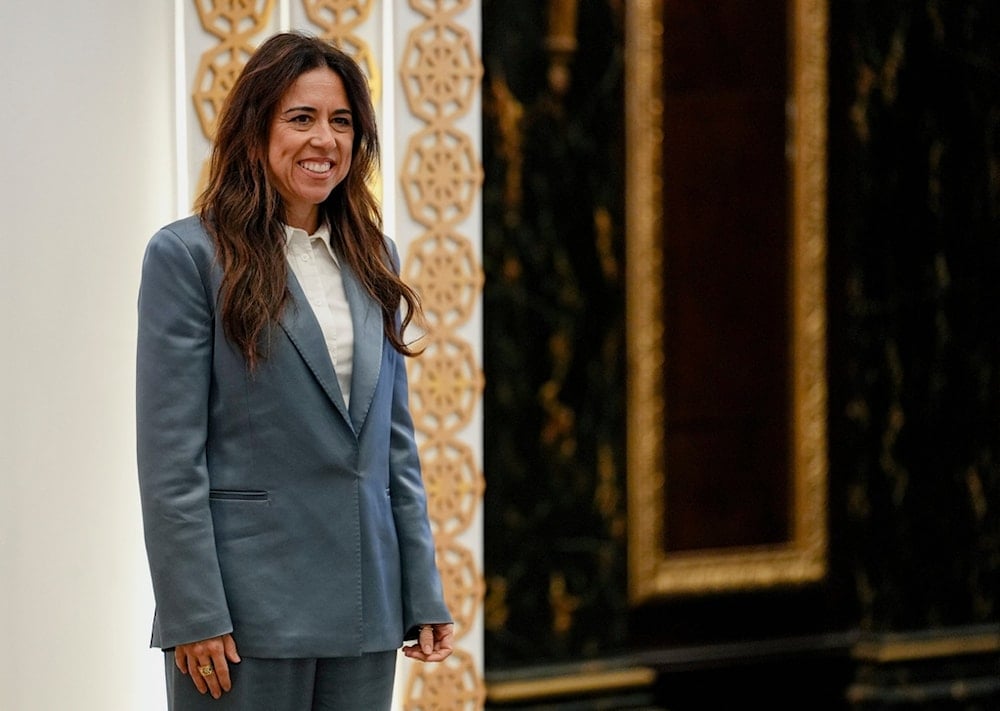
Minister of State at the Ministry of Foreign Affairs of the United Arab Emirates Lana Nusseibeh attends a meeting with foreign ministers of the Gulf Cooperation Council member states in Manama, Bahrain, June 25, 2026 (Eric Lee/Pool Photo via AP)
Emirati Minister of State Lana Nusseibeh is being considered as a potential candidate to succeed UN Secretary-General António Guterres, whose second term ends on December 31, 2026, according to the Financial Times.
Nusseibeh, who currently serves at the UAE Ministry of Foreign Affairs, could enter the race as early as next week, the report said. She previously served as the UAE's ambassador to the United Nations from 2013 to 2024.
Who is competing for the UN's top post?
Nusseibeh could join a field that includes Rebeca Grynspan, a former vice-president of Costa Rica who heads the UN Conference on Trade and Development, and Rafael Grossi, director-general of the International Atomic Energy Agency.
Grynspan has received support from those highlighting her record on institutional reform, while Grossi has emerged as another prominent contender.
The selection process is being complicated by divisions among the five permanent members of the UN Security Council, all of which hold veto power over the appointment. The Financial Times reported that leading candidates have struggled to secure sufficient backing, creating space for additional names to enter the race.
UAE expands its diplomatic role
Nusseibeh's possible bid comes as Abu Dhabi has expanded its engagement with multilateral institutions and sought a more prominent role in international diplomacy.
The UAE served as an elected member of the Security Council in 2022-2023. During its tenure, the Council adopted Resolution 2720, which called for immediate, safe and unhindered humanitarian assistance to Palestinians in Gaza and established a UN mechanism to facilitate the delivery of aid.
The country's diplomatic activity has continued beyond its Council term. During the 81st UN General Assembly in September, the UAE sent a delegation of 137 participants, including 47 ministers, assistant ministers and senior officials, according to the figures cited in the original report. Emirati officials also held meetings with more than 30 foreign ministers.
Nusseibeh's decade as the UAE's UN ambassador gives her extensive experience inside the organization and its diplomatic structures. Her potential candidacy therefore comes at a time when the next secretary-general will inherit an institution facing pressure over wars, geopolitical divisions and its ability to act collectively.
UAE's complicity in Sudan war crimes, partition efforts, and Israeli genocide in Gaza
The United Arab Emirates has come under mounting scrutiny over its role in Sudan's devastating civil war, particularly its military and financial support for the Rapid Support Forces (RSF), a paramilitary group implicated in widespread war crimes, ethnic cleansing, and massacres of civilians in Darfur.
Investigations by international human rights organizations have documented weapons transfers linked to Abu Dhabi, raising serious questions about the UAE's role in enabling atrocities that have displaced millions and devastated entire communities. Abu Dhabi continues to deny supplying the RSF.
Beyond its involvement in the conflict, the UAE has been implicated in efforts threatening Sudan's territorial integrity through its alleged backing of the RSF and its attempts to establish a parallel government in territories under its control.
The emergence of a rival administration has intensified fears of Sudan's partition, with Emirati support for the paramilitary group widely criticized as a factor prolonging the war, undermining the country's sovereignty, and obstructing efforts to restore a unified political authority.
Meanwhile, Abu Dhabi has maintained its diplomatic, economic, and security ties with "Israel" under the US-brokered Abraham Accords, despite the genocide committed by the Israeli occupation in the Gaza Strip.
While publicly expressing concern over Palestinian suffering and calling for humanitarian assistance, the UAE has preserved its normalization framework with "Israel", drawing criticism over its continued cooperation with the occupation amid mass killings, forced displacement, and the widespread destruction of Palestinian civilian infrastructure.
Guterres' final year amid global crises
Guterres has used his final year in office to warn that international cooperation is being undermined by widening geopolitical divisions. Addressing the General Assembly in September, he said the world was facing defining tests over war and peace, inequality, climate change and artificial intelligence.
The UN has also been under financial pressure. In June, the General Assembly adopted measures aimed at addressing the organization's liquidity problems, while Guterres presented a proposed $3.3 billion program budget for 2027 in October, describing the UN as operating amid war, hunger and other global pressures.
The financial strain has added another challenge for whoever succeeds Guterres, particularly as the organization faces demands to maintain peacekeeping, humanitarian operations and diplomatic efforts with fewer resources.


