
UK 'not being targeted' by Iran, Starmer says as tensions escalate
 4 Min Read
UK Prime Minister Keir Starmer says there is "no assessment" that Britain is being targeted by Iran, dismissing Israeli military claims that Iranian missiles can reach London.
-
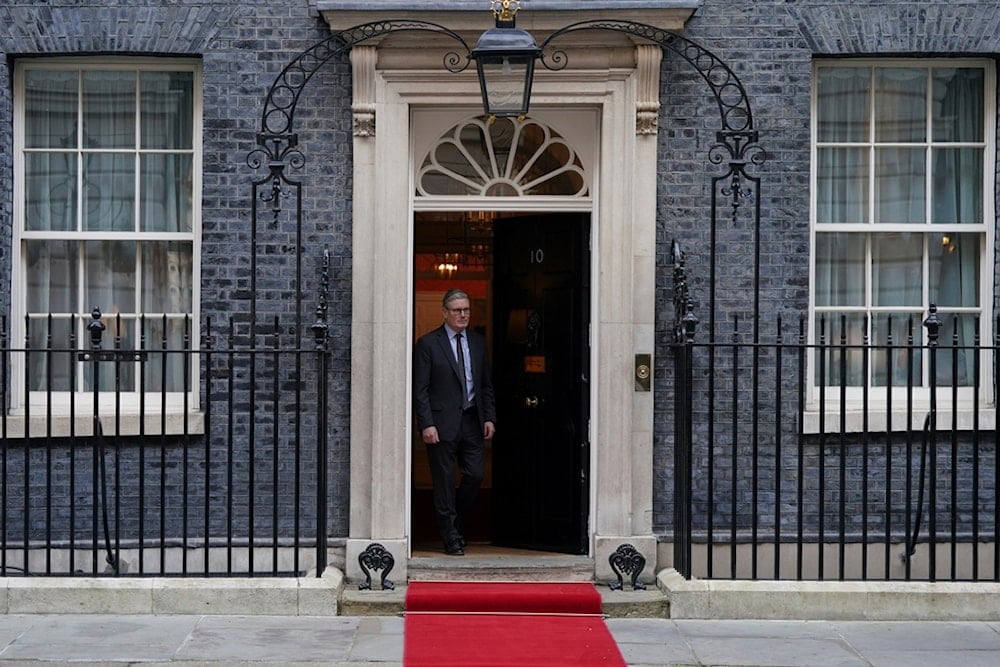
Britain's Prime Minister Keir Starmer walks out of 10 Downing Street to greet President of Nigeria Bola Ahmed Tinubu in London, Thursday, March 19, 2026. (AP)
UK Prime Minister Keir Starmer on Monday said there is "no assessment" that the United Kingdom is being targeted by Iran, following recent military developments in the region.
Speaking to broadcasters, Starmer said the government continually reviews potential threats but reassured the public that current intelligence does not indicate the UK is at risk.
His remarks came after the Israeli army claimed on Saturday that Iran now has "missiles that can reach London, Paris, or Berlin." An Iranian missile would need to travel approximately 2,700 miles (4,300 km) to reach the British capital.
The claim, shared on social media, followed reports that Iran had fired ballistic missiles at the Diego Garcia US-UK military base, located about 2,350 miles from Iran's southern coast. Neither missile struck the base, according to The Wall Street Journal, with one reportedly malfunctioning mid-flight. A US warship attempted to intercept the second missile using an SM-3 interceptor, the newspaper said, citing US officials. However, it remains unclear whether the interception was successful.
Assessment and de-escalation
Asked whether the UK was within range of Iranian missiles after the attempted attack, Starmer said the government carries out assessments "all the time in order to keep us safe, and there's no assessment that we're being targeted in that way at all."
He also emphasized the need to de-escalate Middle East tensions, adding that it is important to defend British interests and lives "without getting dragged into the war."
The British prime minister confirmed that an emergency Cobra meeting would take place to address the wider impact of the war, particularly on household finances. Cobra meetings bring together senior ministers and officials to coordinate responses to major crises.
Starmer said "most people" are concerned both about the war itself and about how it may affect them and their families.
"And so today we're looking at the economic impact, and I am asking for every lever that's available to the government to deal with the cost of living to be discussed at Cobra," he told reporters.
He added that the Bank of England and other bodies would attend, saying he wants to ensure the government is "doing everything we possibly can" to mitigate cost-of-living pressures.
Context of UK's involvement
On Friday, the British government authorized the United States to use military bases on UK soil to carry out operations targeting Iranian sites.
Earlier, Starmer stressed that the UK would not be drawn into a war with Iran, noting that he initially rejected a similar US request pending verification of the legal framework and legitimacy of any potential military action.
Iran’s Foreign Minister Abbas Araghchi criticized Starmer over London’s role in the ongoing confrontation involving the US-Israeli aggression against Iran, warning that this decision is putting lives at risk and escalating tensions in the region.
In a post on X, Araghchi said that “the vast majority of the British People do not want any part in the Israel-U.S. war of choice on Iran,” arguing that the UK government is acting against public opinion by allowing military cooperation with US-led operations.
Araghchi further warned that Iran would respond accordingly, stating that it “will exercise its right to self-defense,” a message that underscores the right to retaliate against any attacks on Iranian sovereignty.
The Iranian FM previously warned the United Kingdom that permitting the United States to use British military bases amounts to “participation in aggression."
Read More: UK allows US to use its bases to strike Iran


