
UK poll puts EU re-entry support at 49% as Labour weighs risks
 5 Min Read
A major poll found 49% of British voters support rejoining the EU, as Labour weighs potential electoral gains against fears of renewed Brexit divisions.
-
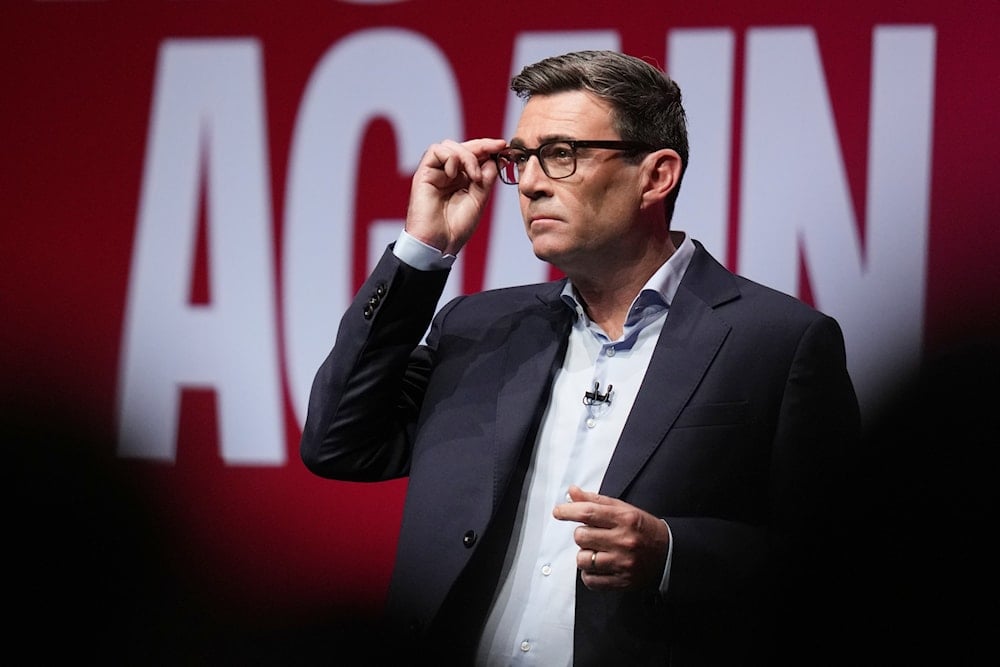
Britain's Prime Minister Andy Burnham delivers his Leader's Speech during the Labour Party Conference in Liverpool, England, Tuesday, Sept. 29, 2026 (AP)
Almost half of British voters support returning to the European Union, according to a large survey reported by The Guardian, adding momentum to discussions within Labour over a possible membership pledge at the next election.
The findings come as Prime Minister Andy Burnham opens a review of Britain’s future relationship with the bloc, while cabinet colleagues warn that revisiting EU membership could deepen political divisions and strengthen Nigel Farage’s Reform party.
The Messina Group surveyed 11,461 people between September 12 and 24, with responses weighted by the 2016 referendum result. It found that 49% backed rejoining the EU, compared with 28.5% who opposed it.
In tests of potential election messages, proposals involving closer European ties increased Labour’s projected support by between 4.3 and 7.4 percentage points. The largest potential gain came from offering another referendum and campaigning for membership, with most additional support drawn from Green and Liberal Democrat voters.
Dissatisfaction with Brexit shapes debate
The research points to widespread disappointment with Britain’s departure from the EU. Some 52.4% of respondents said leaving had been the wrong decision, against 29.7% who believed it was right.
Asked to assess Brexit’s outcome, 54.9% described it as a failure and 12.2% as a success. Another 23.2% considered it neither.
However, support extended across several possible arrangements with Europe. Keeping the current framework while removing as many trade obstacles as possible attracted 48.2% support, while 47.1% favoured a customs union.
Associate membership and participation in the single market received 45.5% and 45.1% support respectively. Moving further away from the EU was the least popular option tested, backed by 27.9% and opposed by 41.2%.
More than two-thirds of respondents prioritised trade with the EU over the United States or China if Britain had to choose. Yet arguments about sovereignty and immigration continued to resonate, and four in five wanted to retain the pound.
Ministers warn against renewed divisions
Burnham announced the review during his first Labour conference address as leader on Tuesday, later making clear that full membership should be among the options examined.
According to The Guardian, some Downing Street officials favour an election commitment to at least negotiate possible re-entry. Ministers representing areas that voted Leave, however, are concerned about the political consequences.
“Brexit clearly hasn’t worked and the promises made haven’t been kept so Andy is right to open up the question of what the future relationship looks like. But he definitely needs to proceed with caution because we don’t want to restoke division," one cabinet minister told the newspaper.
Two-thirds of the cabinet, including Burnham, represent constituencies that backed Brexit.
Several senior ministers had already expressed reservations before the conference speech. Labour deputy leader Lucy Powell supported improving defense and security cooperation but said moving beyond the reset inherited from Keir Starmer was “not possible nor desirable."
Home Secretary Shabana Mahmood described rejoining as “not a simple, straightforward thing” and raised concerns about the possible costs. Trade Secretary Jonathan Reynolds warned that disputes over Britain’s constitutional relationship with Europe were creating uncertainty for businesses.
Other ministers questioned whether dissatisfaction with Brexit would translate into support for the terms of renewed membership.
“I’m sceptical if we go back in, about the terms we’d be going back in on, and whether that can really resolve the problems in people’s lives. But if you look at the global context you cannot start to solve things for people without having a closer relationship with the EU," one minister said.
Referendum remains a central question
Voters also differed over how a return should be authorized. Almost one-third said another referendum would be necessary, while more than one in six considered a general election mandate sufficient. A similar proportion believed parliament could decide.
On timing, 25.9% wanted Britain to rejoin immediately and 22.9% within three years. Another 8.4% favoured doing so over the next decade, while 23% rejected a closer relationship altogether.
Downing Street’s approach appears focused on challenging the politicians who made unfulfilled promises about Brexit, rather than criticizing those who voted to leave.
Nevertheless, some officials fear that reopening the question could give Reform a renewed campaigning advantage. Farage said Thursday that Burnham had handed him “the biggest boost in my career” by bringing Brexit back into the political debate.
The survey offers Labour evidence of potential electoral gains from closer EU ties, but those gains remain projections based on tested messages rather than a certain election outcome.
Read more: Clear majority of Britons think Brexit was a failure: Poll


