
Ukraine halts strikes on oil tankers after request from JD Vance
 4 Min Read
Ukraine has suspended drone strikes on oil tankers near Novorossiysk after a request from US Vice-President JD Vance, officials say.
-
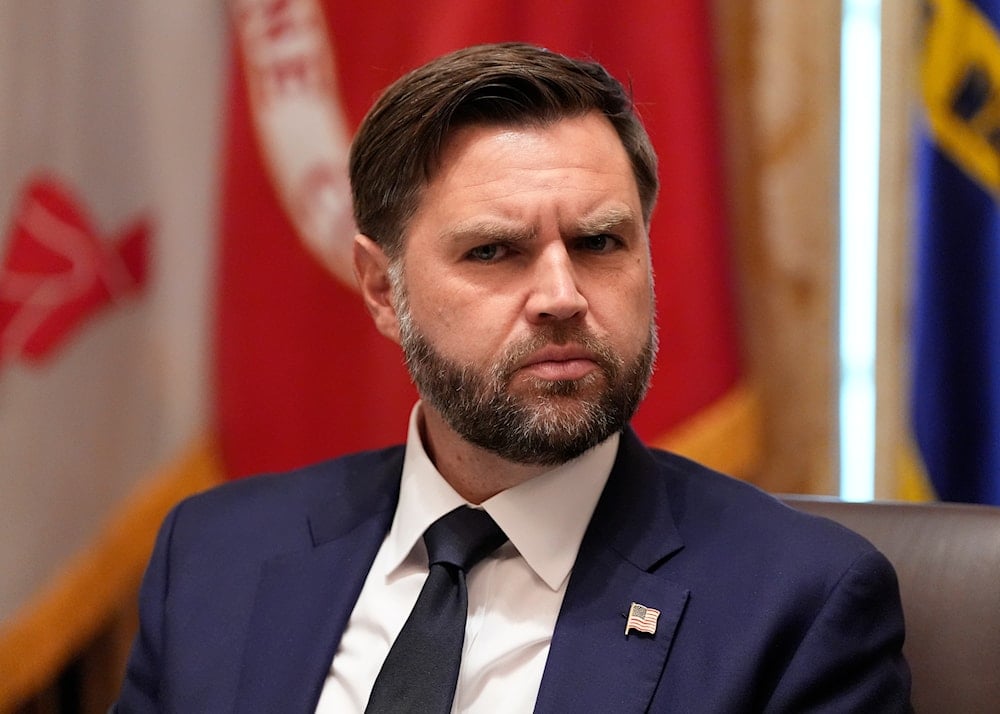
Vice President JD Vance listens as President Donald Trump speaks before a lunch with Ukraine's President Volodymyr Zelenskyy in the Cabinet Room of the White House, Friday, Oct. 17, 2025, in Washington (AP)
Ukraine has suspended an intensive campaign of drone strikes on oil tankers using a key Black Sea port after a request from US Vice-President JD Vance late last month, according to Ukrainian officials cited by The Financial Times.
Washington was concerned that Ukraine was further destabilising oil markets and harming US companies by targeting tankers carrying crude piped from Kazakhstan to a Caspian Pipeline Consortium (CPC) terminal in the Russian port of Novorossiysk, officials said.
Vance asked President Volodymyr Zelensky to halt the attacks during a call on July 31, according to Ukrainian officials and other people familiar with the matter. Ukraine has not struck tankers near the CPC terminal since then, based on official statements and an FT analysis of open-source information.
Ukrainian officials said the country had agreed not to target CPC infrastructure or non-Russian vessels as long as those ships were not under Ukrainian sanctions and were not carrying Russian oil or other Russian cargo.
“We very carefully listen to our American partners,” a senior Ukrainian official said, adding that Kiev had established relevant “mechanisms” in response to the US request. The CPC had been “a regular part of the conversation with the US and the Kazakh governments”, the person said.
Major US companies own stakes in CPC
US energy majors Chevron and ExxonMobil both own stakes in CPC, which serves as Kazakhstan’s main oil export route, and in the western Kazakh oilfields that supply the pipeline. Chevron owns 50 per cent of Tengiz, the country’s largest field, while Exxon holds 25 per cent.
A US official confirmed that the administration had warned Ukraine to stop targeting non-Russian vessels in the Black Sea, as well as CPC infrastructure. “The administration views the CPC as a vital conduit of Kazakhstan-origin energy for European markets that serves as an alternative to Russian energy supplies,” the official said.
The US had “reaffirmed” Kiev’s commitment to refrain from targeting CPC infrastructure and non-Russian vessels bound for the pipeline’s terminal at Novorossiysk, provided they were not otherwise subject to Ukrainian sanctions, the official added.
Ukraine targets oil tankers in international seas
Ukraine has conducted a systematic campaign targeting Russian oil tankers, with a particular focus on vessels belonging to Moscow's so-called "shadow fleet." Ukrainian President Volodymyr Zelensky confirmed in May that Ukrainian forces had struck two tankers near the port of Novorossiysk, claiming the vessels are key components of Russia's wartime economy.
Ukrainian naval drones have been the primary instrument in these operations. In November 2025, the Security Service of Ukraine released footage showing strikes on two alleged "shadow-fleet" tankers, the Kairos and Virat, in the Black Sea, with Ukrainian officials identifying both as sustaining critical damage. More recently, the SBU, working with the Ukrainian Navy, attacked two additional tankers, the Louise 1 and Banda, using Mamai naval drones.
The campaign has intensified significantly. Ukraine's Unmanned Systems Forces reported striking 136 vessels in a 10-day period in July, including 20 oil and gas tankers struck in the Black Sea in a single night.
The scope of attacks has drawn international attention. An analyst at British maritime security company Ambrey noted that Ukraine is striking at a faster pace than during the Iran-Iraq "tanker war" of the 1980s. Turkey has restricted the movement of commercial vessels in the Black Sea and urged both Russia and Ukraine to suspend attacks, following reports of injuries to crew members from drone strikes.


