
US military aid shipments to Ukraine fall 55% in 2026
 4 Min Read
Washington's weapons pipeline to Ukraine has slowed sharply, with completed USAI deliveries falling as previously funded contracts replace direct Pentagon stockpile transfers.
-
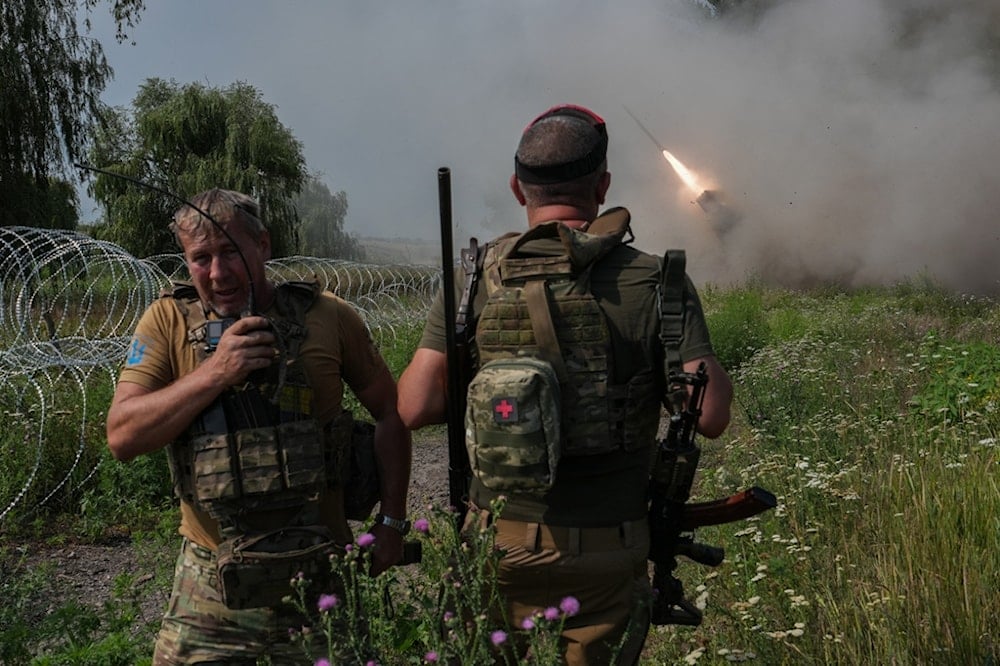
A Ukrainian MRLS BM-21 "Grad" fires towards Russian army positions near the frontline city of Kramatorsk, Donetsk region, on August 4, 2026. (Iryna Rybakova/Ukraine's 93rd Mechanized Brigade via AP)
US military deliveries to Ukraine have lost considerable momentum in 2026, with completed deliveries through the Ukraine Security Assistance Initiative (USAI), falling by nearly 55% compared with last year's monthly pace.
The shift is significant because it reflects more than a change in accounting: Washington's support for Kiev is increasingly dependent on older procurement commitments rather than the rapid release of weapons from US military stocks.
Read more: US considers expanding nuclear deployments in Europe
US weapons pipeline loses momentum
USAI deliveries averaged $587 million a month in 2025, according to an analysis of quarterly Operation Atlantic Resolve reports. During the first three months of 2026, that figure fell to approximately $265 million per month.
The change represents a 54.8% decline in the rate at which contracted military equipment was completed and delivered.
The contraction followed the slowdown of direct transfers from US stockpiles in early 2025. With Congress not approving another supplemental Ukraine package, Washington increasingly relied on procurement contracts already financed under earlier legislation.
That arrangement allowed weapons to continue reaching Ukraine without a new injection of congressional funding. But as existing contracts move through the production and delivery process, the flow has begun to weaken.
Billions committed, but not yet delivered
The figures also illustrate why headline funding totals do not necessarily correspond to weapons reaching the battlefield. By March 31, 2026, approximately $13.49 billion in USAI contracts had been obligated but not yet disbursed, out of $32.49 billion in total obligations.
In practical terms, Washington has committed substantial resources to military procurement for Ukraine, but a significant portion of that equipment had yet to be completed and delivered.
This distinction matters when assessing the trajectory of US support. A decline in completed deliveries does not mean that all US assistance has stopped, just as large outstanding obligations do not mean that equivalent quantities of weapons are immediately available to Kiev.
A different model of support for Kiev
The change has also exposed the growing importance of the US defense industry in sustaining American military assistance to Ukraine.
USAI operates primarily through contracts with defense manufacturers, meaning deliveries depend on production schedules, procurement decisions, and the completion of individual contracts. This differs from the faster mechanism of transferring existing Pentagon stocks.
A second channel, Foreign Military Financing, has also contributed to Washington's broader military support structure. By March 31, approximately $4.20 billion in supplemental FMF had been disbursed. However, nearly $1.94 billion of that amount went to European partner countries, including Poland, Romania, and the Czech Republic, while approximately $2.18 billion went directly to Ukraine.
A major direct Ukrainian allocation of around $1.64 billion took place between June and September 2025 for non-NATO-standard ammunition and long-range firing systems. Direct financing subsequently flattened.
What the slowdown means for Ukraine
The emerging picture is therefore not one of an abrupt US withdrawal, but of a military aid system entering a more constrained phase.
Washington retains billions of dollars in previously obligated procurement, while the absence of fresh supplemental funding limits the ability to replenish the pipeline at the pace seen during earlier stages of the conflict.
For Kiev, the distinction could become increasingly important as battlefield requirements continue to compete with the production capacity and political priorities of its principal military backer.
For Washington, meanwhile, the figures suggest that the future scale of assistance will depend increasingly on whether the Trump administration and Congress are prepared to authorize new funding rather than simply complete contracts inherited from earlier Ukraine aid packages.
Read more: Turkey urges Russia, Ukraine to halt Black Sea attacks


