
US considers expanding nuclear deployments in Europe
 3 Min Read
The United States is reportedly discussing expanding nuclear weapons deployments across additional NATO states.
-
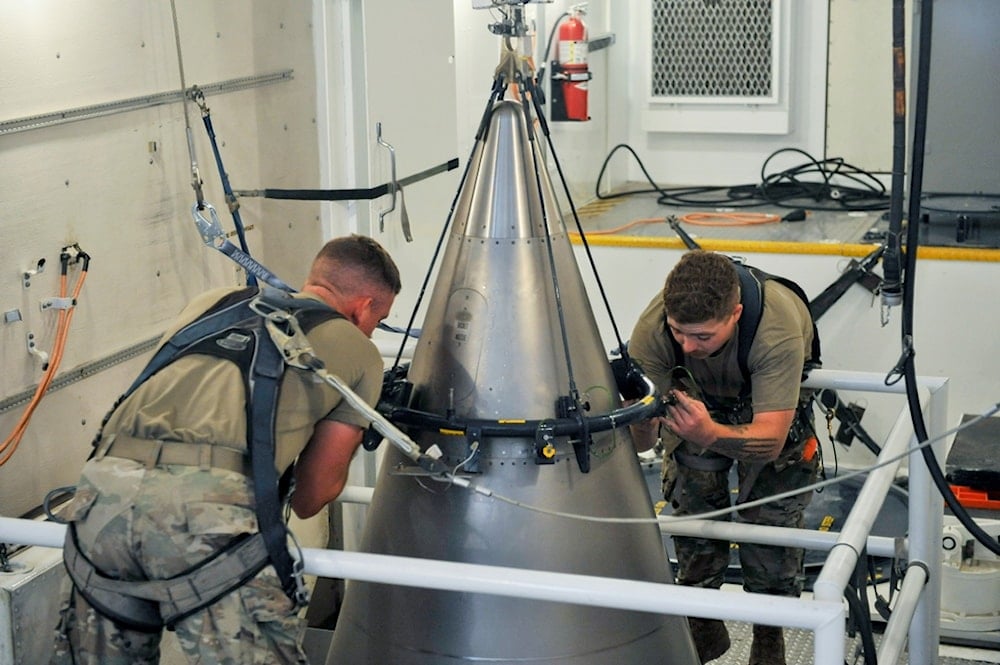
Senior Airman Jacob Deas and Airman 1st Class Jonathan Marrs secure a titanium shroud at the top of a Minuteman III intercontinental ballistic missile, Aug. 24, 2023, Malmstrom Air Force Base in Great Falls, Mont. (John Turner/US Air Force via AP)
The United States is reportedly in discussions over expanding the deployment of nuclear weapons across additional NATO member states in Europe, in a move framed as part of efforts to reassure allies amid shifting US military priorities and growing tensions with Russia.
The talks remain confidential and may not result in immediate changes to existing nuclear-sharing arrangements, sources familiar with the discussions told the Financial Times.
US officials signalled openness to potentially extending nuclear deployment arrangements beyond the current European states hosting US nuclear-capable systems, according to individuals briefed on the matter.
The discussions are being held within the framework of NATO’s nuclear-sharing program, which allows selected allies to host US nuclear weapons under strict American control, with Washington retaining sole authority over their use.
The openness to expansion is intended to reinforce the credibility of the US nuclear umbrella at a time when Washington is reassessing aspects of its conventional military posture in Europe.
Eastern NATO members seek inclusion in nuclear umbrella
Countries on NATO’s eastern flank, including Poland and the Baltic states, have reportedly expressed interest in hosting US nuclear-capable aircraft as part of broader deterrence arrangements.
Polish officials have publicly advocated for deeper nuclear cooperation with Washington. Former President Andrzej Duda previously called for expanding the nuclear-sharing framework to Polish territory, while Warsaw has also engaged in parallel discussions with France on European nuclear deterrence concepts.
According to sources cited in the discussions, states closer to Russia’s borders have shown the strongest interest in hosting dual-capable aircraft.
Read more: New EU-led bloc may replace US role in Europe, Lavrov says
Existing NATO nuclear-sharing framework
NATO’s current nuclear-sharing arrangement includes Belgium, Germany, Italy, the Netherlands, Turkey, and the United Kingdom.
Under this system, US nuclear weapons are forward-deployed in Europe and stored under US custody, while allied air forces are trained to deliver them using designated dual-capable aircraft when authorized.
The arrangement, established during the Cold War, is formally described by NATO as a mechanism allowing non-nuclear member states to participate in nuclear planning and policy while remaining under the US nuclear umbrella.
NATO response and alliance tensions over US posture
The discussions come amid broader uncertainty in Europe over US defense commitments under US President Donald Trump, including reported considerations of troop adjustments and weapons redeployments.
NATO Secretary-General Mark Rutte said following a recent meeting of alliance foreign ministers that there is a shared understanding that US global priorities are shifting, but that Europe’s deterrence posture must remain stable.
He also reiterated the alliance’s position on deterrence, stating that any attack on NATO members would be met with a “devastating” response.


