
New EU-led bloc may replace US role in Europe, Lavrov says
 3 Min Read
Lavrov says a proposed EU-led military bloc could reduce US involvement in Europe while shifting Washington’s focus toward long-term confrontation with China.
-
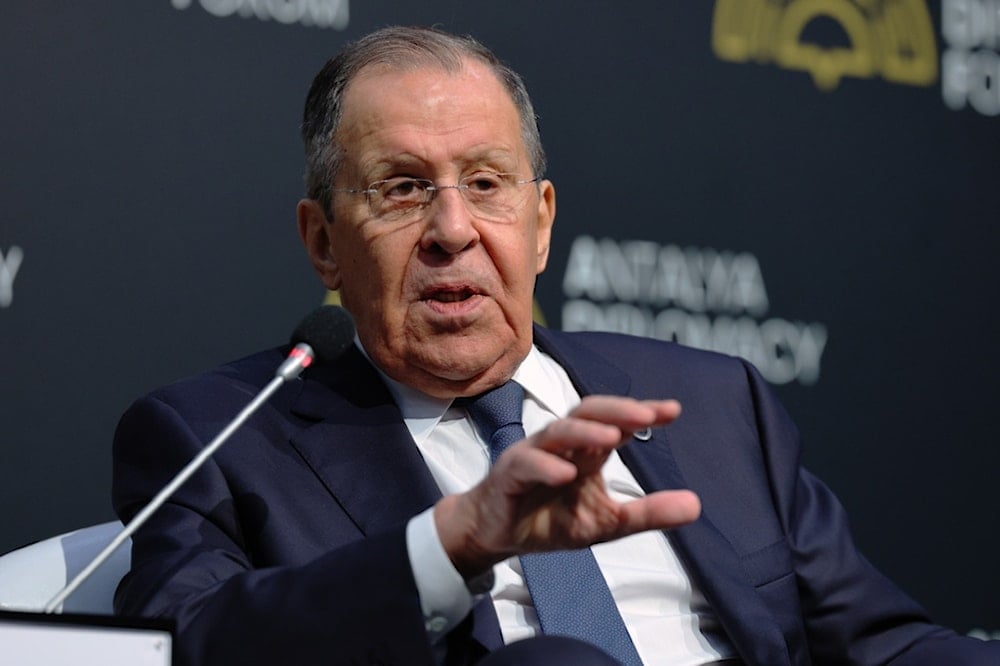
Russian Foreign Minister Sergey Lavrov talks during a panel at the Antalya Diplomacy Forum, in Antalya, southern Turkey, Saturday, April 18, 2026. (AP Photo/Riza Ozel)
Russian Foreign Minister Sergey Lavrov said discussions are underway about forming a new Western-aligned military structure that could bring together the European Union, Turkey, the United Kingdom, and Ukraine, describing the initiative as part of a broader strategic shift led by Washington.
Speaking on Saturday during a session of the Antalya Diplomacy Forum, Lavrov outlined what he said was a recalibration of US global priorities.
"Currently, a new concept is being widely discussed, suggesting that the Americans want to rid themselves of the burden of funding European security, then negotiate with Russia, and then fully switch to a long-term confrontation against the People's Republic of China … Instead, it is proposed to create a bloc that would include the EU …, Turkey, the UK and Ukraine," Lavrov said.
His remarks suggest that Washington may be seeking to reduce its direct role in European defense, potentially encouraging regional actors to assume greater responsibility while redirecting attention toward strategic competition with China.
Strategic autonomy
The comments come amid ongoing debates across Europe over reducing reliance on the United States for security, particularly in light of shifting political signals from Washington and uncertainty surrounding long-term US commitments to the continent. European officials have increasingly called for greater “strategic autonomy,” seeking to expand defense coordination and capabilities within the bloc.
The war in Ukraine has accelerated these discussions, exposing gaps in Europe’s military readiness and prompting renewed efforts to deepen cooperation between European states and partners such as the United Kingdom and Turkey. Ukraine, for its part, has moved closer to Western military structures, further anchoring its role within the broader Euro-Atlantic security framework.
Lavrov warns bloc
Lavrov also framed the developments as part of a wider US pivot, arguing that any reduction in American engagement in Europe would allow Washington to concentrate more fully on its long-term rivalry with China, a view that reflects broader geopolitical debates about shifting global priorities.
Lavrov also warned that any newly formed arrangement would retain a confrontational posture, particularly under the current leadership of Western institutions such as NATO and the European Union.
"The foreign minister added that any radically new structure would still be aggressive, especially given the current leadership of the EU and NATO."
The Antalya Diplomacy Forum, now in its fifth edition, is being held from April 17 to 19, bringing together officials and policymakers to discuss global security challenges amid heightened geopolitical tensions.
Read more: US war on Iran strains weapon stockpiles, deliveries to Europe delayed


