
Russia warns US troop buildup in Poland escalates tensions with West
 4 Min Read
Moscow says additional US troops in Poland could trigger a “qualitative escalation” and force retaliatory steps amid rising NATO tensions.
-
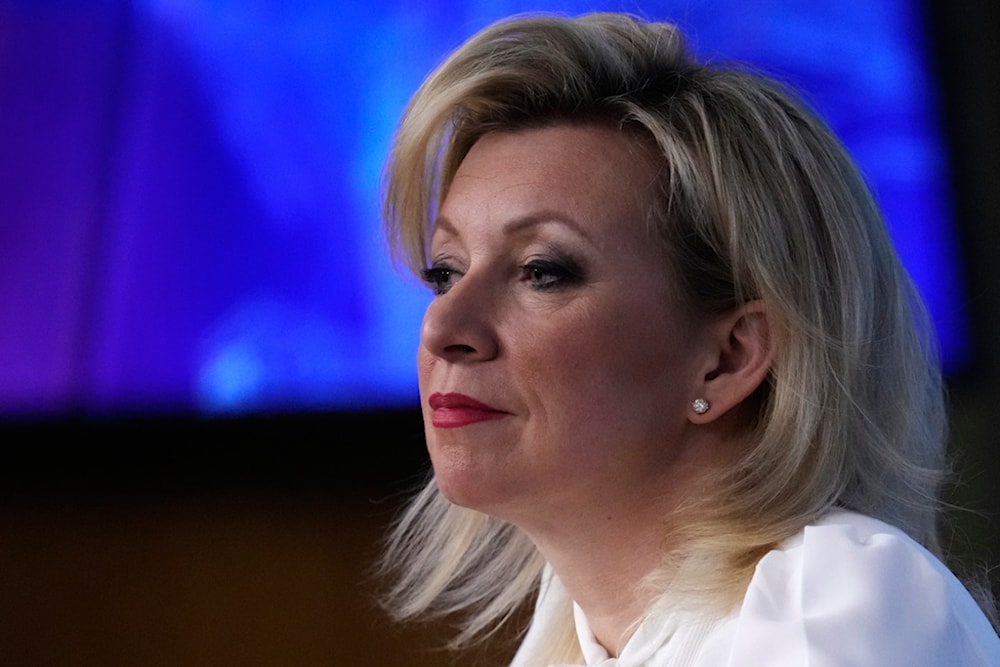
Russia's Foreign Ministry Spokeswoman Maria Zakharova attends Russian Foreign Minister Sergey Lavrov's annual news conference in Moscow, on Tuesday, Jan. 20, 2026 (AP Photo/Pavel Bednyakov)
Russia has warned that an increase in US military forces in Poland would amount to a “qualitative escalation” in tensions with the West, while also saying it will take into account drone activity originating from the Baltic region in its military planning.
Speaking on Thursday, Russian Foreign Ministry spokesperson Maria Zakharova said the deployment of additional US troops in Poland could significantly worsen relations between Moscow and Western countries.
She said any such reinforcement would force Russia to take countermeasures “to ensure the protection of its national security,” signaling a potential response if the military buildup proceeds.
Zakharova also said Russia is closely monitoring a growing number of drones launched from Baltic states toward Russian territory, adding that this factor is now being incorporated into Moscow’s military planning as tensions rise along its western borders.
The warning follows remarks from US President Donald Trump on May 22 announcing the deployment of 5,000 additional US troops to Poland, a move that reportedly caused confusion within NATO after coming shortly after Washington had signalled a reduction of nearly the same number of forces in Europe.
Zakharova's comments come amid broader concerns over NATO’s eastern flank, where military activity has intensified since the start of the Ukraine war.
Estonia shifting border agreements amid NATO tensions
Separately, Russian border authorities have accused Estonia of attempting to move away from long-standing agreements with Moscow on the delimitation of Lake Chudskoye (Peipus) and the Narva River, warning that such steps could increase border tensions in the region.
In comments published on Thursday, Vladimir Kulishov, first deputy director and head of the Border Service of Russia’s Federal Security Service (FSB), said Estonia was undermining established arrangements governing shared waterways.
Speaking to the Russian state newspaper Rossiyskaya Gazeta, Kulishov said, “The Estonian authorities are trying to move away from compliance with agreements on the delimitation of the water spaces of Lake Chudskoye and the Narva River.”
He warned that such actions “create conditions for conflict situations at the state border and also negatively affect the practice of ensuring navigational safety on border water bodies.”
Kulishov also said that Finland and Estonia have “unilaterally” altered border crossing procedures since 2022, adding that Finnish border guards had erected engineering barriers in areas not stipulated under the 1960 Soviet-Finnish border agreement.
NATO's eastern flank
He linked the developments to NATO’s expanded military presence on its eastern flank, saying increased alliance activity was contributing to a destabilizing behavior by neighbouring states.
“The concentration of North Atlantic Alliance forces on the so-called eastern flank is accompanied by attempts by neighboring states to revise the established practice of implementing agreements on the state border regime, as well as by growing provocative actions on their part,” he said.
Kulishov urged Tallinn and Helsinki to return to full compliance with international agreements, saying Moscow had seen no constructive response so far.
The Russia-Estonia border stretches for more than 300 kilometres, running partly along the Narva River and Lake Peipus, which separates the Estonian city of Narva from Russia’s Ivangorod.
Russia to respond to any action
In a separate statement, Russian Deputy Foreign Minister Alexander Grushko warned that any attempt by NATO to block or seize Russia’s Kaliningrad exclave would trigger “the gravest consequences.”
Speaking to RT, Grushko said such scenarios had “zero” chance of success, adding, “I assess their chances as zero.” He said that Russia had “all the necessary resources” to respond to any such actions.
Kaliningrad, a Russian exclave between Poland and Lithuania, has become a growing point of tension between Moscow and NATO amid heightened military activity on the alliance’s eastern flank and the ongoing war in Ukraine.
Read more: Putin warns nuclear proliferation, terrorism threaten all countries


