
Under guise of training soldiers, US eyes returning troops to Syria
 4 Min Read
Washington is discussing a multinational mission to train Syrian forces in mine clearance, potentially bringing a limited number of US troops back to Syria next year.
-
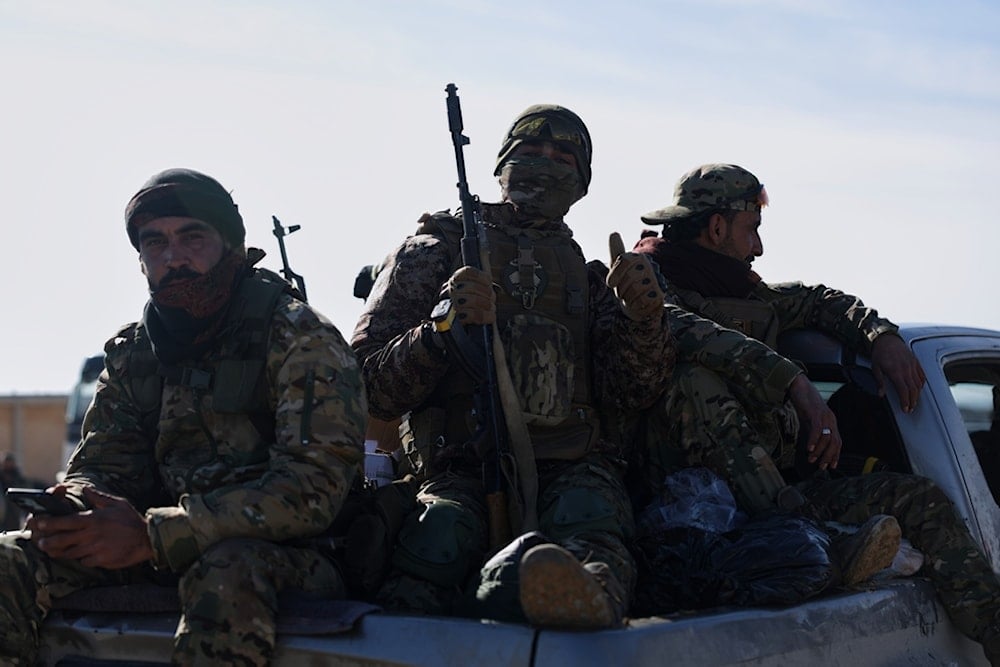
Syrian government soldiers sit atop a vehicle as they patrol inside the al-Hol camp in northeastern Syria's Hasakeh province, Syria, Wednesday, Jan. 21, 2026, after the withdrawal of the US-backed Syrian Democratic Forces (AP)
The US is discussing plans for a multinational mission to train Syrian soldiers in demining and explosive ordnance disposal, Reuters reported, citing five people familiar with the discussions.
The proposal could bring a number of American troops back to Syria as early as next year, according to the sources.
The initiative would mark the first US training mission with the Syrian military since the militants took power in Damascus in 2024. However, the proposal still faces legal obstacles in Washington and reservations among some members of the Syrian military, the sources said.
Four sources said the initial programme would focus on mine clearance and the safe disposal of unexploded ordnance, potentially paving the way for broader military cooperation if successful.
The proposed framework would involve personnel from around 15 US allies, including Britain, France, Germany, Australia, Saudi Arabia, and the United Arab Emirates. One option under consideration is to train Syrian soldiers in both Jordan and Syria, potentially beginning in March with limited US military participation.
Legal and military obstacles remain
The plan would build on the Damascus Coordination Center (DCC), established in Jordan last year to facilitate cooperation between Syrian authorities, US forces, and regional allies.
US Central Command spokesperson Captain Tim Hawkins said the DCC continued its work in support of a stable, unified, and peaceful Syria, adding that decisions had not yet been made regarding its future structure or mission priorities.
A US State Department spokesperson said Washington welcomed having a partner in Damascus committed to combating the Islamic State group.
Restrictions under Leahy Laws
However, the proposal faces restrictions under the US Leahy Laws, which prohibit assistance to foreign security force units when credible information indicates that they have committed gross human rights violations. Two sources said American officials would need to vet prospective Syrian recipients before providing funding.
The concerns partly stem from the backgrounds of some commanders in Syria's new security forces, including former members of extremist armed groups. UN investigators have also documented abuses by forces affiliated with the new authorities.
On the Syrian side, some Defense Ministry officials have been reluctant to grant American military personnel access to military institutions and facilities, complicating efforts to establish training programmes, the sources said.
Proposal marks another step in US-Syria rapprochement
The discussions come amid thawing and closer ties between Washington and Damascus following the overthrow of President Bashar al-Assad in December 2024.
The US lifted broad economic sanctions on Syria in December 2025, removed its designation of the country as a state sponsor of terrorism in August 2026, and eased restrictions on arms exports and defense services in October, allowing related licenses to be considered on a case-by-case basis.
During the war on Syria, hundreds of US troops were deployed in the country as part of "Operation Inherent Resolve." While there was an effort against ISIS, US troops later became guards for Syria's vast oil reserves in the east and northeast. US forces were used to smuggle oil and plunder the country's resources, taking them to Iraq.
The last US troops withdrew from Syria in April 2026 and from Iraq in September.
Syrian Defense Minister Murhaf Abu Qasra met "Operation Inherent Resolve" commander Rear Admiral Liam Hulin in Damascus on November 12, according to Syria's state news agency SANA. A Syrian military source said their discussions included the proposed multinational coordination mechanism, demining and explosive ordnance disposal training, and unspecified assistance with border security.
US officials are also examining whether remaining funds from "Operation Inherent Resolve" could finance the programme. One source estimated that approximately $200 million was available.


