
UNSC slams Israeli recognition of Somaliland, US opts out
 4 Min Read
The UN Security Council, minus the US, slams "Israel’s" recognition of Somaliland, warning it threatens Somalia’s unity and could impact Palestinians in Gaza.
-
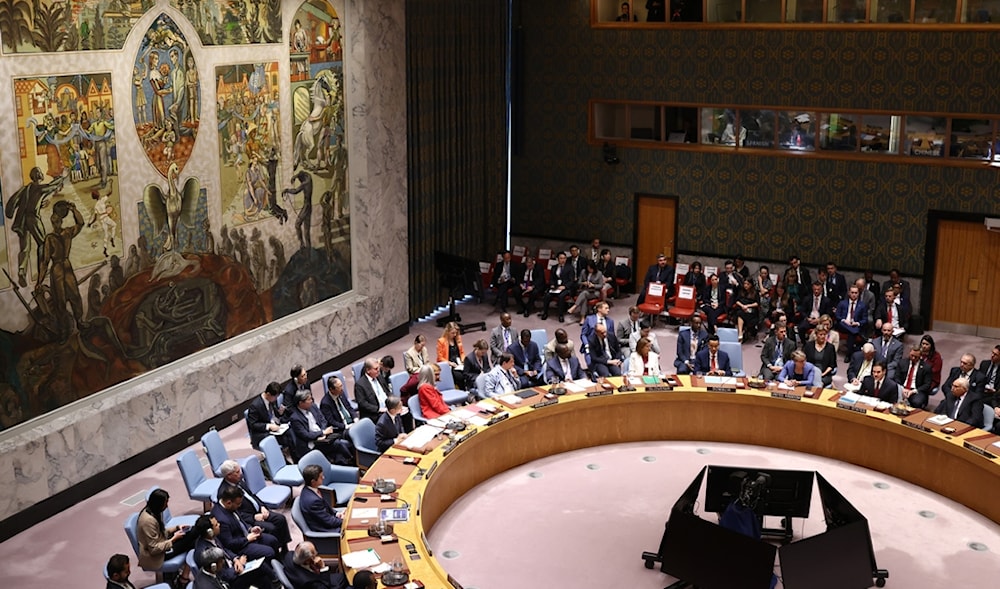
US Secretary of State Marco Rubio speaks during a United Nations Security Council ministerial meeting on Ukraine at the UN headquarters, Sept. 23, 2025. (AP)
The United Nations Security Council, except for the United States, strongly criticized "Israel’s" recent decision to recognize the self-declared independence of Somaliland, warning of serious regional consequences.
During an emergency session, 14 out of the 15 Security Council members voiced opposition to the move, condemning it as a step that could destabilize Somalia and trigger broader ramifications across the Horn of Africa and the Red Sea region, including its potential impact on Palestinians in Gaza.
While Washington did not condemn the recognition, it stated that its policy toward Somaliland “remains unchanged.”
Somalia decries 'aggressive act' at UN
Somalia’s Ambassador to the UN, Abubakr Taher Osman, called on the Council to reject the “aggressive act” that threatens Somalia’s sovereignty.
“This recognition endangers Somalia’s unity and could undermine stability in the Horn of Africa and the Red Sea region,” Osman warned.
He also raised alarm over alleged proposals to relocate Palestinians from Gaza to northern Somalia, saying, “This blatant disregard for international law and morality must end immediately.”
Global condemnation of the recognition
Meanwhile, South Africa’s UN Ambassador, Mathu Joyini, reaffirmed her country’s support for Somalia’s sovereignty and territorial integrity, citing international law, the UN Charter, and the foundational principles of the African Union.
Pakistan’s Deputy Ambassador, Mohammed Usman Iqbal Jadoon, described "Israel’s" recognition of Somaliland as “deeply troubling,” especially in light of previous suggestions that the region could be used to resettle displaced Palestinians from Gaza.
Both China and the United Kingdom, permanent members of the Security Council, also voiced strong opposition. China’s envoy to the UN, Sun Li, warned against any action that could fragment Somalia, stating, “Beijing strongly opposes all measures that promote secessionist agendas for geopolitical gain.”
Why is 'Israel' eyeing Somaliland?
The Israeli occupation officially recognized the Republic of Somaliland as an independent and sovereign state, following the signing of a joint declaration between Prime Minister Benjamin Netanyahu, Foreign Minister Gideon Sa'ar, and Somaliland President Abdirahman Mohamed Abdallah.
Somaliland hosts a major Emirati military presence at Berbera, developed by the UAE as part of its broader regional footprint stretching from the Horn of Africa to the southern Red Sea. The base has played a central role in Abu Dhabi’s efforts to project power across maritime chokepoints and to support operations linked to Yemen, including attempts to restrict the operational depth of Ansar Allah and limit Saudi Arabia’s exposure along critical shipping lanes, which greatly benefits the Israeli occupation.
US military planners have also long viewed Somaliland as a strategic fallback and logistics hub near the Bab al-Mandab strait, especially to protect their interests as Ansar Allah grows. Israeli security officials, meanwhile, have reportedly sought access and intelligence cooperation in the area as part of a wider push to monitor Red Sea traffic and resistance-aligned movements operating across Yemen and the Horn of Africa.
The recognition of Somaliland aligns with this emerging security architecture, effectively granting political cover to an already entrenched military and intelligence reality. By formalizing relations, the Israeli regime positions itself alongside Washington and Abu Dhabi in shaping Red Sea security arrangements that aim to control maritime routes, constrain Ansar Allah’s reach, and reinforce a regional bloc extending from occupied Palestine to East Africa.
The declaration also echoes the logic of the "Abraham Accords," backed by Trump, which linked diplomatic normalization with deeper security and intelligence integration. In this context, Somaliland’s recognition is less than an isolated diplomatic gesture and more as a strategic consolidation of overlapping US, Israeli, and Emirati interests at a critical geopolitical crossroads.
Forcibly displacing Palestinians from Gaza to Somaliland was also previously floated by the Israeli regime and Donald Trump.
Read more: After Somaliland recognition, 'Israel' eyes south Yemen: Israeli media


