
US, Qatar move to unlock frozen Iranian assets under ceasefire deal
 4 Min Read
Washington and Doha are discussing a mechanism to grant Iran access to billions in frozen funds for humanitarian purchases as negotiations continue following the US-Iran ceasefire agreement.
-
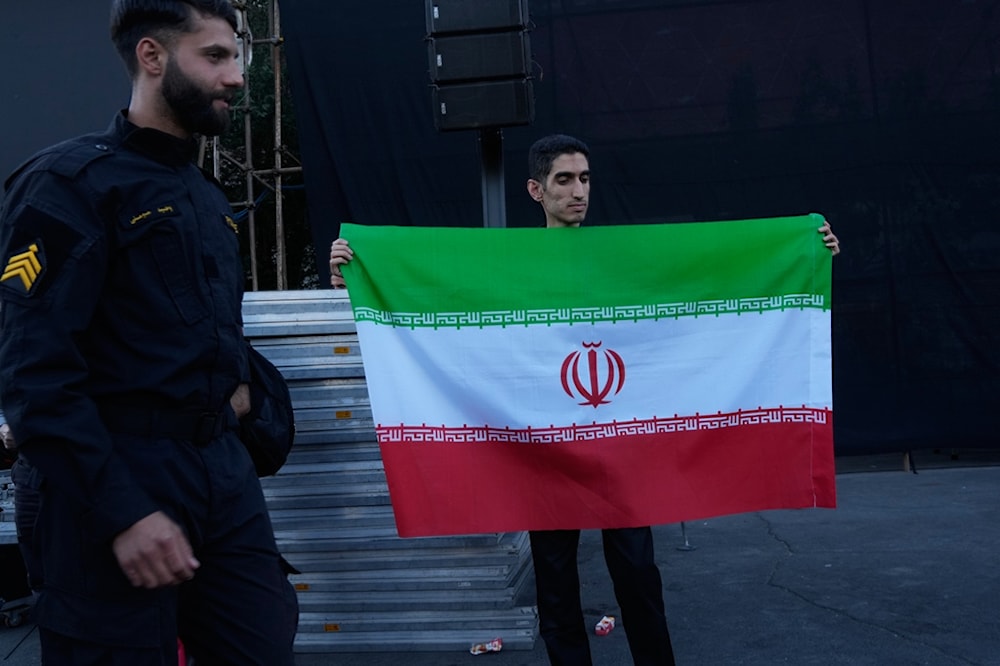
A man holds an Iranian flag while a policeman walks past at the Islamic Revolution Square in Tehran, Iran, Sunday, June 14, 2026. (AP Photo/Vahid Salemi)
The United States and Qatar are reportedly working on a mechanism that would allow Iran access to billions of dollars in frozen assets for "humanitarian" purchases, marking one of the first economic measures linked to the recently signed ceasefire agreement between Washington and Tehran.
Sources familiar with the discussions told the Wall Street Journal that the proposal would initially focus on approximately $6 billion in Iranian funds currently held in Qatar. Under the arrangement being discussed, Iranian authorities would be able to use the money to purchase food, medicine, and other humanitarian goods through transactions overseen by Qatar.
The funds originate largely from Iranian oil revenues that have remained inaccessible due to years of US-led sanctions targeting the country's economy and financial system.
If implemented, the mechanism could serve as a model for unlocking access to additional pools of frozen Iranian assets held abroad, potentially opening the door to broader financial relief measures sought by Tehran.
Asset access emerges as key incentive in US-Iran negotiations
The reported initiative comes after Washington and Tehran signed a memorandum of understanding aimed at ending recent hostilities and allowing passage of ships through Hormuz for 60 days.
Under the agreement, the United States reportedly committed to negotiating mechanisms that would make Iranian assets "fully available for use." Sources cited by WSJ said Tehran is seeking access to at least $24 billion in blocked funds as an initial step, while estimates place the total value of frozen Iranian assets worldwide at roughly $100 billion.
Analysts note that access to foreign currency could provide significant relief for Iran's economy, which continues to face inflationary pressures and currency instability resulting from years of sanctions and economic restrictions.
"Even limited asset releases function as both economic lifelines and political signals of de-escalation," said Sanam Vakil, West Asia director at Chatham House.
Read more: Iran emerges as regional power...'Israel' left alone: Maariv
Political tensions persist despite diplomatic progress
Despite the diplomatic breakthrough, tensions between Washington and Tehran remain evident.
A statement by Iran's Leader, Sayyid Mojtaba Khamenei said that US President Donald Trump agreed to halt hostilities "out of desperation," prompting a sharp response from Trump.
The full text of the message of Imam Sayyid Mojtaba Khamenei, the Leader of the Islamic Revolution, addressing the Iranian nation regarding the Memorandum of Understanding between the presidents of Iran and America, June 18, 2026 pic.twitter.com/9nSD2NfkVe
— Ayatollah Mojtaba Khamenei (@MKhamenei_ir) June 18, 2026
Trump responded by writing, "We didn't meet out of desperation, Iran did. They are FINISHED! We'll play out the 60 days. They get no money, not ten cents!"
While critics propagandize against granting Iran access to its frozen assets, supporters contend that easing tensions and reopening key maritime routes could help stabilize global energy markets and enable good-faith negotiations in the future.
Trump also admitted during a press conference in France that returning withheld funds is necessary to preserve trust in the global financial system.
“It’s not our money, it’s their money, and we froze it at a certain point in time,” he said. “I guess we’re going to have to give it back. If we didn’t give it back, nobody would ever invest in the dollar again.”
Frozen assets and sanctions remain central to Iran's economy
The issue of frozen assets has long been a central point of contention between Iran and the United States.
In 2023, approximately $6 billion in Iranian oil revenues held in South Korea were transferred to Qatar following an agreement that secured the release of several American detainees. The funds were intended for humanitarian purchases but were subsequently frozen again, against the deal, after the outbreak of the war on Gaza in October 2023.
Sources told the WSJ that discussions regarding renewed access to those funds began in late May during meetings in Doha involving senior Iranian officials.
While access to frozen assets could provide short-term economic relief, analysts argue that meaningful recovery would require broader sanctions relief and expanded access to international financial markets. US officials have indicated that future economic measures will remain tied to progress in negotiations.


