
US envoys visit USS Abraham Lincoln amid rising tensions with Iran
 3 Min Read
Jared Kushner and Steve Witkoff visit the USS Abraham Lincoln as Trump’s unclear strategy adds to regional uncertainty.
-
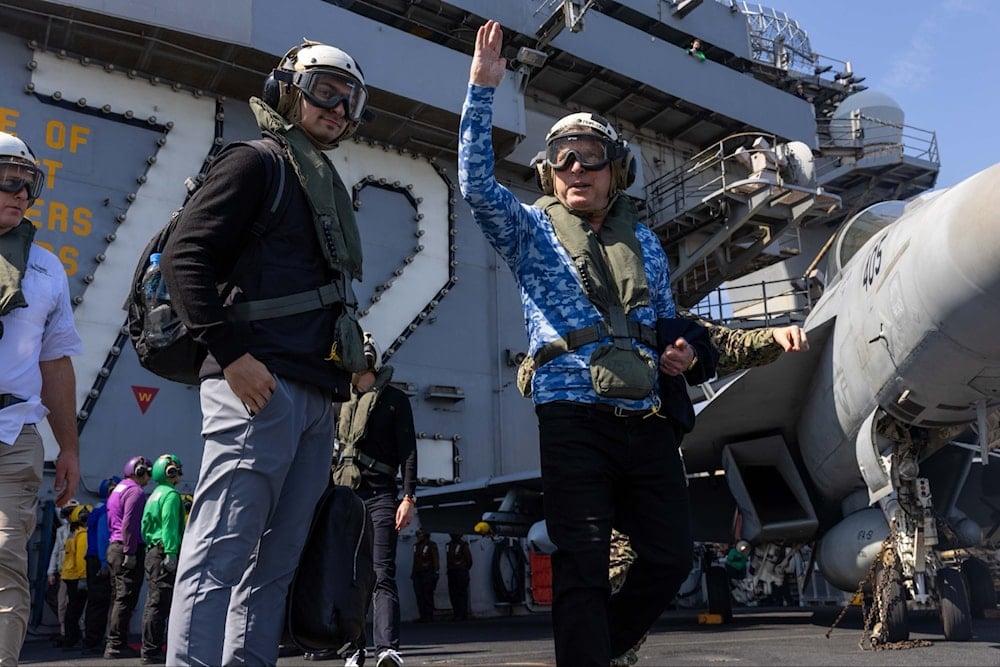
US Envoy Steve Witkoff on the USS Abraham Lincoln in the Arabian Sea on February 7, 2026 (X/@SEPeaceMissions)
US special envoys Jared Kushner and Steve Witkoff visited the USS Abraham Lincoln, currently deployed near the Arabian Sea, south of Iran, on Saturday. The visit comes at a time of growing US-Iran tensions and increased US military presence in the region.
Witkoff shared details of the visit in a social media post, stating, “Today, Adm. Brad Cooper, Commander of US Naval Forces Central Command, Jared Kushner, and I met with the brave sailors and Marines aboard the USS Abraham Lincoln, her strike group, and Carrier Air Wing 9 who are keeping us safe and upholding President Trump’s message of peace through strength.”
He also noted that the delegation spoke with a pilot aboard the carrier who was involved in downing an "Iranian drone that approached the carrier without a clear intent."
Today, Adm. Brad Cooper, Commander of U.S. Naval Forces Central Command, Jared Kushner, and I met with the brave sailors and Marines aboard the USS Abraham Lincoln, her strike group, and Carrier Air Wing 9 who are keeping us safe and upholding President Trump’s message of peace… pic.twitter.com/7Kc4XZuBY6
— Special Envoy Steve Witkoff (@SEPeaceMissions) February 7, 2026
US-Iran nuclear talks mediated by Oman
The visit coincides with the recent resumption of indirect US-Iran nuclear talks, mediated by Oman, aimed at addressing Iran’s civilian nuclear program. According to Iran's IRNA news agency, the outcome of the first round, though limited to a political statement, may signal a cautious step toward de-escalation.
IRNA noted that both Tehran and Washington now appear to have a clearer understanding of the risks associated with confrontation.
Iran has maintained that the dialogue must remain focused solely on the nuclear file, firmly rejecting the inclusion of its missile program or internal affairs in any discussions. Tehran insists it is open to diplomacy, but only if the US provides firm guarantees for constructive engagement.
These talks come against a backdrop of heightened US military activity in the region, continued accusations against Iran, and skepticism in Tehran due to a history of five failed rounds of talks, many of which collapsed following military strikes by "Israel".
Read more: Iranian Army warns Trump: Any war would see US bases hit
Trump’s Iran strategy lacks clarity, say officials
Amid the renewed diplomatic efforts, US officials say Trump has yet to define a coherent strategy regarding Iran.
Speaking to NBC News, officials claimed Trump has not clarified whether his administration seeks to apply military pressure to coerce Iranian concessions, pursue regime change, or simply signal strength for deterrence.
Despite aggressive rhetoric, including a warning that Iranian leader Sayyed Ali Khamenei "should be very worried," there remains uncertainty about Washington's actual endgame.


