
Witkoff, Kushner meet Netanyahu over Rafah crossing
 3 Min Read
US Special Presidential Envoy Steve Witkoff and Jared Kushner are in "Israel" for high-level talks with Netanyahu on reopening the Rafah crossing
-
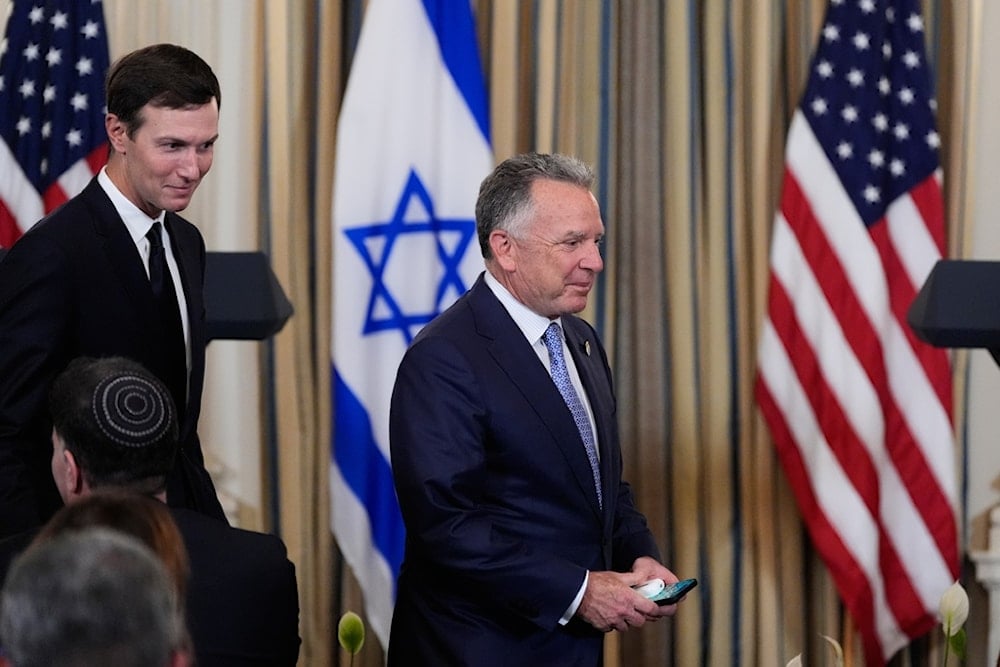
US Special Envoy to the Middle East Steve Witkoff and Jared Kushner arrive before US President Donald Trump holds a news conference with Israeli PM Benjamin Netanyahu in the White House, Sept. 29, 2025, in Washington (AP)
US Special Presidential Envoy Steve Witkoff, accompanied by Jared Kushner, son-in-law of US President Donald Trump, arrived in "Israel" on Thursday for high-level talks with Israeli Prime Minister Benjamin Netanyahu, Axios reported.
The discussions are expected to focus on the Rafah crossing, the sole border point in Gaza and a critical lifeline for the enclave, facilitating humanitarian aid deliveries, medical evacuations, civilian movement, and the transport of supplies by international organizations. Its operation has frequently been suspended or resumed by "Israel", directly worsening the humanitarian situation in Gaza.
Ali Shaath, head of the Palestinian technocratic Gaza Governance Committee, announced that the Rafah crossing will reopen next week. The move aligns with Trump’s 20-point plan to end the Gaza war, which called for reopening the crossing as part of a ceasefire agreement reached in October of last year.
The Times of Israel reported that "Israel" intends to initially limit the crossing to the exit of Gaza residents while insisting on the return of the body of the last captive and the disarmament of Hamas before allowing full operations.
On January 23, three informed sources told Reuters that "Israel" plans to set up a military checkpoint inside Gaza to monitor all individuals entering and exiting through the Rafah border crossing with Egypt.
According to the sources, the measure is intended to limit the number of Palestinians returning to Gaza via Rafah, effectively ensuring that more people leave the blockaded territory than enter, ahead of the crossing’s anticipated reopening next week.
Rafah weaponized: How 'Israel' manufactures crisis in Gaza
Despite being the only Gaza–Egypt border crossing not originally under Israeli control, the Rafah crossing has been tightly regulated by "Israel" throughout the war on Gaza, especially after Israeli forces took control of the crossing from Gaza's side in May 2024. This control effectively gives "Israel" significant influence over who and what can enter or exit Gaza through this critical point.
The crossing, which lies between Egypt’s border post and the Palestinian side of Rafah, has long been critical for humanitarian aid and the movement of civilians needing medical treatment abroad. However, since Israeli forces seized the Palestinian side, movement through the crossing has been heavily restricted, leaving many aid deliveries and evacuations dependent on Israeli security decisions.
"Israel" has weaponized this control, using restrictions on Rafah’s operation as leverage in broader political and military negotiations. Decisions about when and how the crossing opens have frequently been tied to alleged security demands, including conditions related to captive returns and ceasefire terms, rather than solely humanitarian need.
The impact on civilians has been stark: patients needing urgent treatment abroad have faced delays or denials of passage because of closures, and humanitarian agencies have struggled to bring in sufficient supplies when Rafah’s operations have been curtailed. The crossing’s intermittent closures have directly contributed to shortages affecting basic needs like food and medical care.


