
US fighter jet shootdown exposes limits of air superiority: CNN
 3 Min Read
The downing of a US F-15E over Iran, alongside the loss of an A-10 and a failed rescue mission, signals a turning point in the war on Iran.
-
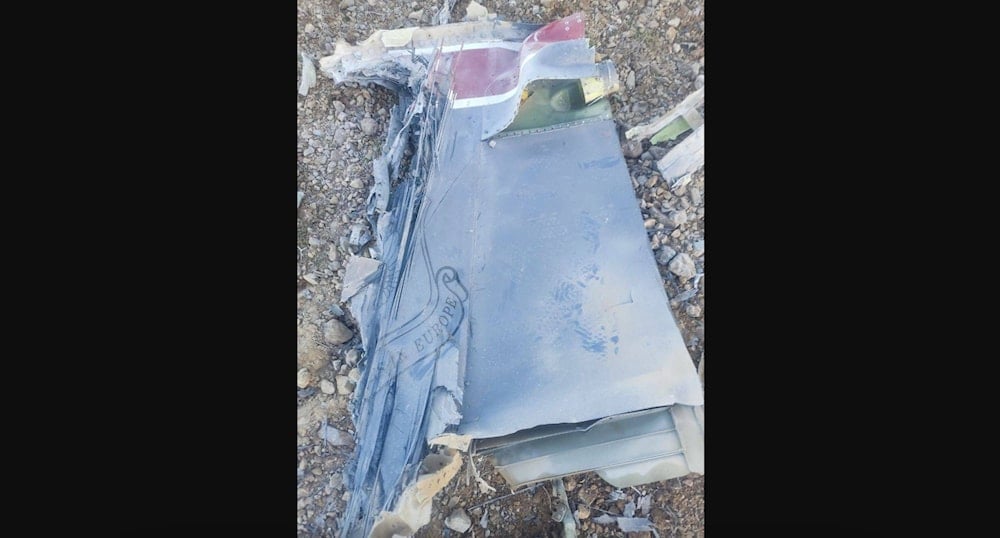
Wreckage of a US fighter jet downed over Iran; analysts say the debris appears consistent with an F-15 (Nour News/Telegram)
The shootdown of a US F-15E Strike Eagle over Iran marks a significant shift in the trajectory of the war on Iran, analyst Matthew Chance says, noting that it exposes the growing vulnerability of American forces and the limits of Washington’s claims of air superiority.
CNN’s analysis describes the incident as the first confirmed case of a US warplane being brought down over Iranian territory since the start of the war, a development widely seen as a turning point in the war.
The episode unfolded alongside a broader pattern of operational setbacks. Around the same time, a US A-10 Thunderbolt II went down near the Strait of Hormuz, with US officials providing limited details on the circumstances, while Iranian authorities said the aircraft had been tracked and targeted by their integrated air defense systems.
Rising costs
The report highlights the escalating risks facing US personnel as the war drags on, with President Donald Trump signaling that military operations will continue for at least another two to three weeks. As the war extends, the likelihood of further American casualties increases, particularly as US forces operate deeper inside contested Iranian airspace.
Since the launch of the war at the end of February, the US has admitted to 13 US service members killed and hundreds more wounded, reflecting the mounting human and political costs of the war. Iranian officials, however, say the true toll is far higher, arguing that Washington is underreporting casualties to contain domestic backlash as losses mount in a war it initiated.
Airspace contested
The shootdown also directly challenges repeated claims by US officials that Iran’s defenses had been effectively neutralized and that American forces maintained full control of the skies. The loss of the aircraft suggests instead that Iran retains the capability to contest its airspace and impose tangible costs on US military operations.
That assessment is reinforced by events following the shootdown. Iranian media reported that US forces launched a rescue mission involving helicopters and a transport aircraft, but the operation came under fire from Iranian air defenses and was ultimately forced to withdraw. US officials later told NBC News that at least two helicopters involved in the mission were struck, confirming that even recovery efforts were conducted under an active threat.
Adaptive defenses
While the exact method used to bring down the jet remains unclear, the analysis notes that even after sustained US-Israeli strikes, Iran continues to rely on dispersed and mobile air defense systems. These include hard-to-detect, shoulder-fired missiles that can operate outside traditional radar coverage, making any claim of absolute air superiority increasingly untenable.
The incident also carries broader strategic implications. Beyond the immediate loss, it exposes the growing difficulty faced by US forces in maintaining operational freedom, particularly as Iranian defenses continue to adapt under pressure. It also reveals a widening gap between Washington’s narrative of dominance and the realities on the ground, where the battlefield is becoming increasingly contested.
Read more: Iran has 'no air defense whatsoever' but scored world's first F-35 hit


