
US House passes bill to block China from global financial institutions
 3 Min Read
The US House passes a bill to exclude China from global financial bodies if it threatens Taiwan. The measure now awaits Senate approval and Trump’s signature.
-
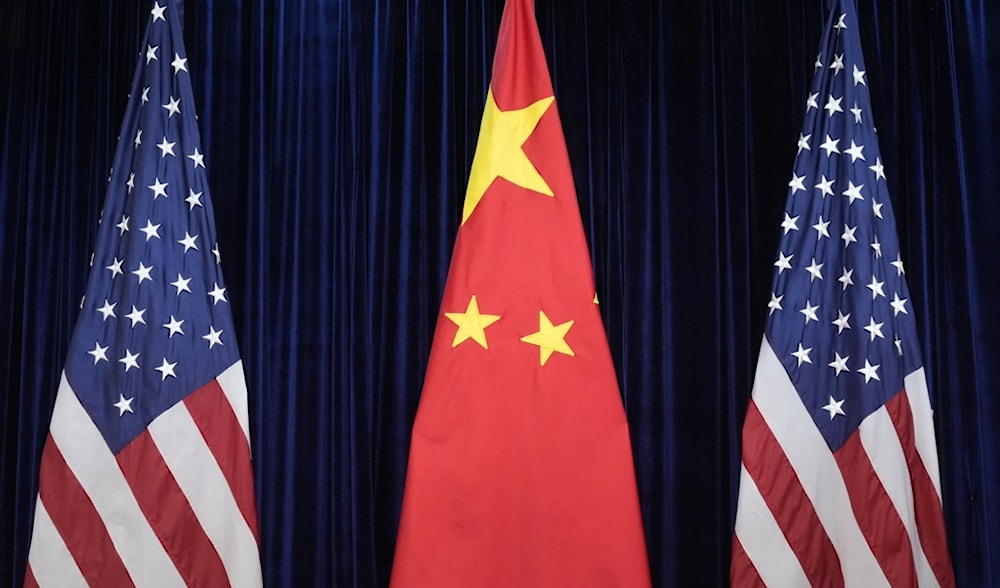
Flags of the U.S. and China are displayed at the Gimhae International Airport in Busan, South Korea, Oct. 30, 2025. (AP)
The US House of Representatives on Tuesday overwhelmingly passed a bill aimed at excluding China from key global financial institutions should it threaten Taiwan or undermine American interests.
The bill, which passed with a vote of 395 to 2, would establish US policy to block Chinese participation in six major international organizations. These include the Group of 20 (G20), the Bank for International Settlements, the Financial Stability Board, and the Basel Committee on Banking Supervision.
The legislation also targets Chinese representation in the International Association of Insurance Supervisors and the International Organization of Securities Commissions.
Next steps: Senate and Trump’s signature
Despite the House's strong support, it remains uncertain whether the Senate will take up the bill. If it does pass the upper chamber, it would then require the signature of President Donald Trump to become law.
However, the Republican-controlled Senate may hesitate to move forward, especially ahead of Trump’s planned visit to Beijing for talks with Chinese President Xi Jinping in April. The timing raises concerns about escalating tensions just before a high-level summit.
Trump has been trying to ease disputes with China on a range of issues, including trade, rare earths, and Taiwan. Earlier this month, Trump and Xi spoke in advance of their meeting. Trump characterized the call as “excellent,” while China struck a more combative tone, particularly over Taiwan, the self-governing island that China considers part of its territory.
“If China seeks to disrupt the global order, then China cannot continue to be party to international organizations that seek to preserve that order,” Representative Frank Lucas, the bill’s sponsor, posted on X.
China urges banks to curb exposure to US treasuries
Meanwhile, Chinese regulators have advised major financial institutions to scale back their exposure to US Treasury bonds, citing rising concerns over concentration risk and market volatility, individuals familiar with the matter told Bloomberg.
Officials reportedly instructed banks with significant holdings of US government debt to curb future purchases and reduce existing positions. In recent weeks, the guidance was communicated verbally to some of China’s largest banks and does not apply to the state’s own holdings of US Treasuries.
Sources told Bloomberg that the move is motivated by risk management priorities, not geopolitical strategy or a loss of confidence in the creditworthiness of US debt. No specific targets or deadlines were set regarding the scale or timing of the reductions.
Market reaction was swift: Treasury yields rose modestly during Asian trading hours, while the US dollar slipped slightly against major global currencies. As of September, Chinese banks held approximately $298 billion in dollar-denominated bonds, though it remains unclear how much of that was specifically in Treasuries, according to data from the State Administration of Foreign Exchange.
Read more: China slams US 'double standards' after Trump's 100% tariff threat


