
US imposes satellite imagery blackout over West Asia amid Iran strikes
 2 Min Read
US satellite imagery provider Planet Labs halts high-resolution West Asia images following Iran attacks on US bases and radar systems, limiting public monitoring of military operations.
-
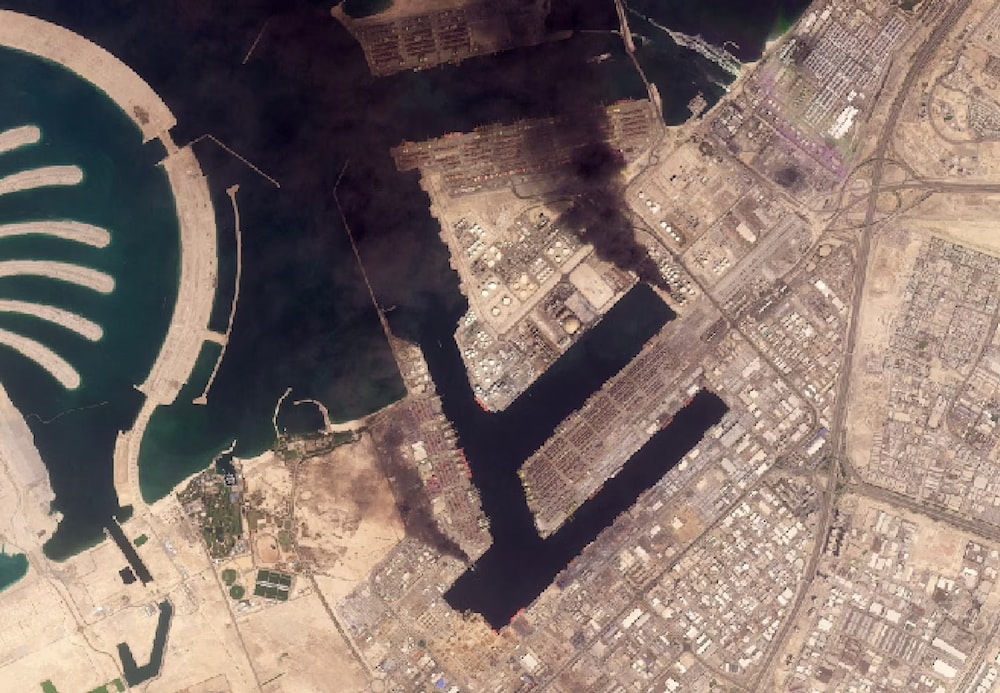
Several fires are visible at Abu Dhabi's Jebel Ali Port on March 1st, 2026. (Planet Labs PBC)
US satellite imagery provider Planet Labs will stop releasing high-resolution images of West Asia, following a request from US President Donald Trump’s administration. The decision comes amid escalating retaliatory attacks by Iran on US military assets in the region, which have raised concerns about sensitive information being visible to adversaries.
Planet Labs announced on Saturday an "indefinite withhold of imagery," effective retroactively from March 9, 2026. The blackout covers Iran, allied bases, Gulf states, and the warzone, limiting the public release of images that could reveal the locations of US bases, radar systems, and other strategic assets and the losses sustained by the attacks.
Under the new policy, imagery will only be released on a case-by-case basis for urgent, mission-critical requirements or when deemed in the public interest. Planet Labs, founded in 2010 by former NASA scientists, had previously imposed short-term delays in March, but the current restrictions are expected to last until the end of the war.
US attempt to conceal destruction of military bases
The US government cited the risk that high-resolution satellite imagery could reveal "vulnerable military positions", particularly after Iran demonstrated its ability to strike US bases, aircraft, and radar systems across West Asia and released imagery of the damage the bases sustained.
Since the beginning of the US-Israeli aggression, Iran has targeted US bases and radar installations in Jordan, Iraq, Kuwait, Saudi Arabia, Bahrain, Qatar, and the UAE.
Several advanced systems, including THAAD and AN/FPS-132 radars, have been damaged or destroyed. Aircraft losses include KC-135 tankers, F-15 jets, and at least one E-3 AWACS radar plane. Iran has also shot down MQ-9 Reaper drones and claims to have damaged an F-35 stealth fighter.
The blackout limits independent monitoring of US military losses in Iran and reduces the ability of analysts, journalists, and researchers to verify developments on the ground. Open-source intelligence, long a tool for public scrutiny and strategic analysis, will now be heavily restricted.


