
US intel see Iran prepared to prolong war, weigh further escalation
 4 Min Read
US intelligence assessments suggest Iran is prepared to prolong the US war on Iran, with missile strikes, Strait of Hormuz pressure and cyber operations among the concerns.
-
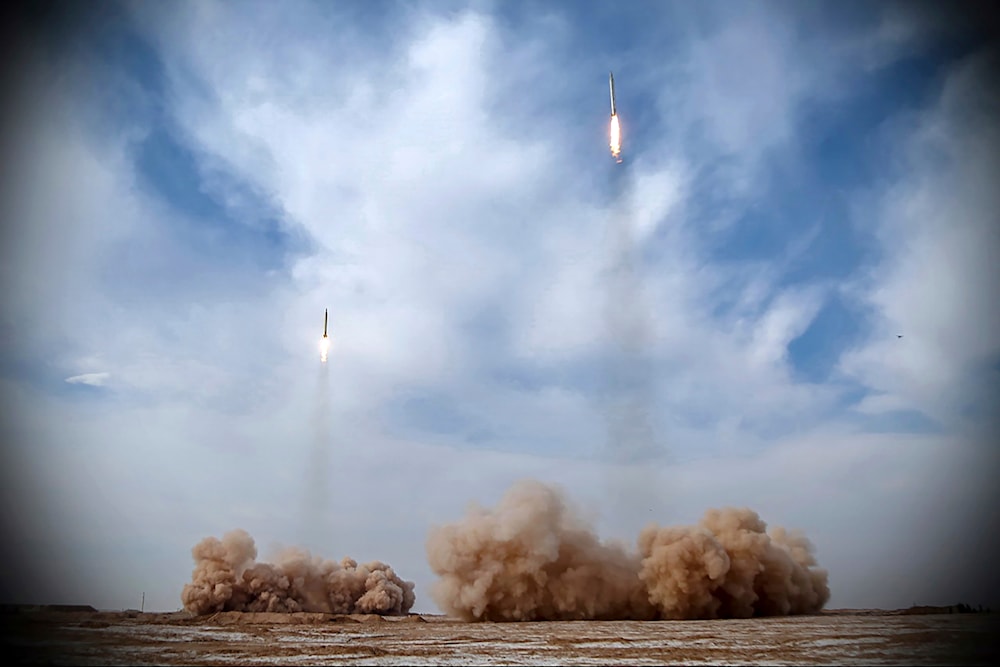
In this photo released on Saturday, Jan. 16, 2021, by the Islamic Revolution Guard Corps, missiles are launched in a drill in Iran (AP)
US intelligence assessments have become increasingly pessimistic regarding the possibility of ending the war on Iran in the near future, revealing that Tehran has developed a more refined understanding of its own strengths and the limits of American power over the past six months, according to a report in The New York Times.
The newspaper's reporting, based on individuals who have reviewed recent US intelligence reports, indicates that Iran has grown more confident in its ability to strike targets in the Middle East. According to the assessment, Iran appears determined to prolong the war for months, aiming to exhaust Washington and increase political pressure on President Trump ahead of the midterm elections.
According to those who have reviewed the intelligence evaluations, there are currently few indicators that Tehran is prepared to offer a broad deal to the United States. Some US officials believe that Iran sees benefit in the continuation of the war as long as its political costs accumulate within the United States, the report states.
Iranian escalation and cyber operations assessed
The intelligence reports do not rule out that the Iranian government is considering greater escalation. The newspaper does not state that a decision has been made or that a major attack is imminent and certain, but it indicates that limited military escalation may not be the ceiling of what Tehran is considering.
The US assessment is that Iran may repeat in the coming weeks a pattern similar to its actions in July, including striking US bases in the Middle East, attacking shipping in the Strait of Hormuz, and targeting infrastructure in Kuwait and other countries.
The file of cyberattacks within the United States has also become part of the assessment of Iran's capacity to apply pressure. US officials believe that hackers linked to Iran were likely responsible for attacks targeting more than 100 US water systems in late July. The attacks caused disruptions at some sites, requiring a shift to manual operations and the issuance of precautionary boil-water advisories.
The political value of cyber operations, as presented in the report, lies not only in their ability to cause physical damage but also in their use as a tool to exhaust the American public.
Factors behind Iran's growing confidence
The report links Iran's heightened confidence to three primary factors. First, according to Democratic Representative Jason Crow, the Iranian leadership has become more cohesive.
Second, Iran still retains a stockpile of missiles and drones despite sustaining significant damage. Third, it has developed a more precise understanding of how to use the Strait of Hormuz as a pressure lever on Washington and global markets.
A fourth factor, which appears in assessments from individuals who have reviewed the intelligence reports, is Iran's belief that the United States' ability to launch large new waves of strikes has become more difficult due to declining ammunition inventories.
The report also states that Iran appears prepared to draw the war out at least until after the midterm elections. Current and former US officials believe that Tehran understands that the war and the resulting rise in fuel prices caused by disruptions in the Strait of Hormuz harm Trump and the Republican Party.
Democratic Representative Josh Gottheimer, a member of the Intelligence Committee who initially supported the war, summarized this by saying that the Iranians believe they have "maximum leverage," and therefore see no reason to stop putting pressure on the president.
US lawmaker shifts position as administration holds course
Gottheimer also presented a significant shift in his personal position, stating that the US administration did not have a clear strategy and that Iran was able to absorb the strikes.
Regarding Trump, the report states that he is not currently seeking negotiations and believes that economic pressure will force Tehran to make concessions on the Strait of Hormuz and possibly later on the nuclear program.
However, individuals who have reviewed the intelligence estimates believe that in the short term, sanctions may lead to further escalation rather than de-escalation.


