
US launches sweeping campaign to isolate, undermine ICC
 8 Min Read
The United States has escalated its campaign against the ICC through sanctions, diplomatic pressure, and attacks on Palestinian rights groups.
-
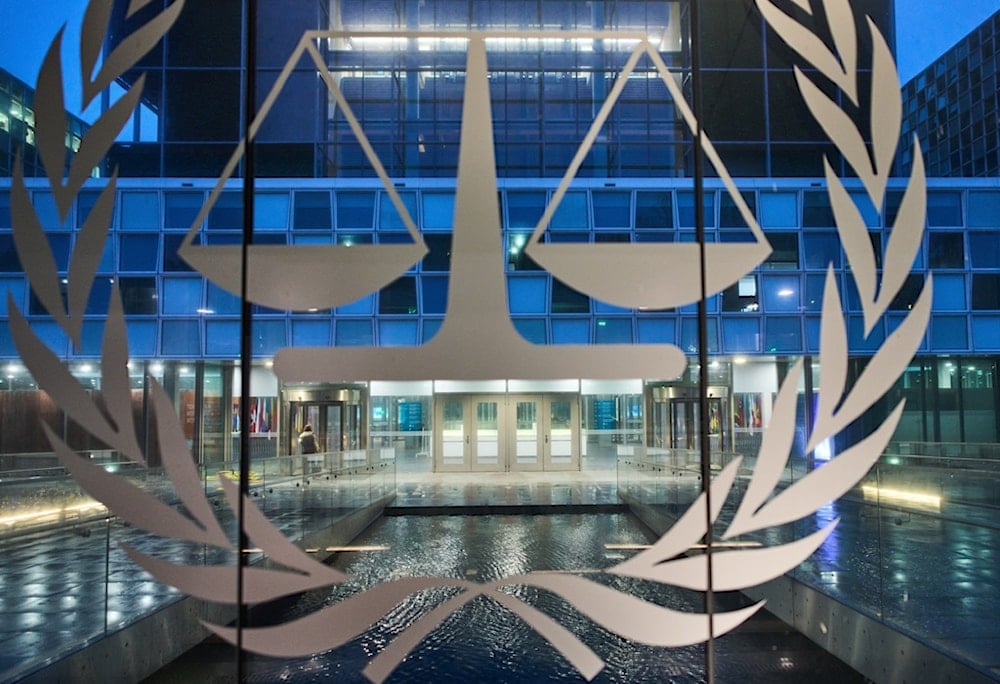
FILE - The International Criminal Court (ICC) is seen on Dec. 9, 2025, in The Hague, Netherlands (AP)
The United States has launched a sweeping international campaign to weaken and isolate the International Criminal Court, escalating a pressure drive that intensified after the Hague-based tribunal sought to hold Israeli leaders accountable for crimes committed against Palestinians in Gaza.
Although Washington is presenting the initiative as a defense of US sovereignty, the measures build upon more than a year of sanctions, diplomatic threats, and financial restrictions targeting ICC prosecutors, judges, Palestinian rights organizations, and a United Nations expert involved in documenting or pursuing accountability for Israeli crimes.
US Secretary of State Marco Rubio announced the campaign on Monday, portraying international legal action against US and Israeli officials as a form of warfare.
"The ICC and its friends are waging a war against our country, not with bullets or missiles, but with statutes, compacts and the force of so-called international law," Rubio said in a video statement.
The State Department said Washington intends to "systematically disable the ICC's ability to operate, target American servicemen or officials, or otherwise threaten American sovereignty."
Measures under consideration include further financial sanctions, visa revocations, travel restrictions, and punitive action against organizations affiliated with or assisting the court. US officials are also pressuring other governments, particularly those hosting American forces, cooperating with US law enforcement, or relying on Washington’s security umbrella, to reject the ICC’s authority.
Gaza warrants trigger confrontation
US opposition to the ICC long predates the Israeli war on Gaza, particularly because of the court’s investigation into crimes committed by American forces in Afghanistan. However, Washington’s campaign entered a new phase after the tribunal issued arrest warrants for Israeli Prime Minister Benjamin Netanyahu and former Security Minister Yoav Gallant on November 21, 2024.
The ICC found reasonable grounds to believe Netanyahu and Gallant were responsible for the war crime of using starvation as a method of warfare and the crimes against humanity of murder, persecution, and other inhumane acts against Gaza’s civilian population.
The warrants followed months of mass killings, forced displacement, restrictions on humanitarian aid, and the widespread destruction of Gaza’s civilian infrastructure.
While the ICC warrants concern war crimes and crimes against humanity rather than genocide charges, they form part of a broader international accountability effort surrounding the Israeli assault. A UN Independent International Commission of Inquiry concluded in September 2025 that Israeli authorities had committed genocide against Palestinians in Gaza and accused senior Israeli officials of incitement.
South Africa’s separate genocide case against "Israel" also remains before the International Court of Justice. Unlike the ICC, which prosecutes individuals, the ICJ is considering the Israeli entity’s responsibility as a state under the Genocide Convention.
Trump orders sanctions during Netanyahu visit
The Trump administration formally expanded its campaign on February 6, 2025, when the president issued an executive order authorizing economic and travel sanctions against people involved in ICC investigations targeting US citizens or citizens of allied countries.
The order explicitly cited the arrest warrants for Netanyahu and Gallant and was issued while the Israeli prime minister was visiting Washington. It described the court’s actions against the Israeli officials as illegitimate and authorized the freezing of assets belonging to designated ICC personnel.
Washington subsequently sanctioned ICC Chief Prosecutor Karim Khan and several judges involved in the Palestine and Afghanistan cases.
In June 2025, the administration sanctioned four ICC judges, describing their judicial work as an illegitimate attempt to target the United States and "Israel". The move marked an unprecedented use of US economic sanctions against sitting judges of the permanent international war crimes tribunal.
Further rounds of sanctions followed in August and December 2025. By June 2026, Washington had sanctioned 11 ICC judges and prosecutors, including Khan, largely over the Netanyahu and Gallant warrants and the earlier Afghanistan investigation.
Palestinian rights groups targeted
The campaign soon expanded beyond court officials to include organizations that gather evidence of Israeli crimes and represent Palestinian victims.
In September 2025, the State Department sanctioned Al-Haq, Al Mezan Center for Human Rights, and the Palestinian Centre for Human Rights, explicitly citing their cooperation with the ICC’s Palestine investigation.
The three organizations have documented killings, forced displacement, torture, starvation, attacks on healthcare facilities, and other violations committed against Palestinians.
Targeting them extended Washington’s pressure campaign to the network responsible for collecting testimony, preserving evidence, and communicating information to international judicial bodies. Such restrictions could obstruct future investigations by deterring financial institutions, technology companies, researchers, and other organizations from working with the sanctioned groups.
The United States also sanctioned UN Special Rapporteur on the occupied Palestinian territories, Francesca Albanese, in July 2025. Rubio linked the decision to her calls for ICC proceedings against Israeli and American officials and companies supporting the Israeli assault.
Albanese had described the war as genocidal and called for sanctions and an arms embargo against "Israel". She also examined the role of corporations in sustaining the occupation and the destruction of Gaza.
A US federal judge temporarily blocked the sanctions against Albanese in May 2026, finding that the measures likely violated her free-speech rights. The sanctions had effectively restricted her access to financial services and complicated her ability to meet everyday expenses.
Financial system weaponized against court
The restrictions have consequences extending far beyond entry bans.
Because major banks, payment networks, cloud-service providers, travel platforms, and technology firms are based in the United States or exposed to its financial system, sanctioned ICC personnel have faced difficulties using bank accounts, credit cards, email services, software, and online platforms.
A Reuters investigation found that US sanctions disrupted war-crimes investigations and placed ICC officials and Albanese on the same Treasury blacklist used against designated armed groups and transnational criminal organizations. Some organizations reportedly reduced cooperation with the court because they feared becoming targets themselves.
Washington also considered sanctioning the ICC as an institution, a step that could prevent the court from accessing banking services, paying staff, purchasing software, or maintaining basic operations. US officials reportedly demanded guarantees that the tribunal would not pursue Trump administration officials, Israeli leaders, or other nationals of countries that have not joined the Rome Statute.
Three sanctioned ICC judges filed a lawsuit against Trump and his administration in June 2026, arguing that the measures were intended to punish and coerce them for carrying out independent judicial duties.
The judges said the sanctions interfered with their financial affairs, travel, and access to services. The administration maintained that the measures were lawful and necessary to confront what it called a threat to US national security and foreign policy.
Washington threatens ICC member states
The latest initiative goes further by seeking to undermine the court’s international support.
The ICC does not maintain its own police force and relies on its member states to arrest suspects, execute warrants, and provide evidence. Diplomatic pressure on those governments could therefore make the Netanyahu and Gallant warrants more difficult to enforce.
US officials indicated that countries receiving American military, intelligence, or law-enforcement assistance could face increased scrutiny unless they formally reject the tribunal’s authority over Americans. Washington is also considering encouraging governments to withdraw entirely from the Rome Statute.
The State Department described the court as an "intolerable threat to US sovereignty," claiming that it "claims the authority to prosecute and even imprison American servicemen and officials operating on behalf of America's national interest."
"Americans never signed up for this, and all American presidents since the ICC's ratification have maintained that the ICC does not have jurisdiction over Americans," the department said.
The ICC maintains that it may prosecute nationals of non-member countries when alleged crimes are committed on the territory of a state that accepts its jurisdiction. Palestine joined the Rome Statute in 2015, providing the legal basis for the court’s investigation of crimes committed in the occupied Palestinian territories.
Neither the United States nor "Israel" is a member of the ICC. Russia is also not a member, although the tribunal issued an arrest warrant for Russian President Vladimir Putin in March 2023.
Read more: ICC judges sue Trump over his retaliatory sanctions


