
Iceland, Netherlands join ICJ case against 'Israel's' genocide in Gaza
 4 Min Read
With Iceland and the Netherlands joining, this brings the number of countries supporting South Africa to 18.
-
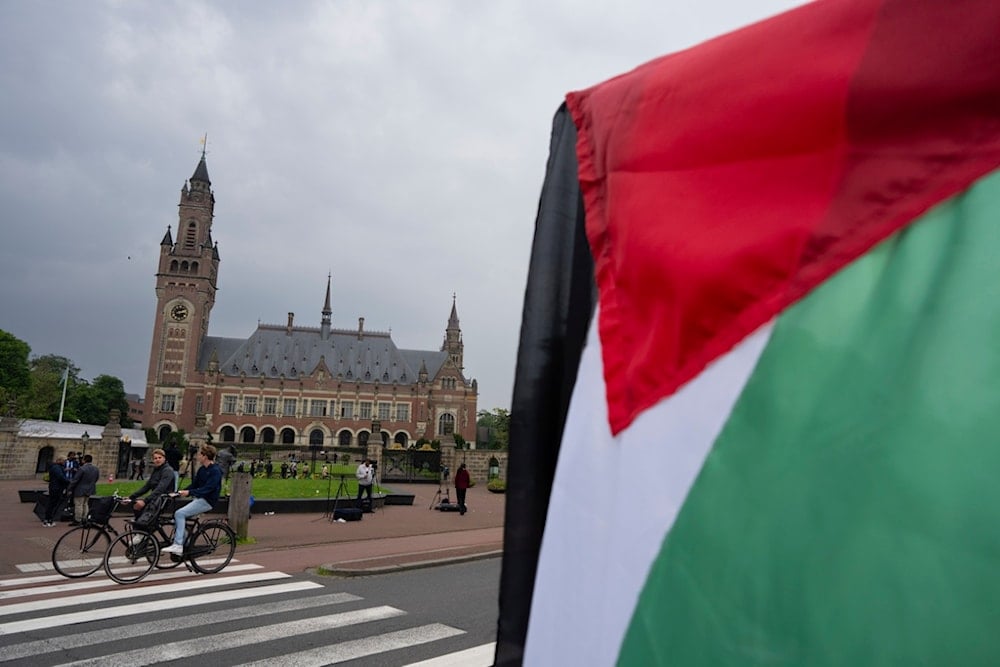
A demonstrator waves the Palestinian flag outside the Peace Palace, rear, housing the International Court of Justice, or World Court, in The Hague, Netherlands, Friday, May 24, 2024 (AP)
Iceland and the Netherlands have filed declarations to intervene in South Africa’s genocide case against "Israel" at the International Court of Justice (ICJ), the United Nations’ highest judicial body.
The move, announced Thursday, brings the number of countries seeking to participate in the proceedings to 18.
Countries that have already joined the case include Colombia, Libya, Mexico, Palestine, Spain, Turkey, Chile, the Maldives, Bolivia, Ireland, Cuba, Belize, Brazil, the Comoros, Belgium, and Paraguay.
Case filed under Genocide Convention
South Africa brought the case before the ICJ in December 2023, accusing "Israel" of violating the 1948 Genocide Convention through its genocide in the Gaza Strip.
In January 2024, the court ordered "Israel" to take all necessary measures to prevent acts of genocide against Palestinians and allow humanitarian aid into Gaza.
However, "Israel" has continued its aggression despite the ruling.
Iceland raises humanitarian concerns
In its declaration to the court, Iceland called for a closer examination of actions that could create conditions of life intended to destroy a protected group.
The country specifically highlighted practices such as the deprivation of food, shelter, and medical care, arguing that such measures may fall under acts prohibited by the Genocide Convention.
Iceland also emphasized the particular vulnerability of children, saying their exposure to serious bodily and psychological harm should be a key factor in the court’s assessment.
Netherlands highlights displacement, aid restrictions
The Netherlands, on its part, also raised concerns about the humanitarian consequences of "Israel’s" actions in Gaza.
In its filing, The Hague stated that forced displacement and restrictions on humanitarian aid could, depending on the circumstances, constitute acts prohibited under the Genocide Convention.
Legal experts have said the case could have major implications for "Israel" and countries supporting its aggression.
Genocide scholar William Schabas, a leading authority on international criminal law, has previously described the case as one of the strongest genocide proceedings ever brought before the ICJ.
Hamas welcomes move
The Palestinian Resistance movement Hamas welcomed the decision by Iceland and the Netherlands to join the case, describing it as an important step toward strengthening international justice.
The group also called on other countries to support legal efforts against "Israel" and its officials in international courts.
Genocide case widens
South Africa initiated proceedings against "Israel" on December 29, 2023, accusing it of breaching its obligations under the Genocide Convention in relation to Palestinians in the Gaza Strip. The case has already resulted in multiple sets of provisional measures, issued by the Court between January and May 2024, ordering "Israel" to take steps to prevent acts falling under the scope of the Convention, facilitate humanitarian assistance, and preserve evidence relevant to the allegations.
Since April 2024, more than a dozen states have filed declarations or applications to intervene, including Ireland, Spain, Türkiye, Brazil, Chile, Mexico, Libya, and Palestine. The expanding roster points to the legal gravity of the proceedings and growing fractures within "Israel’s" diplomatic support base, particularly inside the European Union, over the application of international law to the war on Gaza.
The interventions also come amid heightened scrutiny of international judicial institutions following political pressure and public attacks directed at judges of the International Criminal Court after arrest warrants were issued against Israeli leaders. Although the ICJ and ICC are institutionally and legally distinct, analysts say the broader climate places renewed focus on judicial independence and raises the stakes surrounding the enforcement of international humanitarian and criminal law.
The ICJ stressed that its press releases are issued for informational purposes only and do not constitute official rulings. Proceedings on the merits are ongoing, and a final judgment is not expected for several years.
Read more: Belgium intervenes in ICJ Gaza genocide case against 'Israel'


