
Belgium condemns 'Israel's' West Bank settlements expansion
 3 Min Read
Belgium's foreign minister condemned "Israel’s" approval of 19 West Bank settlements as illegal under international law.
-
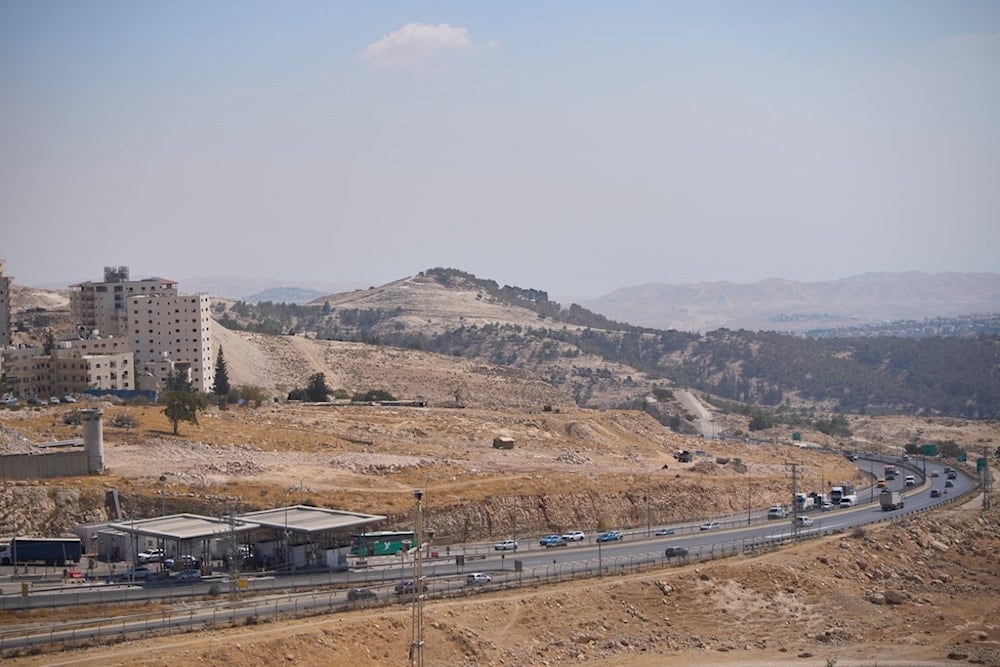
View of an area near Maale Adumim, an Israeli settlement in the occupied West Bank, near where the Israeli occupation says housing units will be built as part of the E1 settlement project on August 21, 2025. (AP Photo/Ohad Zwigenberg)
Belgian Foreign Minister Maxime Prévot on Tuesday condemned "Israel’s" expansion of settlements in the occupied West Bank, warning that the decision entrenches illegality and further erodes the prospects of the so-called two-state solution.
"The announcement by the Israeli security cabinet to establish and legalize 19 settlements in the West Bank is yet another blatant and unacceptable violation of international law. It is a deliberate opposition to the two-state solution, which is the best and only option for guaranteeing the lasting security of both Palestinians and Israelis," Prévot said on X on Monday.
🇮🇱🇵🇸 (EN/FR/NL) The announcement by the Israeli security cabinet to establish and legalize 19 settlements in the West Bank is yet another blatant and unacceptable violation of international law. It is a deliberate opposition to the two-state solution, which is the best and only…
— Maxime PREVOT (@prevotmaxime) December 22, 2025
"Israel’s" decision, approved by the security cabinet, involves a mix of newly designated settlements and the retroactive legalization of previously unauthorized settler outposts. Several of the sites had long existed without official approval under Israeli law, while others are linked to areas evacuated during "Israel’s" 2005 disengagement. The move is widely seen as consolidating permanent Israeli control over large parts of the occupied territory.
The decision forms part of a broader acceleration of settlement expansion. Watchdog groups and European officials report that since late 2022, Israeli authorities have approved or legalized at least 69 new settlements and outposts, raising the total number of settlements from around 140 to more than 210.
An EU assessment estimates that by the end of 2024, the settler population had reached over 737,000, including more than 500,000 settlers in the West Bank and more than 230,000 in occupied East Jerusalem.
The settlement package was strongly backed by senior figures in "Israel’s" far-right government, including Finance Minister Bezalel Smotrich, a long-time advocate of settlement expansion who has openly opposed the creation of a Palestinian state. Moreover, Israeli officials have framed the decision as a strategic and ideological step, despite widespread international opposition.
Escalating violence
The settlement announcement comes amid an intensifying campaign of violence against Palestinians in the occupied West Bank. Figures from the Office of the United Nations High Commissioner for Human Rights (OHCHR) show that Israeli forces and settlers killed at least 1,017 Palestinians between October 7, 2023, and November 13, 2025, including 221 children, with additional deaths in Israeli custody excluded from the toll.
Record levels of settler violence have accompanied the rise in killings. UN humanitarian monitors documented more than 260 settler attacks in a single month in 2025, the highest monthly figure recorded since systematic tracking began in 2006, with attacks including arson, shootings, and assaults on Palestinian communities.
Settlement expansion has long functioned as a mechanism of territorial seizure and demographic engineering. Under international humanitarian law, the transfer of an occupying power’s civilian population into occupied territory is prohibited, rendering Israeli settlements illegal in the view of the United Nations, the European Union, and most states.
Observers argue that the continued approval and legalization of settlements fragments Palestinian land, emboldens settler violence, and entrenches a one-state reality defined by permanent occupation and unequal rights, rather than justice or self-determination for Palestinians.
Read more: 9,300 Palestinians detained in Israeli prisons, majority without trial


