
US military strikes two vessels in Eastern Pacific, kills six
 4 Min Read
The new US strikes have raised alarm over its alleged war on drugs and the use of lethal force without evidence or accountability.
-
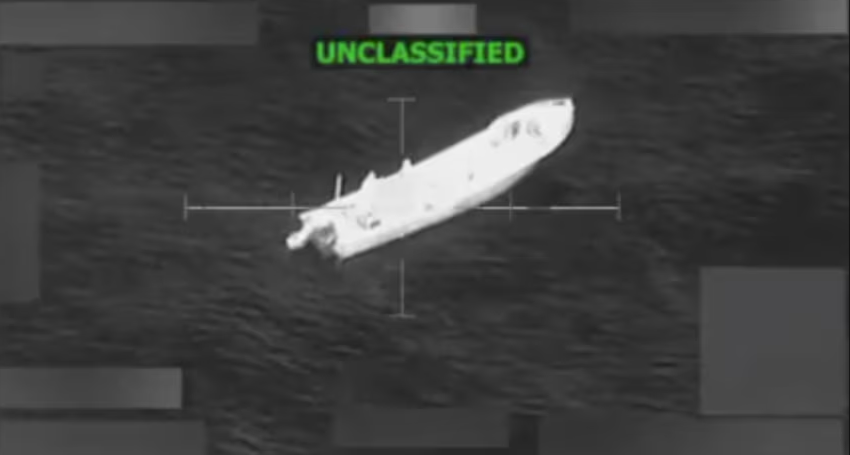
This screengrab taken from a video posted by Defense Secretary Pete Hegseth shows a boat shortly before it is struck by a missile on November 9, 2025 (Secretary of Defense Pete Hegseth/X)
The US military carried out strikes on two alleged drug-trafficking vessels in the Eastern Pacific on Sunday, killing six people, Secretary of Defense Pete Hegseth announced in a post on X.
Yesterday, at the direction of President Trump, two lethal kinetic strikes were conducted on two vessels operated by Designated Terrorist Organizations.
— Secretary of War Pete Hegseth (@SecWar) November 10, 2025
These vessels were known by our intelligence to be associated with illicit narcotics smuggling, were carrying narcotics, and… pic.twitter.com/ocUoGzwwDO
Hegseth claimed the boats were linked by intelligence to narcotics smuggling and “designated terrorist organizations,” but did not specify which groups were involved.
Since September 2, the US has conducted 19 similar strikes, destroying 20 vessels and killing 76 people in a campaign Washington alleged targets drug flows into the country.
Officials have acknowledged they do not always know the identities of those on board before striking and classify those killed as “unlawful combatants", a designation that allows lethal action without judicial review under a classified Justice Department ruling.
Strikes spark debate over legality, regional impact
Some lawmakers and human rights groups have challenged this approach, arguing that suspects should face prosecution, and the Trump administration has not publicly verified the presence of narcotics or cartel affiliation on the targeted boats.
In fact, the use of military force against suspected drug traffickers, along with the administration’s decision to label some trafficking groups as “terrorist” actors, has drawn scrutiny from legal experts, human rights groups, and some lawmakers.
Critics warn that strikes at sea present complex challenges under international law and question the role of law enforcement agencies such as the US Coast Guard. Administration officials argue the operations are necessary to disrupt networks responsible for mass drug-related deaths in the US.
Mexico and other regional governments have responded cautiously. Mexican authorities, who accepted responsibility for a lone survivor, have in past cases protested unilateral military actions near their waters. Latin American officials have warned that sustained US operations in the region could cause diplomatic friction.
Maduro urges CELAC to oppose US militarization in the Caribbean
Earlier today, Latin American leaders strongly denounced, at the fifth CELAC-European Union Summit in Colombia, the growing US military presence in the Caribbean, warning against foreign interventions and calling for a united regional stance in defense of sovereignty and peace.
On his part, Venezuelan President Nicolas Maduro issued a letter to CELAC member states urging them to categorically reject what he described as the US-led militarization of the Caribbean. Referring to recent attacks on fishing vessels and the deployment of US military forces near Venezuelan maritime borders, Maduro argued that forces need to be joined as countries and "in a single voice demand an immediate cessation of the attacks and military threats against our people."
Maduro also demanded an independent investigation into the extrajudicial killings at sea, previously condemned by UN human rights bodies. His statement emphasized the need for regional mechanisms for humanitarian cooperation and collective defense to protect territorial sovereignty.
“Our history demands we do not bow to foreign domination. Latin America must preserve its will, strength, and autonomy,” he declared.
A regional pushback against militarization
The summit has spotlighted growing concern across Latin America about Washington's renewed militarization near Venezuela, amid accusations of regime change attempts and resource exploitation.
With regional leaders unified in calling for peace, non-intervention, and sovereignty, the CELAC-EU summit marks a pivotal moment in Latin America's collective response to foreign pressure and military encroachment.
Read more: War on drugs or war for trusteeship? Petro tears down US narrative


