
US-misled supertanker struck by mine in Strait of Hormuz: IRGC
 3 Min Read
Iran's IRGC Navy reported that a supertanker carrying over two million barrels of crude oil caught fire after striking a naval mine while attempting to cross an unauthorized route in the Strait of Hormuz, accusing US forces of misleading the vessel.
-
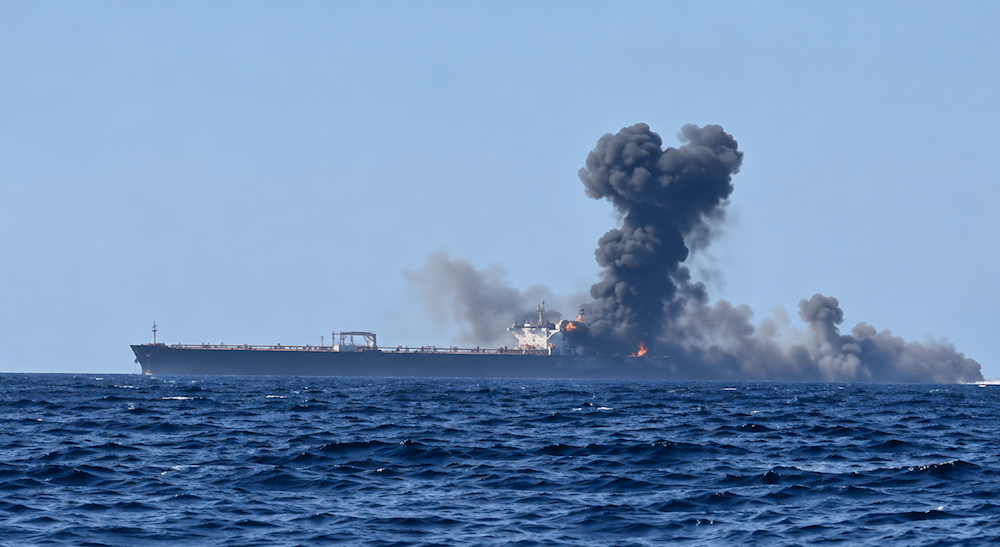
Smoke rises from an oil tanker reportedly struck by a naval mine while attempting to cross an unauthorized route through the Strait of Hormuz, October 17, 2026. (IRGC/AI-enhanced screenshot)
A supertanker carrying more than two million barrels of crude oil was engulfed in flames after striking a naval mine while attempting to cross the Strait of Hormuz through an unauthorized route, following "deception by the US military," Iran's Islamic Revolution Guard Corps (IRGC) said Saturday.
JUST IN: 🇺🇸🇮🇷 Another supertanker carrying more than 2 million barrels of crude oil struck a naval mine in the Strait of Hormuz this morning, resulting in a major explosion in the vessel’s engine room, leaving it immobilized. It looks like soon the world will also run out of oil tankers…
— Megatron (@Megatron_ron) October 17, 2026
The IRGC Navy announced Saturday that the vessel, which it classified as an aggressor, had attempted to bypass Iranian navigation restrictions by entering a prohibited maritime route with its positioning and radar systems disabled.
According to the IRGC statement, the tanker struck a naval mine, triggering a powerful explosion in its engine room and causing a massive fire that brought the vessel to a complete halt.
The IRGC held the US military responsible for misleading the tanker into attempting the unauthorized passage, accusing Washington of encouraging vessels to disregard Iranian maritime regulations despite repeated warnings about the dangers of unapproved routes.
The statement did not identify the vessel or provide details about its crew. The circumstances of the explosion have not been independently verified.
IRGC reiterates control over Strait of Hormuz
The incident comes as Iran continues to enforce restrictions on maritime traffic through the Strait of Hormuz amid the ongoing US-Israeli war on the Islamic Republic, which began on February 28.
The IRGC has repeatedly affirmed that the strategic waterway remains under Iranian control and that vessels seeking passage must comply with routes designated by the Iranian authority responsible for managing navigation through Hormuz.
Tehran has maintained that the restrictions will remain in place until US military aggression and interference in the region cease.
Iranian authorities have also warned shipping companies against relying on US military assurances of safe passage, stressing that vessels attempting to cross unauthorized routes risk serious consequences.
The latest incident follows a series of maritime confrontations in the strategic waterway, where Iranian forces have repeatedly reported targeting or intercepting vessels attempting to circumvent established navigation procedures.
Iran, Oman pursue regional framework for navigation
Meanwhile, Tehran continues to pursue a regional framework for managing maritime traffic through the Strait of Hormuz, holding consultations with neighboring Oman over arrangements intended to restore secure navigation.
On August 25, the two countries outlined a proposed framework for establishing a temporary joint navigational corridor through the strait, alongside a joint mine-clearance initiative.
The discussions also addressed plans for a permanent navigation route, mechanisms for coordinating maritime traffic, and the future administration of the waterway.
Iran has emphasized that maritime security arrangements must respect the sovereignty and rights of countries bordering the strait, maintaining that regional cooperation remains central to any lasting agreement governing navigation.
Read more: Supertanker catches fire after hitting mine in Strait of Hormuz: IRGC


